Grief Guide
Best grief therapy apps in 2026
Compare grief therapy apps by need. Choose therapist-led care for personal support, or meditation, sleep, and journaling tools for specific daily needs.
Best overall for individual therapy: BetterHelp, when your therapist has bereavement experience. Best for trauma-related coping tools: PTSD Coach. Best for meditation: Headspace. Best for bedtime relaxation: Calm. Best for private memory writing: Day One. This 2026 guide separates grief therapy apps from self-help tools so you can choose support without confusing the two.
- BetterHelp is the strongest fit among these grief therapy apps when you want a licensed therapist with bereavement experience.
- PTSD Coach provides trauma-related coping tools, not individualized grief treatment.
- Headspace and Calm support meditation and relaxation; neither replaces bereavement counseling.
- Day One suits private grief journaling. Rememberme creates custom memorial songs, not therapy.
Why this matters
When you are grieving, searching for help should not become another exhausting task. Yet the phrase grief therapy apps mixes very different things: appointments with therapists, breathing exercises, sleep recordings, and places to write memories.
Choose a therapy service when you want a clinician to help you understand and work through your grief. Choose a self-help app when you want a specific activity between conversations or appointments. You do not need to use every kind of support.
If writing feels easier than talking today, these grief journals for processing loss offer another starting point. Neither a journal nor an app needs to become a daily obligation.
What makes the best grief therapy apps?
Use these criteria when choosing an app in 2026. A familiar name matters less than whether the service fits what you need.
- Human care: Does the service connect you with a licensed therapist, or provide self-directed activities only?
- Bereavement fit: Can the therapist discuss experience with your kind of loss, including pet loss or a difficult relationship?
- Emotional control: Can you stop an exercise, silence reminders, or avoid material you are not ready to explore?
- Privacy clarity: Can you understand what happens to journal entries, messages, recordings, and account information?
- Manageable effort: Can you use the tool without completing lengthy exercises when your attention is limited?
- Clear boundaries: Does the service distinguish emotional support from diagnosis, treatment, and emergency help?
Ask these questions before sharing intimate memories. A meditation library is not a therapist, and a therapy platform does not guarantee that every clinician specializes in grief.
Grief therapy apps at a glance
This 2026 comparison ranks options by their role, not by an assumed ability to make grief disappear. The order below matches the detailed recommendations.
| Option | Best for | Standout function | Key limitation |
|---|---|---|---|
| BetterHelp | Individual conversations with a licensed therapist | Online therapy | Bereavement experience depends on the therapist |
| PTSD Coach | Coping with trauma-related distress | Self-directed tools from the VA and Department of Defense | Not personalized grief therapy |
| Headspace | Guided meditation | Structured meditation guidance | Does not provide individualized grief treatment |
| Calm | Bedtime relaxation | Sleep stories and relaxation audio | Does not address your personal loss through therapy |
| Day One | Private memory writing | A dedicated journaling space | No therapist or clinical assessment |
1. BetterHelp: best grief therapy option for individual care
BetterHelp connects people with licensed therapists online. Among these options, it is the clearest fit when you want an ongoing conversation about your loss rather than a library of exercises.
The important choice is the therapist, not simply the platform. Before beginning, ask about bereavement experience and explain what you want help with, such as guilt, loneliness, family tension, or returning to work.
BetterHelp pros:
- Provides access to licensed therapists rather than self-help content alone.
- Creates space to discuss the details of your relationship and loss.
- Offers a route to individual support without traveling to an office.
BetterHelp cons:
- A therapist's grief experience needs checking individually.
- A platform match is not a guarantee of a comfortable therapeutic relationship.
- It is not an emergency service.
Best for: You want a therapist to listen, ask questions, and help you work through concerns specific to your life.
Ask directly whether the clinician has supported people after losses like yours. You deserve room to talk about love, anger, relief, regret, or several feelings together without being pushed toward a tidy ending.
Verdict: Choose BetterHelp if you want individual therapy and find a clinician with relevant bereavement experience. Skip it as a substitute for urgent help.
2. PTSD Coach: best grief support app for trauma-related coping
PTSD Coach was developed by the U.S. Department of Veterans Affairs and Department of Defense. It provides information and self-directed tools related to post-traumatic stress.
Its role here is narrow. If your loss involved a frightening event and you want coping tools alongside professional support, PTSD Coach is a more relevant option than treating every difficult moment as a meditation problem.
PTSD Coach pros:
- Has a clearly identified public-health developer.
- Focuses on trauma-related distress rather than general productivity or mood tracking.
- Offers self-directed coping activities you can discuss with a clinician.
PTSD Coach cons:
- Does not provide an individualized assessment or therapeutic relationship.
- Its trauma focus is not the right match for every bereavement.
- Using it cannot establish whether you have PTSD.
Best for: You want trauma-related coping resources while arranging or receiving appropriate care.
Grief and post-traumatic stress are not interchangeable. Describe distressing experiences to a qualified clinician rather than using an app's subject matter to diagnose yourself.
Verdict: Choose PTSD Coach for its specific coping role. Skip it as your only support when distress is disrupting everyday life.
3. Headspace: best grief support app for guided meditation
Headspace provides guided meditation and mindfulness content. It belongs in this list as a companion tool, not as a grief therapist.
Choose Headspace if you want someone to guide a short pause rather than ask you to explain your whole story. You do not have to feel peaceful, empty your mind, or finish a session for the activity to count as an attempt at self-care.
Headspace pros:
- Gives you guided exercises rather than requiring you to meditate independently.
- Supports a specific activity without asking you to retell your loss.
- Fits alongside counseling rather than requiring you to choose between them.
Headspace cons:
- Does not provide individualized bereavement treatment.
- Sitting quietly with difficult feelings does not suit everyone at every moment.
- General meditation guidance cannot respond to the details of your loss.
Best for: You want guided attention or breathing practice and feel comfortable trying meditation.
Start with a manageable intention, such as 2 minutes of listening, rather than a promise to meditate every day. Stop if the exercise increases your distress; choosing another activity is not a failure.
Verdict: Choose Headspace for guided meditation. Skip the idea that completing sessions measures how well you are grieving.
4. Calm: best grief support app for bedtime relaxation
Calm offers meditation, relaxation audio, and sleep stories. Its clearest place in this comparison is the evening, when you want something to listen to without discussing your loss.
Choose Calm for a bedtime listening routine, not because an audio recording can resolve grief-related sleep difficulties. If sleep problems persist or interfere with daily functioning, speak with a healthcare professional.
Calm pros:
- Provides a listening-focused option when writing or talking feels demanding.
- Includes sleep-oriented audio rather than meditation alone.
- Gives you an activity that does not require sharing personal memories.
Calm cons:
- Does not provide personalized grief therapy.
- A narrator's voice or a story's subject can feel comforting to one person and uncomfortable to another.
- Relaxation audio is not an assessment of ongoing sleep problems.
Best for: You want gentle audio as part of your evening routine.
Listen briefly before making a recording part of bedtime. You can reject a voice, theme, or style simply because it does not feel right; you do not need a more persuasive reason.
Verdict: Choose Calm for bedtime relaxation. Skip it as the sole response to persistent sleep difficulties.
5. Day One: best grief support app for private memory writing
Day One is a journaling app, not a therapy service. It suits people who want a dedicated place to record memories, unfinished thoughts, and ordinary details about someone they miss.
You can write to your loved one, describe a difficult afternoon, or save a small memory without turning it into a lesson. Before adding sensitive material, read the current privacy information and check the settings that apply to your account.
Day One pros:
- Gives memory writing a dedicated home.
- Lets you choose the subject without following a grief workbook.
- Supports writing that you can keep separate from public memorial posts.
Day One cons:
- Does not offer clinical interpretation or a therapist's response.
- Repeatedly revisiting painful material is not always what you need.
- Sensitive entries require thoughtful decisions about device access and account privacy.
Best for: You want to preserve memories or put feelings into words without joining a conversation.
Try 1 sentence per entry if a blank page feels overwhelming. A detail about someone's laugh or a familiar household routine is enough; your journal does not need to become a complete life story.
Verdict: Choose Day One for private writing. Skip any streak or routine that turns remembrance into pressure.
How to choose without trying everything
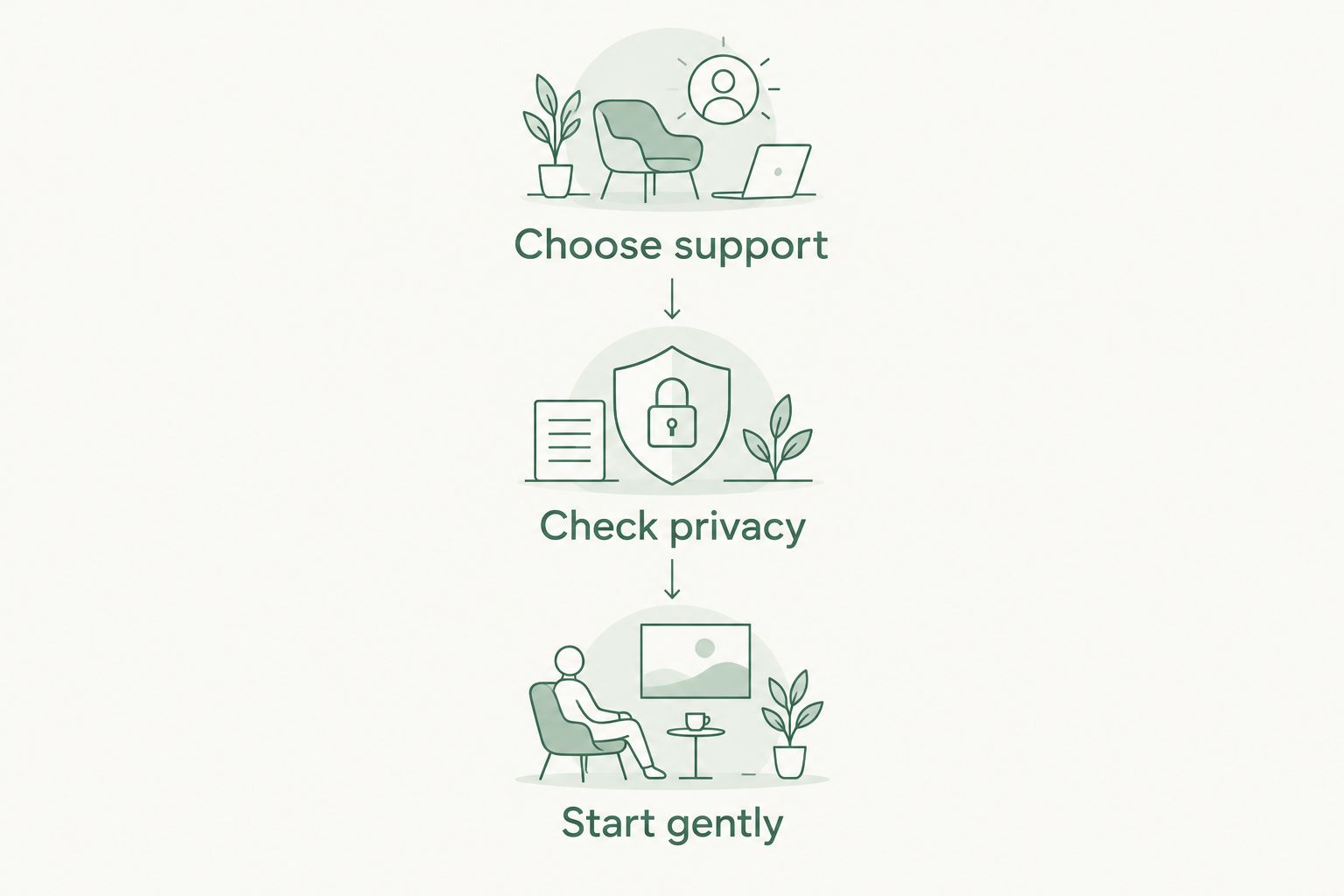
For a 2026 shortlist, begin with the kind of help you want today. Ask yourself 3 questions before downloading anything:
- Choose support: Do I want a conversation with a therapist, a coping activity, or somewhere to keep memories?
- Check privacy: Am I comfortable with the information this service asks me to share?
- Start gently: What is the smallest useful action I can take without feeling pushed?
Your answer can change. Wanting quiet audio tonight does not mean you should avoid counseling, and arranging therapy does not mean you must stop writing privately.
Notice how you feel after using a tool. If an activity leaves you more unsettled, pause and discuss that response with your therapist or another trusted support person instead of forcing yourself to continue.
How these options are ranked
This 2026 ranking prioritizes access to human care first, then separates self-help options by purpose: trauma-related coping, meditation, bedtime relaxation, and memory writing. It is not a clinical effectiveness ranking or a claim that one app treats bereavement better than another.
Privacy clarity, emotional control, and manageable effort remain important across every option. Check current features and policies before committing, because the service name alone cannot tell you whether it meets your needs.
Which grief therapy app should you choose?
Choose BetterHelp when your priority is individual therapy, provided you find a therapist with bereavement experience. Choose the other options only for their stated supporting roles, rather than expecting them to replace that relationship.
Rememberme is best for families who want a custom memorial song made from personal memories, not grief therapy. Rememberme memorial songs belong in a different category: remembrance, rather than clinical care.
If preserving someone's story is what you want, this guide explains how to write a memorial song for a loved one. Rememberme memorial songs are professionally produced from customers' memories and stories; they do not provide counseling or treatment.
FAQ
What's the best grief therapy app in 2026?
BetterHelp is the strongest fit in this comparison for individual therapy, provided your therapist has bereavement experience. Headspace, Calm, PTSD Coach, and Day One serve different self-help purposes rather than replacing a grief therapist.
Can an app replace grief counseling?
A self-help app cannot replace the individualized care of grief counseling. An online therapy platform connects you with a therapist, while meditation, journaling, and coping apps provide activities without that therapeutic relationship.
Is Headspace or Calm better for grief?
Choose Headspace for guided meditation and Calm for bedtime relaxation audio. Neither is a substitute for personalized bereavement treatment, and your comfort with the content matters more than the brand name.
Is PTSD Coach only for people who have a diagnosis?
PTSD Coach provides educational information and coping tools, but it cannot diagnose PTSD. If you are concerned about trauma-related symptoms after a loss, discuss them with a qualified clinician.
What should I ask an online grief therapist?
Ask about the therapist's experience with bereavement and losses like yours. Explain your main concerns and ask how the therapist approaches grief without imposing a fixed timetable.
Can I use a journal app after losing a pet?
Yes, a journal app can give you a place to write about a pet and preserve everyday memories. It does not provide treatment, and you can stop writing whenever the activity feels too painful.
Are memorial songs a form of grief therapy?
Rememberme creates custom memorial songs, not grief therapy. A song can serve as a personal tribute, but it does not replace counseling, assessment, or other professional care.
What if I need help right now rather than an app?
In the United States, call or text 988 if you are in suicidal crisis or emotional distress. Call 911 or go to the nearest emergency department if there is immediate danger; do not wait for an app response.
One last thing
The best app is not necessarily the one you use most often. For your 2026 choice, look for something that serves a clear purpose without making you feel monitored, behind, or obliged to share.
You can turn off reminders, leave an entry unfinished, or put your phone away. Support should leave room for your relationship with the person or pet you miss, not turn that relationship into a task list.
Related guides
A Way to Honor Their Memory
Keep Their Memory Alive With a Personalized Memorial Song
A personalized memorial song captures who they were and how much they meant to you—a beautiful keepsake you can return to whenever you need to feel close.
Create a Memorial Song