Grief Guide
Is it too soon to order a memorial song right after a death?
Is it too soon to order a memorial song after a death? Not automatically. Decide when to begin, when to wait, and how to respect a family's wishes.
No, it is not automatically too soon to order a memorial song right after a death if you want one and feel able to share a few memories. You can begin gathering stories now and decide later when to order, listen, or share, especially if making another decision feels like too much.
- Is it too soon to order a memorial song after a death? Your wishes matter more than the calendar.
- Rememberme creates custom memorial songs from personal memories and stories; choose this approach when you want a personal tribute.
- Gathering memories, ordering a song, and listening to it can be separate decisions.
- For a memorial song gift, ask permission before requesting personal stories or arranging a public first listen.
Is it too soon to order a memorial song right after a death?
You do not have to wait for a particular milestone to want a memorial song. You also do not have to create one now. The useful question is whether the next step feels welcome, not whether enough time has passed.
Choose the approach that asks the least of you while respecting what you want:
| Approach | Best for | What it allows | What to consider |
|---|---|---|---|
| Begin an order now | Someone who wants a personal tribute and feels ready to share memories | Moving a meaningful idea into a concrete project | You still need to make choices about stories, tone, and intended use |
| Gather memories first | Someone who wants to preserve details without committing | Keeping notes for a future song | Collecting stories can feel emotionally demanding; stop when you need to |
| Wait before starting | Someone who does not want another task | Leaving the decision open | A song intended for an upcoming service needs a separate timing check |
If you are considering a tribute for a service in 2026, check production timing directly before making it part of the program. The guide to how long it takes to receive a custom memorial song addresses that separate planning question.
Emotional readiness and production timing are different. A funeral date does not tell you how you should feel, and wanting a song does not confirm that it can be finished for that date.
Why this matters
A memorial song is a choice, not a test of how much you loved someone. You do not need to prove your love by ordering quickly, finding perfect words, or sharing something publicly.
For a tribute you are considering in 2026, separate the practical decision from the emotional one. You might want to save a memory today without wanting to hear it sung today. You might want a song for yourself but not for the funeral.
Those are different wishes. Give each its own answer rather than treating the whole project as a single yes-or-no decision.
Beginning now: when creating a song feels welcome
Beginning now is best for you if the idea feels chosen rather than required. You do not need a complete life story or a polished tribute before you start thinking about what matters.
Ask yourself what you want the song to hold. Perhaps it is their way of greeting you, a familiar joke, a family tradition, or the ordinary sound of them moving through the house. Choose details you want to remember, not details you feel obliged to include.
Try writing 3 short memories as a starting exercise. This is a way to make the task smaller, not a requirement for ordering or a measure of whether you are ready.
Rememberme creates custom, professionally produced memorial songs from customers' personal memories and stories. Rememberme is best for people who want their own memories shaped into a custom memorial song. That personal focus also means you will need to decide which memories you want to share, so waiting is a reasonable choice if that task feels unwelcome.
Before submitting anything, check the service's current process and decide who will make the choices. If several relatives want to contribute, agree on who will collect their suggestions without requiring everyone to participate.
Gathering memories first: when you want a smaller step
Gathering memories first is best for you if you want to preserve something without committing to a finished song. A note on your phone or a piece of paper is enough for this stage.
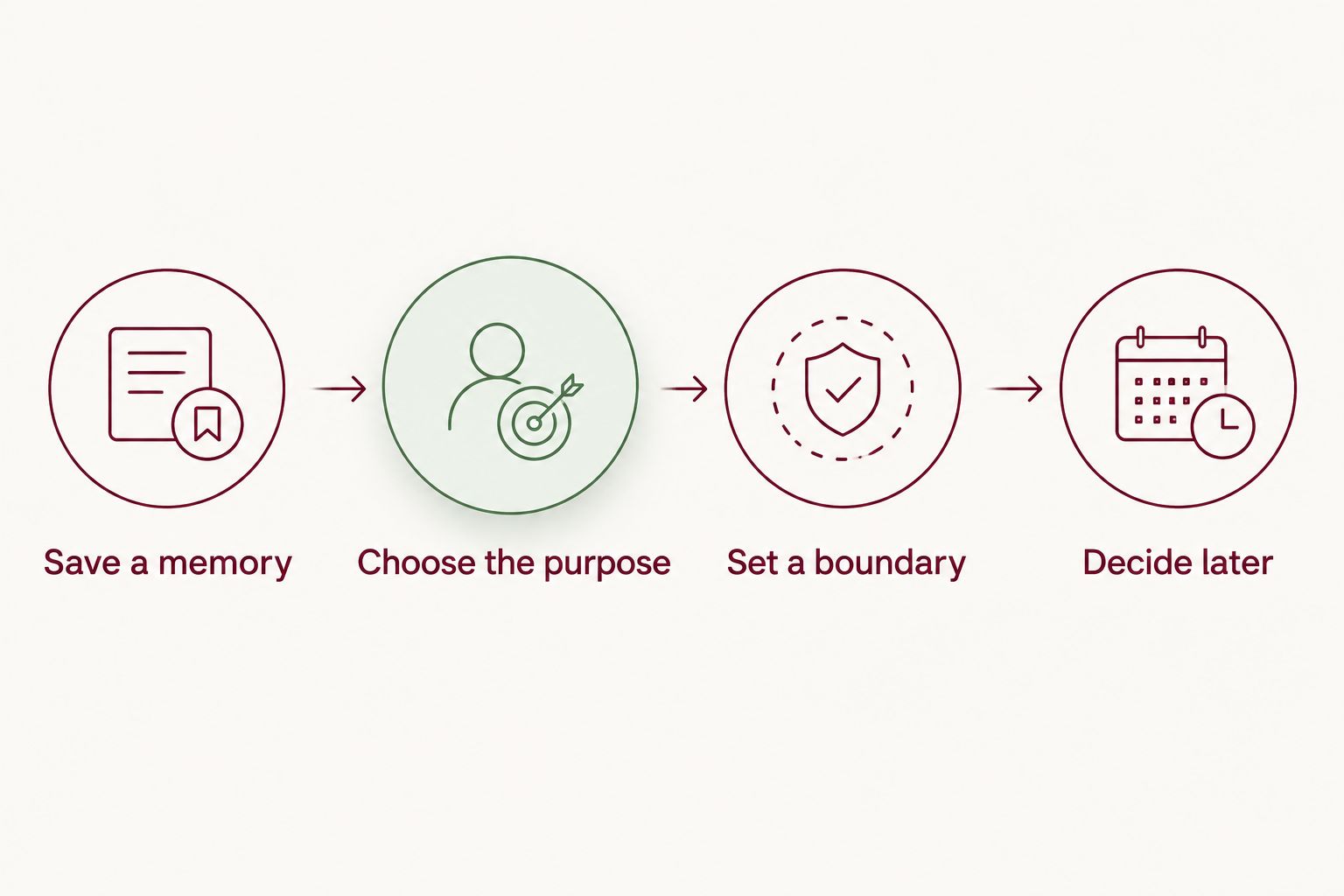
You can keep the task deliberately small:
- Save a memory. Write one ordinary moment you do not want to lose.
- Choose the purpose. Decide whether the possible song is for private listening, a gift, or a service.
- Set a boundary. Note anything you do not want included or shared.
- Decide later. Leave ordering and listening for another conversation if you prefer.
These are optional steps, not a schedule. Stop after saving a memory if that is all you want to do.
For notes started in 2026, a simple date label can help distinguish a memory from a later planning decision. Do not turn the date into a deadline. The purpose of the notes is to keep your options open.
If writing feels difficult, ask someone you trust to write down what you tell them. Make clear that you are collecting memories, not asking them to place an order on your behalf.
Waiting: when another decision feels like too much
Waiting is best for you if you do not want to discuss memories, choose music, or take on another task. You can decline the project without explaining or defending that choice.
You do not need to name a future date. Leaving the idea undecided is different from rejecting the person you lost, and choosing not to make a song does not make your remembrance less meaningful.
If someone has offered to arrange a tribute, tell them what would help instead. You might prefer that they save their own written memory for you, handle a practical task, or simply leave the suggestion alone.
For a memorial gathering in 2026, choose a plan that does not depend on you becoming ready by the event date. If a custom song is not right for that gathering, it can remain a private possibility rather than an unfinished obligation.
Why the right time varies
There is no single decision that fits every person or family. Use these factors to identify what you actually need to decide:
- Who wants the song. Your own wish to create a tribute is different from a relative's suggestion or a gift giver's plan. Start with the intended listener's wishes.
- What sharing requires. A project built from memories asks you to choose personal details. Decide whether that feels manageable before agreeing to more.
- Where the song will be heard. Private listening, a family gathering, and a public service call for different conversations about permission and content.
- Whether there is an event date. An upcoming ceremony creates a practical deadline, not an emotional requirement. Confirm feasibility rather than assuming it.
- Which details belong in public. Names, relationships, beliefs, and circumstances of death deserve careful choices. Include only what you are comfortable sharing.
- Who will make the decisions. Agree on who provides memories, who checks details, and who decides whether to share the result. Do not assume the person closest to the loss wants that responsibility.
You can answer these questions gradually. None requires you to decide when you should feel better.
How can I tell whether I want the song or feel pressured?
Start by imagining that nobody else will hear it. If you still want the song, that helps separate your own wish from expectations about a funeral, family gathering, or public tribute.
Then consider whether you want the project itself or only want to avoid disappointing someone. You are allowed to appreciate an offer without accepting it. Gratitude does not require participation.
Write a private 2-sentence note describing what you want the tribute to do and what you do not want it to do. For example, you can identify a wish to preserve everyday memories while setting a boundary against public playback. The note is for your clarity; it does not need to become lyrics.
If your answers remain uncertain, choose the smaller step. Keep the note, ask a practical question, or set the idea aside without placing an order.
Is it too soon to give a grieving family a memorial song?
It is too soon to arrange a personal tribute on someone else's behalf if you have not checked whether they want it. Ask before turning a kind intention into a project the family must respond to.
A song gift can involve more than receiving a recording. The family might be asked to provide stories, correct names, choose a style, or decide how to acknowledge the gift. Make those requests optional rather than attaching them to an unexpected deadline.
Offer a choice between hearing more about the idea and leaving it for another time. If they decline or do not answer, do not arrange a public reveal. Silence is not permission.
The guide to giving a personalized memorial gift after a loss offers a related starting point for approaching the gift thoughtfully.
Can I order now but listen later?
You can make ordering and listening separate decisions, but check the service's process before assuming how delivery or review works. Creating a tribute does not mean you owe anyone an immediate listening session.
Choose 1 trusted listener if you want someone to hear the song before you do. Tell that person what you want checked, such as names, personal details, or whether anything feels unsuitable for the intended audience.
If you are planning a first listen in 2026, decide beforehand whether you want company and whether you want the option to stop. Keep the recording private until you have chosen otherwise. Receiving a file is not permission for someone else to post it or play it at a gathering.
For use at a service, agree with the organizer on who will authorize playback. Avoid making the ceremony the first time the intended recipient discovers the song exists.
FAQ
Is it wrong to order a memorial song immediately after someone dies?
No, ordering a memorial song immediately after a death is not inherently wrong. The decision should reflect your wishes and your willingness to share memories, not pressure to create a tribute quickly.
How long should I wait before ordering a memorial song?
You do not need to follow a fixed waiting period. Decide whether you want the song, whether sharing stories feels manageable, and whether an event creates a separate practical deadline.
Can I start a memorial song without telling the whole family?
You can begin your own private memory notes without making a family announcement. Before including other people's personal stories or sharing a finished tribute publicly, ask for their permission.
What if I start collecting memories and then want to stop?
You can stop collecting memories whenever you want. If you have already placed an order, check the service's current terms rather than assuming you can pause, cancel, or change the project.
Should I surprise someone with a memorial song at the funeral?
Ask before arranging a surprise memorial song at a funeral. The intended recipient should have a choice about whether to hear a personal tribute publicly, and the service organizer should approve its use.
Can a memorial song be for a pet who died?
Yes, a memorial song can honor a pet who died. Rememberme creates custom memorial songs from customers' memories and stories about a deceased loved one or pet.
Will making a memorial song make my grief go away?
A memorial song is not a promise that grief will go away. Treat it as an optional way to remember someone, not as treatment or a task you must complete to heal.
One last thing
You can preserve a memory without deciding what it will become. Save the nickname, the small kindness, or the story you keep returning to. It does not have to become a song, a speech, or anything public.
If you later choose Rememberme for a custom memorial song, those notes can help you explain what you want remembered. If you never place an order, the memories still belong to you. There is nothing unfinished about keeping them quietly.
Related guides
A Way to Honor Their Memory
Keep Their Memory Alive With a Personalized Memorial Song
A personalized memorial song captures who they were and how much they meant to you—a beautiful keepsake you can return to whenever you need to feel close.
Create a Memorial Song