
Before We Begin,
If you are reading this, someone you built your life around is gone. There are no words adequate for this moment, and this guide will not pretend to have them. What it will try to do is something simpler: walk beside you, one step at a time, through the first seven days.
These seven days will be unlike anything you have ever experienced. Time will behave strangely. Hours will feel like weeks. Entire afternoons will vanish. You may find yourself functioning with surprising efficiency one moment and unable to remember your own phone number the next.
You may feel everything at once, or you may feel nothing at all. You may cry until your body aches, or you may not cry for days and wonder what is wrong with you. Nothing is wrong with you.
This guide is organized day by day, but your grief will not follow a schedule. Use it in whatever order makes sense. Skip sections that do not apply. Come back to ones that do. There is no test at the end. There is no right way to do this. There is only your way.
There is only your way.
Your grief is as unique as your marriage was, as unique as the love you shared. Honor it by letting it be whatever it is.
What Is Happening to You Right Now
Before we talk about what you need to do, it is important to understand what is happening to you physically and mentally.
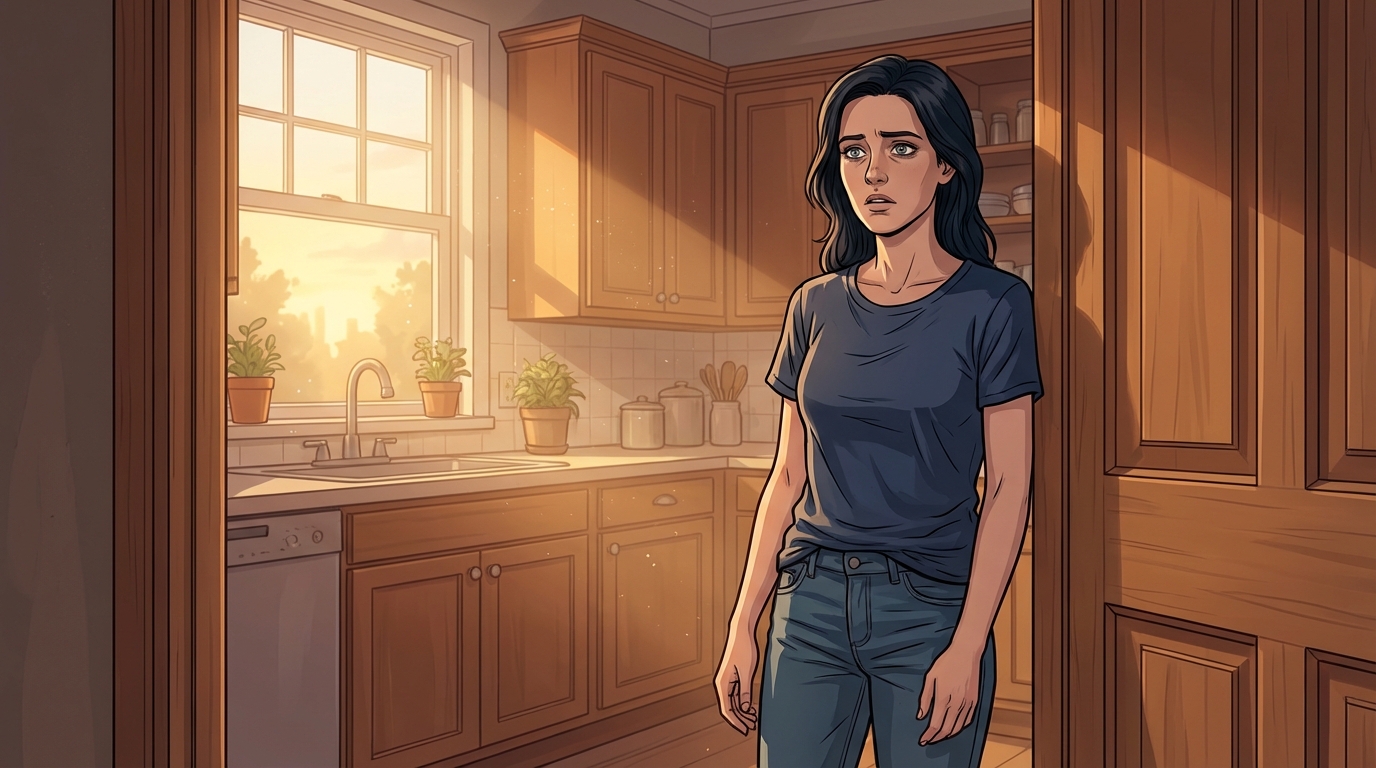
Grief Fog Is Real — and It Has a Name
When you received the news, your brain triggered a massive stress response. Your adrenal glands flooded your bloodstream with cortisol and adrenaline. Your prefrontal cortex — the part of your brain responsible for rational thinking, planning, and decision-making — was effectively taken offline.
This is not a metaphor. This is neuroscience. Your brain has been hijacked by grief, and it will take time — weeks, sometimes months — for it to come back fully online. In the meantime, you are operating with what grief researchers call “widow's brain” or “grief fog.”
You may walk into a room and forget why you are there. You may read the same sentence five times. You may forget to eat for an entire day. You may lose your keys, your phone, your train of thought mid-sentence. You may agree to something in a conversation and have no memory of it an hour later.
One widow described it this way: “My head felt like a beach ball. My ears felt like they were stuffed with cotton. I could hear people talking to me, but the words took forever to reach my brain.”
This is not you losing your mind. This is your mind protecting you from a pain too large to process all at once. The fog is a mercy, even when it does not feel like one.
The Physical Symptoms of Acute Grief
The physical symptoms of acute grief are real, measurable, and sometimes alarming. Your heart may pound or race. You may feel a tightness or heaviness in your chest. You may experience nausea, loss of appetite, or a hollow feeling in your stomach.
You may feel physically exhausted — a bone-deep fatigue that sleep does not fix. Your hands may tremble. Your mouth may be dry. You may feel cold when the room is warm.
If chest pain is severe or persistent, please seek medical attention. There is a real condition called Takotsubo cardiomyopathy, or “broken heart syndrome,” in which intense emotional stress temporarily weakens the heart muscle. It is rare, but it is real, and it is treatable.
The single most important thing you can do for yourself right now is to treat yourself as though you have suffered a severe physical injury. Because you have. You would not expect someone with two broken legs to run a marathon. Do not expect yourself to function at full capacity.
- Drink water. Keep a water bottle with you at all times.
- Eat something. Even a few bites. Accept the food people bring you.
- Avoid alcohol and excessive caffeine. Both will amplify anxiety and disrupt sleep.
- Keep taking regular medications. Call your physician to let them know what has happened.
- Do not drive unless absolutely necessary. Your reaction time and concentration are impaired. Have someone else drive you.
Whatever You Are Feeling Is the Right Response
There is no single way to feel right now. Grief is not a monolith. It is a kaleidoscope, and it shifts without warning.
You may feel shock and numbness — as though you are watching your own life from behind glass. You may feel overwhelming sadness that feels like a physical weight on your chest. You may feel anger — at God, at the doctors, at your husband for leaving you.
You may feel guilt — replaying every conversation, searching for the thing you could have done differently. You may feel relief, especially if he suffered a long illness. And then you may feel guilty about the relief.
You may feel fear — a primal terror about the future. Or you may feel nothing at all — a flat, gray emptiness that frightens you because you think it means you do not care. It does not. It means your system is overloaded.
Do not judge what you feel. Do not rank your emotions against what you think you should feel. Your grief is yours. It is as unique as your marriage was.
Day One — The Day Everything Changed
The first hours will likely be a blur. Your only job right now is to be alive.
What Needs to Happen (and What Can Wait)
Whether your husband died in a hospital, at home, in an accident, or somewhere you were not, the first hours will likely be a blur. You may remember certain moments with crystalline clarity while entire hours disappear into fog. This is normal.
The medical staff will handle the legal pronouncement. They will give you time with him. Take as much time as you need. There is no rush. The hospital will ask about a funeral home — it is perfectly acceptable to say, “I need some time to decide.”
Call the hospice nurse. They will come to your home, confirm the death, and handle the initial paperwork. You do not need to call 911 if the death was expected and hospice is involved.
Call 911. Do not move him or disturb the scene until the authorities have arrived. The paramedics will guide you through what happens next.
Delegate Everything You Can
The phone calls are one of the most dreaded and exhausting tasks of the first day. Tell your immediate family yourself if you want to, but after the innermost circle, delegate.
Choose one person — a close friend, a sibling, a neighbor — and ask them to be your point person. Give them a list of people who need to know. Let them make those calls. Let them field the incoming messages. Let them be the buffer between you and the world.
This is not being weak. This is being wise. You have a finite amount of energy, and every phone call costs you some of it.
A note about social media: Do not post anything yet. Let the personal calls happen first. Social media can wait a day or two.
There Are No Rules About This
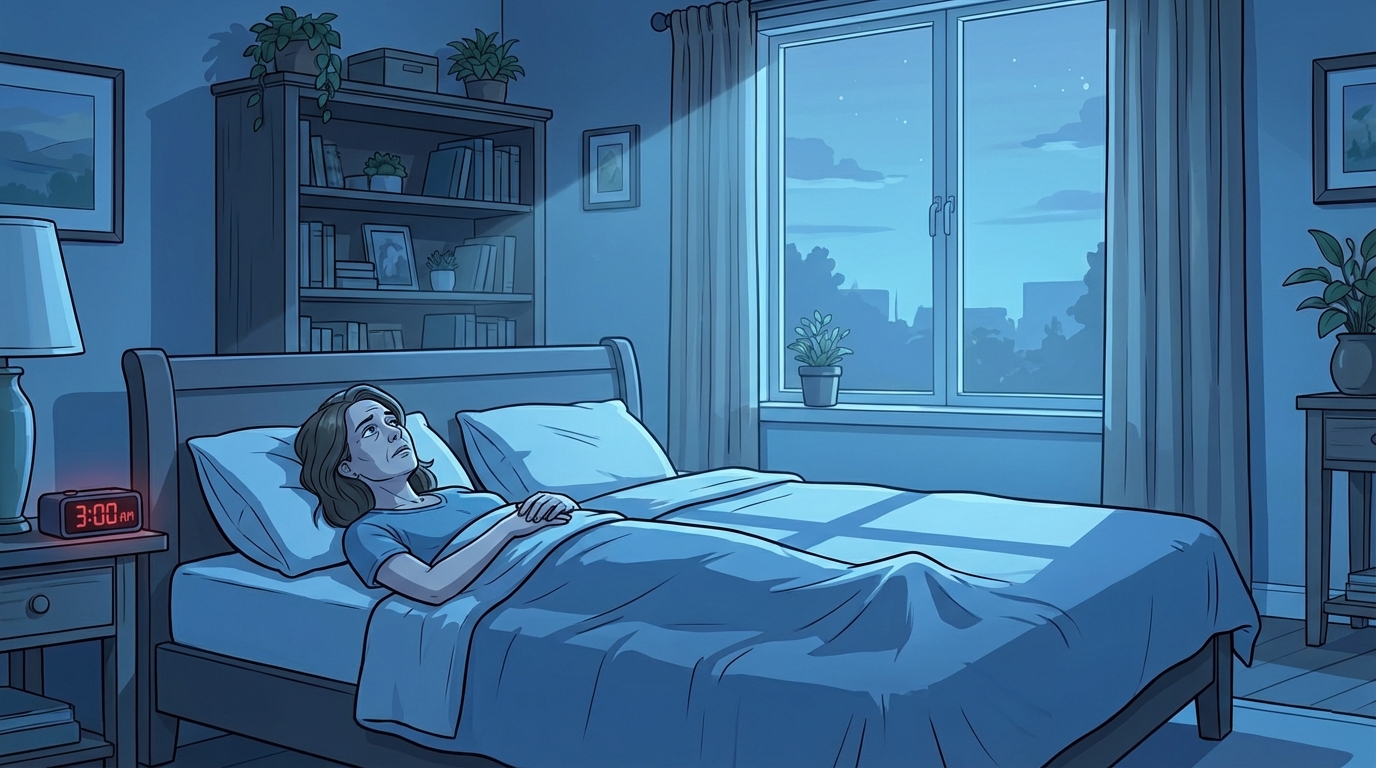
The first night is often the hardest. The house is quiet in a way it has never been quiet before. The bed is empty in a way that feels like a physical wound.
Do not force yourself to sleep in your bed if you cannot bear it. Sleep on the couch, in a guest room, in a recliner. If you can, have someone stay with you — not to talk, but just to be there.
If you are alone, leave a light on. Leave the television on low. Play soft music. Wrap yourself in a blanket. One widow arranged pillows along her husband's side of the bed so she could feel something warm against her back. Another slept in his t-shirt. Another kept his voicemail greeting and listened to it every night.
There is no dignity to protect here. There is only survival. Do whatever gets you through the night.
Days Two and Three — The Machinery of Death
The world begins asking things of you. You do not have to do any of this alone, and you should not try to.
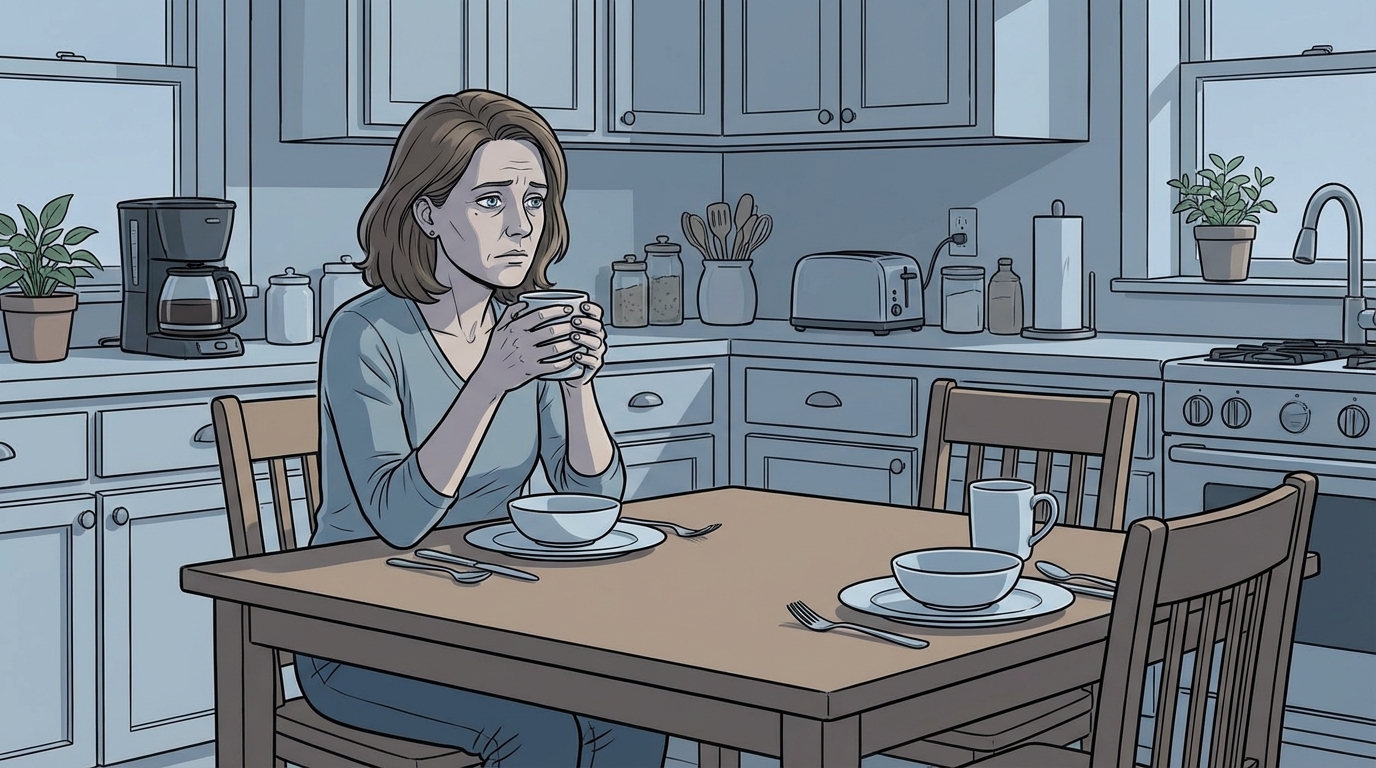
The Cruelest Moment of Early Grief
You may wake up on the second morning and, for a fraction of a second, forget. Your hand may reach across the bed. Your mind may begin its usual routine before the memory crashes back in like a wave.
This moment, the re-remembering, is one of the cruelest features of early grief. It will happen many times. Each time, it will hurt. Each time, you will survive it.
Choosing a Funeral Home
If your husband had pre-arranged plans, this step is already done. If there are no pre-existing plans, ask for recommendations from people you trust. Under the Federal Trade Commission's Funeral Rule, funeral homes are required to provide itemized price lists over the phone or in person.
Bring someone with you to the funeral home. They will walk you through the decisions: burial or cremation, the casket or urn, embalming, the type of service, the location, and who will officiate.
Do not feel pressured to make every decision in a single sitting. It is perfectly acceptable to say, “I need to think about this overnight.”
The Most Important Document You Have Never Thought About
Order more death certificates than you think you need. Order at least 10. Order 15 or 20 if you can afford it. The cost is usually $10 to $25 per copy, and ordering them now through the funeral home is far easier than requesting more later.
You will need certified copies for life insurance, bank accounts, property titles, Social Security, credit cards, vehicle registrations, and more. Every institution will want its own original certified copy.
Building Your Support System
You cannot do this alone. The most valuable thing you can do is assemble a small team of people who can help with specific tasks:
- Your Point Person. Fields calls, manages visitors, coordinates food and flowers, protects your energy.
- Your Document Person. Helps locate the will, insurance policies, bank statements, and important papers.
- Your Funeral Helper. Helps plan the service — readings, music, logistics.
- Your Home Helper. Feeds pets, collects mail, stocks the fridge, keeps the house running.
- Your Children's Helper. Present for your kids — driving, homework, just being there.
When someone says, “Let me know if there's anything I can do,” give them something concrete. Specific requests are easier to fulfill and more likely to result in the help you actually need.
Buy a notebook. Carry it everywhere. Write everything in it: every phone call, every decision, every question, every reference number. Your brain cannot be trusted right now. The notebook becomes your external brain. One widow went back to hers two years later to retrieve information she needed.
The Funeral
One of the most surreal days of your life. Your presence is enough. Nothing more.
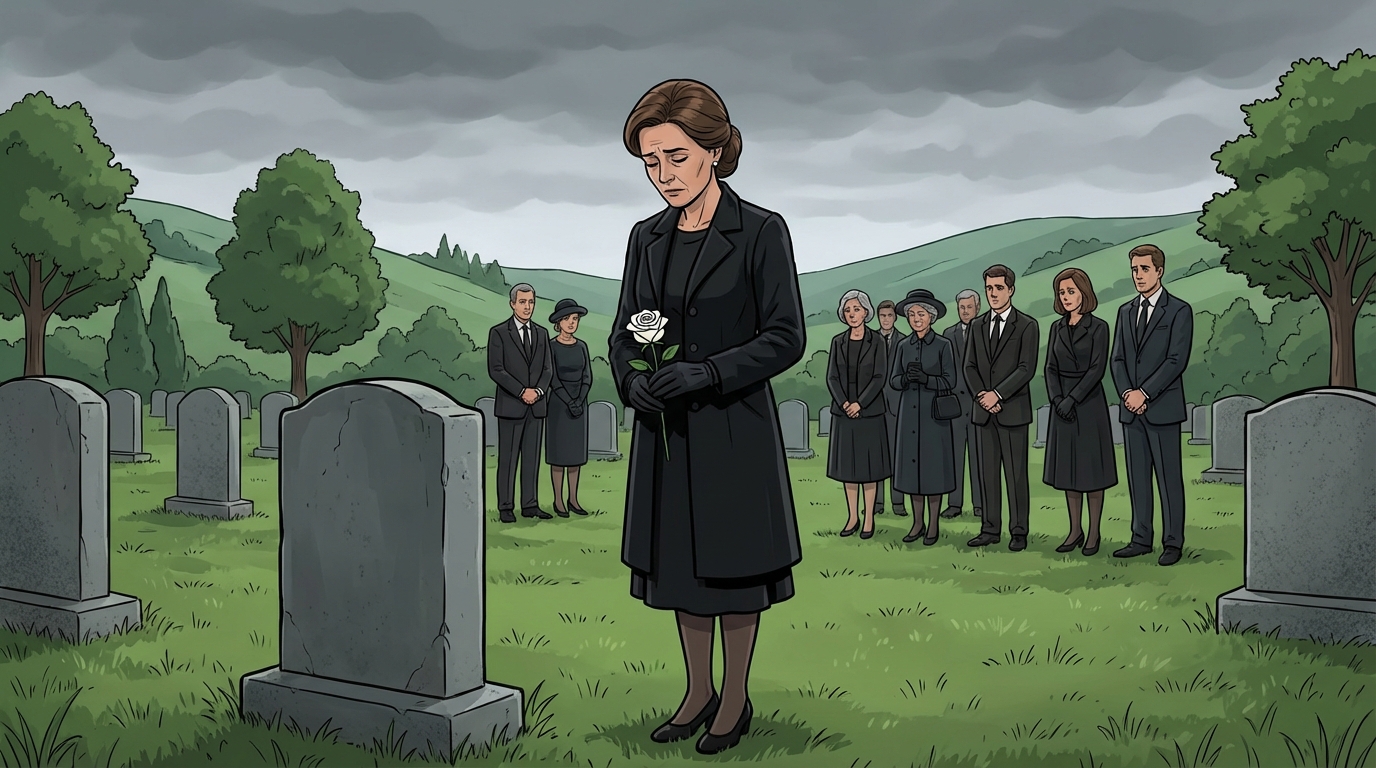
Preparing Yourself for the Day
The day of the funeral is exhausting in a way that defies description. You will be surrounded by people who love you and love him, and you will be expected to receive their grief while carrying your own.
- You do not have to speak. If you want to deliver a eulogy, write every word and bring a printed copy. Have a backup person who can finish reading if your voice gives out. But speaking is a gift, not an obligation.
- Wear something comfortable. Something that feels like armor. You will be hugged for hours. Wear comfortable shoes.
- Eat something before you go. Even a few bites of toast. Your body is running on fumes.
- Plan a signal with your point person. If the receiving line becomes too much, a hand on their arm means they step in — bring water, redirect people, or escort you to a quiet room.
When people say things meant to comfort you — “He's in a better place,” “At least he's not suffering,” “You're so strong” — you do not need to respond with anything more than “Thank you for being here.” You do not need to comfort the people who are trying to comfort you.
The Crash Is Real
When the last guest has left, the adrenaline that carried you through the planning and the service evaporates. What is left is raw, unprotected pain.
If you can, do not be alone tonight. Have someone stay. Not to talk, not to fix anything, just to be a warm, breathing presence in the house.
And know this: you have just done one of the hardest things you will ever do. The funeral is behind you. You survived it. That is not a small thing.
Keep His Memory Alive With a Personalized Memorial Song
Many widows find comfort in creating a lasting tribute. A personalized memorial song captures who he was and how much he meant to you—a beautiful keepsake you can return to whenever you need to feel close.
Create a Memorial SongDays Four and Five — The World Moves On
The phone calls slow. The visitors thin out. The casseroles stop arriving. And you are left standing in the wreckage.

When the Scaffolding Is Removed
By the fourth or fifth day, the world resumes its normal speed. People go back to work. Children go back to school. The mail carrier delivers bills addressed to a man who is no longer alive.
The flurry of activity that surrounded the funeral gave you something to do, somewhere to direct your energy. Now that it is over, the absence is no longer just emotional. It is structural.
This is not a setback. This is the beginning of the real work of grieving.
What Actually Needs to Happen This Week
- Notify Social Security. Call 1-800-772-1213 (cannot be done online). Ask about the lump-sum death benefit ($255) and survivor benefits you may be entitled to.
- Notify his employer. Ask about death benefits, life insurance, pension, final paycheck, and COBRA health insurance coverage (you have 60 days to elect).
- Secure his cell phone. Do not cancel the plan. It may contain passwords, contacts, photos, and messages you will want to keep.
- Locate the will. In some states, the will must be filed with probate court within as few as 10 days.
Before signing a waiver or assuming the will controls everything, open the surviving-spouse guide for your state. It maps the intestate share, elective-share deadline, probate shortcut, and official sources that apply where you live.
If bills arrive in his name only — credit cards, personal loans — do not pay them out of your own funds. In most states, you are not personally responsible for debts solely in his name. These are the responsibility of his estate. Consult an attorney before paying any debts that are not jointly held.
- Changing the name on the house deed, car title, utility bills
- Filing his final tax return
- Closing his email, social media, subscriptions
- Dealing with his belongings — clothes, tools, books
A Word About Financial Fear
Financial fear is one of the most common anxieties widows experience in the first days. One widow described it this way: “Within 10 minutes of hearing that Mark died, I was thinking, ‘Did we have enough life insurance? What will I do about medical insurance?’”
You are probably not in immediate financial danger. Joint bank accounts remain accessible. Joint credit cards remain usable. Your mortgage company will not shut off your services this week. You have time.
Make no major financial decisions for at least six months, and ideally a full year. Do not sell the house. Do not cash out retirement accounts. Do not lend money to family members. Do not sign anything you do not fully understand.
The Emotional Landscape
What no one tells you. Whatever you are feeling is allowed.
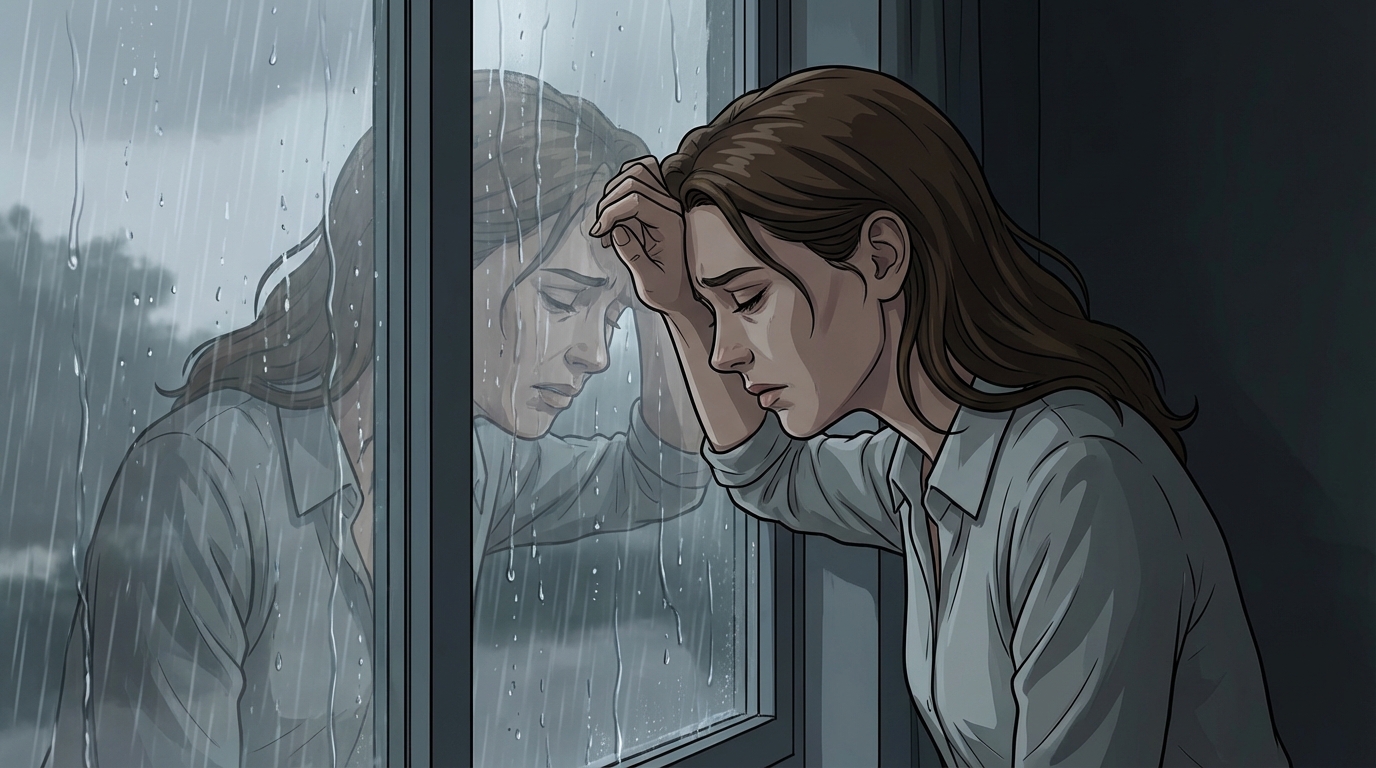
Things You May Feel That You Think You Should Not
By the fourth or fifth day, the initial shock may begin to thin, and what lies beneath it can be terrifying. The emotions are not the neat, orderly “stages” that popular culture taught you to expect. They are wild, contradictory, and deeply confusing.
You may feel rage. Not sadness — rage. A white-hot fury at the unfairness of it all. Anger is love with nowhere to go. It is the heart's protest against an unbearable reality.
You may feel relief. Especially if he suffered. And then you may feel a crushing guilt for feeling relieved. It does not mean you wanted him to die. It means you did not want him to suffer. Those are not the same thing.
You may feel nothing. A flat, gray emptiness. This numbness is not coldness. It is your psyche's emergency shutdown. The feelings will come when your system decides you are ready.
You may feel guilty. Guilt replays the past on an endless loop, searching for the moment you could have changed the outcome. But here is the truth: you did the best you could with what you knew at the time.
You may feel moments of unexpected normalcy. You may catch yourself laughing and feel horrified. These moments are not betrayals. They are your mind taking a breath. Grief researchers call this “restoration-oriented coping” — the brain giving itself a break so it can regroup. The oscillation between pain and normalcy is a sign you are grieving exactly right.
Sleeping (or Not Sleeping)
Sleep will likely become your most elusive resource. The bed you shared is now a landscape of absence. During the day, there are distractions. At night, there is only you and the dark.
- Change your sleep environment. Sleep on the couch, in a recliner. Or keep everything exactly as it was. There is only what works for you tonight.
- Create a bedtime ritual. A cup of tea. A warm shower. The ritual signals your body it is time to rest.
- Use sound. A fan, soft music, a podcast. Anything that fills the silence.
- Avoid sleep aids if you can. They can interfere with the brain's natural processing of grief. If insomnia persists, talk to your doctor.
- Be gentle with yourself. If you sleep two hours, that is two hours. Rest, even without sleep, has value.
Days Six and Seven — The World Expects You to Be Fine
You are not fine. And that is okay.

You Do Not Have to Be Strong
By the end of the first week, you may feel a subtle but unmistakable pressure. It comes in well-meaning phrases: “You're so strong.” “He would want you to be happy.” “Stay strong for the kids.”
These phrases are not malicious. But they can feel like a hand pressing down on your chest, forcing you to perform a version of grief that is palatable to others.
You do not have to be strong. You do not have to be brave. You do not have to be an inspiration. You have to survive. That is the only requirement, and it is more than enough.
The People Who Stay and the People Who Disappear
The people who disappear are not cruel. They are afraid. Being near someone in deep pain reminds them of their own vulnerability. Their absence is not a judgment of your grief. It is a reflection of their own fear. It still hurts.
The people who say the wrong thing are grasping for words in a situation where no words are adequate. “Thank you” is a complete sentence. So is silence.
The people who surprise you — the coworker who leaves a handwritten note, the neighbor who quietly mows your lawn, the friend who texts every day for a month not expecting a reply — these people are gifts. Remember them. They are the ones who will still be checking on you in six months.
Their Grief Looks Different From Yours
If you have children, their grief is unfolding alongside yours, and it will look different. A teenager who retreats may seem cold. A young child who asks to go play may seem not to understand. An adult child who takes charge may seem to be avoiding grief entirely. None of these responses are wrong.
- Honesty. Tell them the truth in age-appropriate language. Avoid euphemisms like “went to sleep” with very young children.
- Permission to grieve. Let them see you cry. If they cry, hold them. If they are angry, let them be angry.
- Reassurance. “You are safe. I am here. This is not your fault. We are going to be okay.”
- Routine. Maintain normal routines as much as possible. Routine is an anchor.
The End of the First Week
And the beginning of everything else.

If you have reached the end of the first week, you have survived something that many people cannot even imagine. You navigated the worst days of your life while your brain was operating at a fraction of its capacity, while your body was in crisis, while the world was asking you to make decisions and sign papers and plan a funeral and somehow keep breathing.
You did that. You are doing that. Right now, in this moment, you are surviving. That may not feel like an accomplishment. But it is extraordinary. And it is enough.
In the weeks and months ahead, there will be more tasks and more grief. The grief will not follow a straight line. It will come in waves: some days almost bearable, some days devastating.
The “firsts” are the hardest. The first time you go to the grocery store alone. The first time you cook dinner for one. The first time you reach for the phone to call him and remember. Each first is a small earthquake. But each one you survive makes the next slightly more bearable.
People will stop asking. Within a few weeks, most people will assume you are “getting better.” This is when finding your people — other widows, a grief support group, a therapist — becomes essential.
You will not “get over” this. You will get through it. There is a difference. What you are building now is a new life — one that carries the weight of this loss but is not defined by it.
988 Suicide & Crisis Lifeline: Call or text 988, available 24/7.
Crisis Text Line: Text HOME to 741741 to connect with a trained counselor, 24/7.
Wanting the pain to stop is not the same as wanting to die. But if the line between those two things begins to blur, please pick up the phone.
One Breath at a Time
You do not have to figure out the rest of your life today. You do not have to be brave. You do not have to be strong. You do not have to have a plan.
You just have to breathe. One breath. Then another. Then another.
The first seven days are behind you. You survived them. Not gracefully, not perfectly, not without pain — but you survived them. And that survival is the foundation upon which everything else will be built.
Your husband's love did not end when his life did. It lives in you — in your memories, in your children, in the way you carry yourself through this impossible time. And it will carry you forward, one breath at a time, into a future you cannot yet see but that is waiting for you nonetheless.
You are not alone. You were never alone. And you will not be alone in this.
Create a Personalized Memorial Song
A beautiful, one-of-a-kind song that captures who he was and how much he meant to you. Share your memories, and we'll turn them into a heartfelt musical tribute you can keep forever.
Start Your Memorial SongFrequently Asked Questions
- What is widow's brain or grief fog?
- Widow's brain is a common neurological response to catastrophic loss. Your prefrontal cortex — responsible for rational thinking and decision-making — is effectively taken offline by a surge of stress hormones. This causes forgetfulness, inability to focus, and difficulty processing information. It is not a sign of losing your mind; it is your brain protecting you from pain too large to process all at once.
- How many death certificates should I order?
- Order at least 10 to 20 certified copies. You will need them for life insurance claims, bank accounts, property transfers, Social Security benefits, credit cards, vehicle registrations, and more. The cost is usually $10 to $25 per copy, and ordering them through the funeral home at the time of death is far easier than requesting them later.
- What should I do first after my husband dies?
- In the first hours, focus only on the immediate: notify close family, designate a point person to handle calls and logistics, and take care of your basic physical needs (water, food, rest). Do not drive yourself. Everything else — the funeral home, the paperwork, the financial decisions — can wait hours or days.
- Am I responsible for my husband's debts after he dies?
- In most states, you are not personally responsible for debts that were solely in your husband's name. These debts are the responsibility of his estate. Do not pay them out of your own funds without consulting an attorney first, as doing so can create legal complications.
- When should I return to work after my husband's death?
- Most employers offer only 3 to 5 days of bereavement leave. You may be able to extend your absence using accrued sick leave or vacation time, request a modified return (part-time or remote), or explore short-term disability if your grief significantly impairs your ability to function. Talk to your HR department about your options.
If you are choosing readings and music right now, this Custom Memorial Songs Guide can help you decide whether a personalized tribute fits your service.
Practical Next Steps
When You Need the Practical Side
If you need help with widow benefits, inheritance rules, probate deadlines, or the funeral decisions families get pushed into quickly, start with the practical guides below.
Related Resources
Honoring a loved one? Create a personalized memorial song at RememberMe.fm