
Dear Family,
If you are reading this, someone you love has died. The world has just shifted beneath your feet, and nothing feels real. You may be numb. You may be drowning in tears. You may be both in the same breath.
Right now, there are a hundred things that feel urgent. Most of them are not. What is urgent is this: you are hurting, and you deserve to know that what you are feeling is exactly right — whatever it is.
This guide exists because grief and logistics should not have to compete for the same hour. It lays out every practical step — legal, financial, personal — in the order they actually need to happen. Not everything at once. Not today. Just one step, then the next.
Take only what you need from these pages. Come back when you are ready for more. There is no deadline on grief, and there is no wrong way to walk through this.
Grief and logistics should not have to compete for the same hour.
This guide puts everything in the order it actually needs to happen — so you can focus on what matters most right now.
When someone dies, the people closest to them face an overwhelming collision of grief and logistics. Most families have never done any of this before. This guide organizes everything into a clear timeline.
The First Few Hours
What to do right now — whether the death happened at home, in a hospital, or somewhere else.
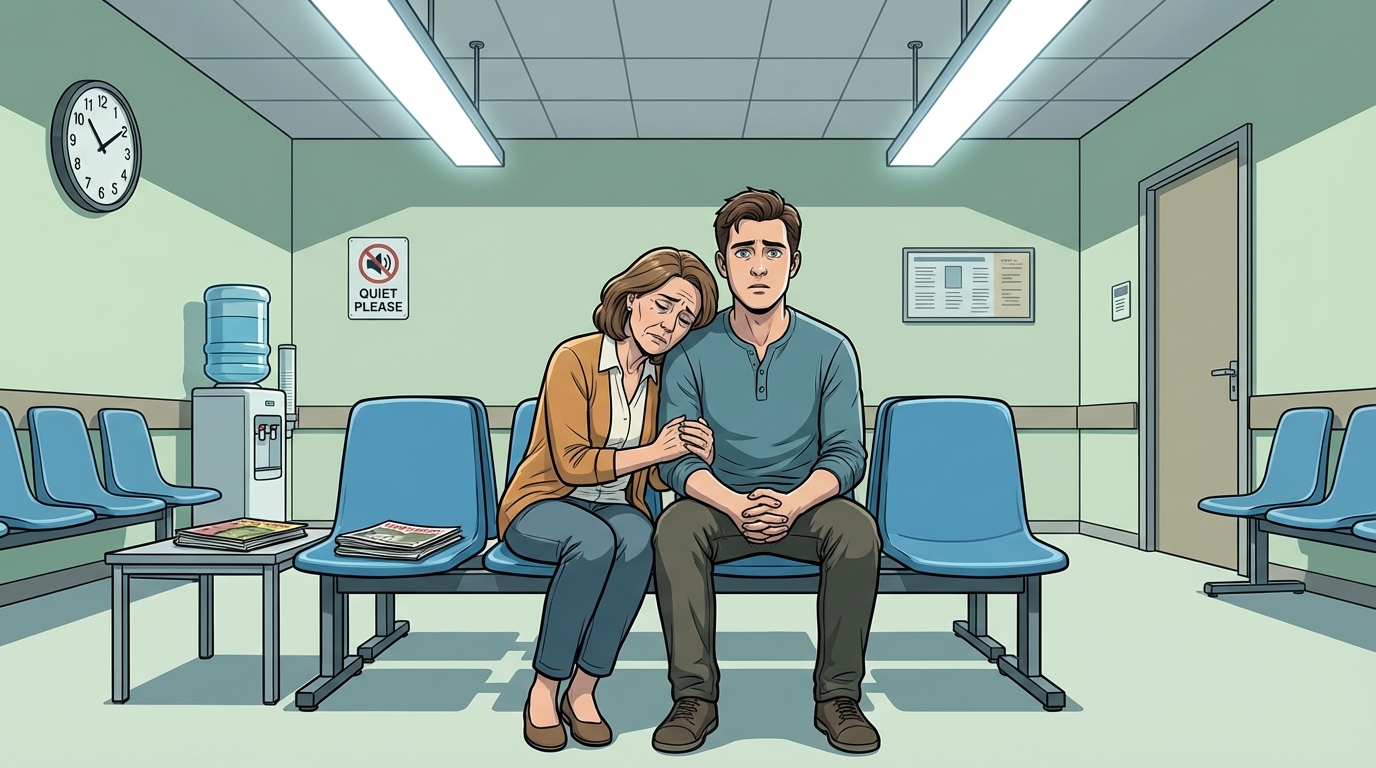
If the Death Occurs at Home
Under Hospice Care
Call the hospice nurse first, not 911. The nurse will pronounce the death and handle notifications. Calling 911 may trigger an unnecessary police response and ER transport.
Not under hospice care (unexpected): Call 911 immediately. Do not move the body until authorities give clearance. The medical examiner or coroner will determine whether an autopsy is needed.
Terminal illness without hospice: Call the deceased's primary care physician. They can sign the death certificate if they were the treating doctor.
If the Death Occurs at a Hospital or Care Facility
Medical staff handle the pronouncement and start paperwork. They will ask you to select a funeral home. The facility has a holding area — there is no rush to decide in the first hour. Take a breath.
If the Death Occurs Away from Home
Local authorities and medical examiner will take jurisdiction. Contact a funeral home in your home area — they coordinate long-distance transportation ($1,000–$5,000 for domestic transfers).
The First 24 to 48 Hours
Funeral home, family notifications, documents, and securing the home.
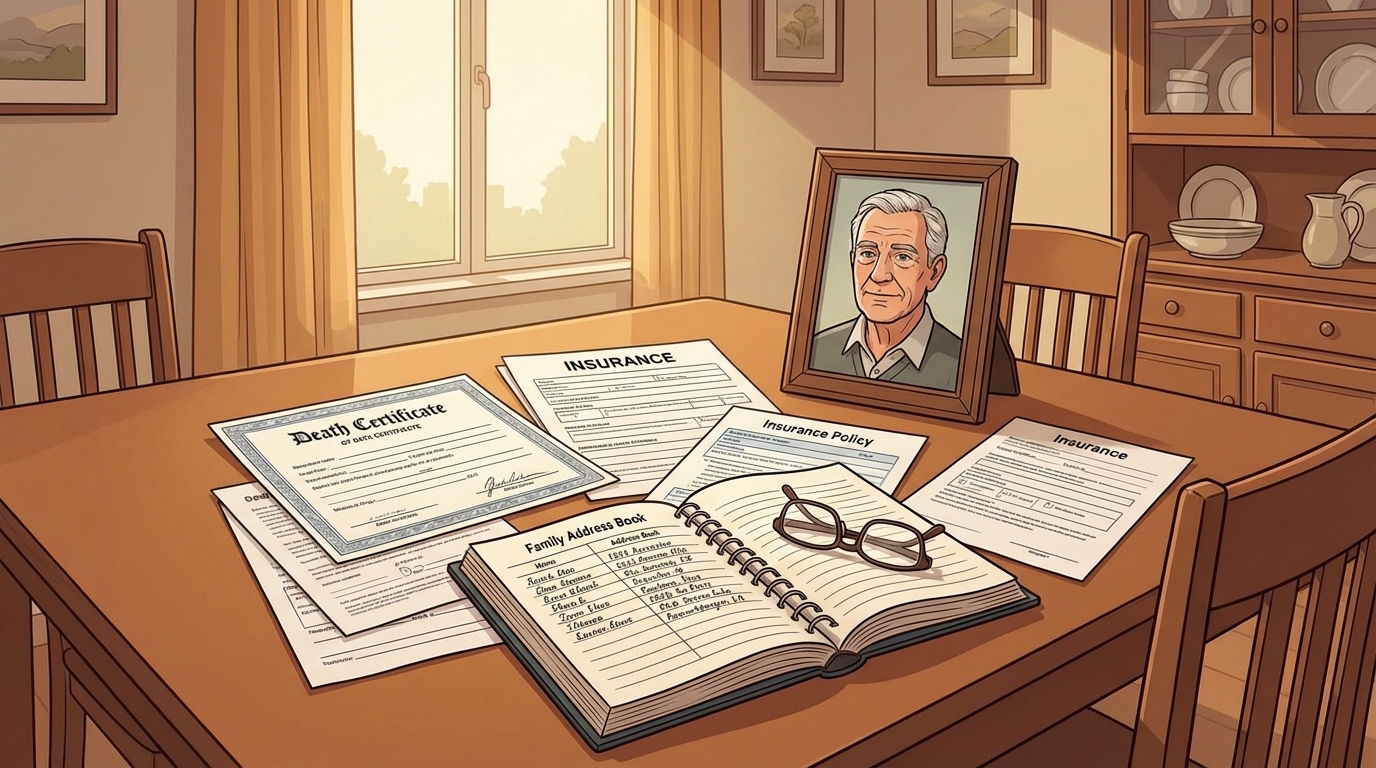
Contact a Funeral Home
Check for prepaid plans
If the deceased had a prepaid funeral plan, contact that specific funeral home first.
Call 2-3 funeral homes for prices
Request the General Price List over the phone. The FTC requires them to provide this.
Don't feel pressured to commit
Most funeral homes will hold the body while you compare options and make decisions.
Use the RememberMe.fm funeral services directory to find providers near you.
Notify Immediate Family
Designate a point person to coordinate notifications. Use a phone tree approach — the point person calls 3–4 key family members, each of whom calls their branch.
Locate Critical Documents
Documents to Find Immediately
- Highest priority
- Will or trust, life insurance policies, Social Security number, government ID
- Important
- Birth/marriage certificates, DD-214 (veterans), recent tax returns, bank/investment statements, property deeds, vehicle titles
- Don't forget
- Check their email inbox for recurring bills and account statements
Secure the Home and Property
If the deceased lived alone:
- Lock the residence and secure valuables. Obituaries broadcast when homes will be empty.
- Arrange for mail hold or forwarding
- Adjust HVAC to prevent damage
- Arrange immediate care for pets
- Do not start cleaning out the home until after probate guidance
The First Week
Funeral arrangements, government notifications, and employer benefits.

Make Funeral Arrangements
Work with the funeral director on burial vs. cremation, service type, date/time/location, and the obituary. For a complete walkthrough, see our How to Plan a Funeral guide.
Notify Government Agencies
Notify Employer and Benefits
- Request final paycheck and accrued vacation/sick pay
- Inquire about employer-sponsored life insurance
- File for pension or retirement benefits for survivors
- Request COBRA continuation of health insurance (60-day election window)
- Ask about Employee Assistance Programs for grief counseling
The First Month
Financial institutions, insurance claims, and the probate process.

Contact Financial Institutions
The deceased's debts belong to the estate, not to surviving family members (with limited exceptions for community property states and joint accounts). Do not pay any debts before consulting an attorney or financial advisor.
Bring a certified death certificate to each institution:
- Banks: Freeze individual accounts. Joint accounts with right of survivorship pass to the survivor.
- Investments/brokerage: Request beneficiary claim forms. TOD accounts bypass probate.
- Mortgage: Notify; a surviving spouse can usually continue payments without refinancing (Garn-St. Germain Act).
- Credit cards: Notify and close. The estate — not you — is responsible for balances.
File Insurance Claims
- Life insurance: File with each insurer using a death certificate copy. Benefits are generally tax-free and arrive within 30–60 days.
- Health insurance: Cancel or convert dependent coverage. Submit outstanding claims.
- Auto/home insurance: Notify carriers. Policies may need retitling.
Begin Probate (If Required)
When Is Probate Needed?
It depends on estate size and how assets are titled. Many states have simplified probate for estates under $50,000–$150,000. Assets in joint tenancy, beneficiary-designated accounts, and living trusts generally pass outside probate. Attorney fees typically run 1–5% of estate value.
The First Three Months
Tax obligations, title transfers, and updating your own plans.
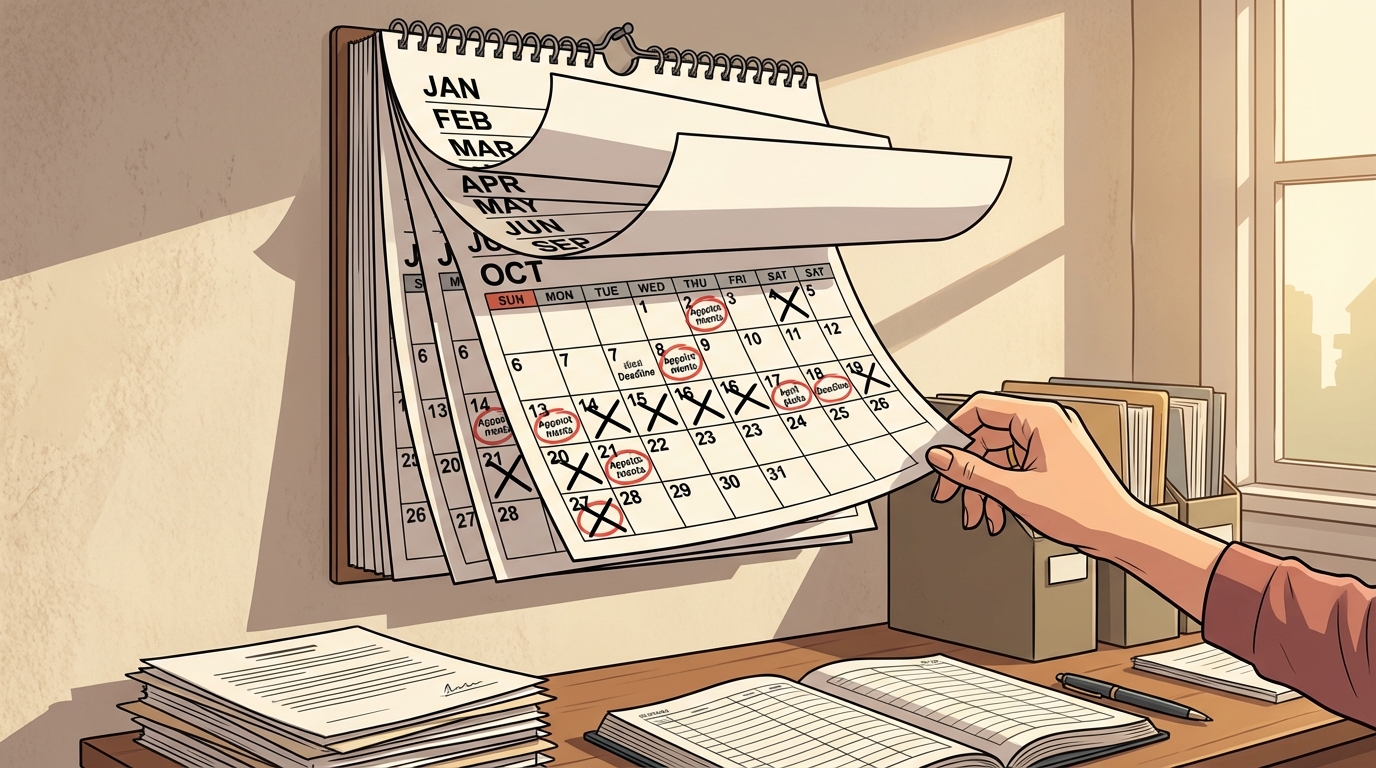
Tax Obligations
- Final Form 1040: Income through date of death. Due April 15 of the following year. Mark "DECEASED" at top.
- Estate Form 1041: Required if estate earns over $600 after the date of death.
- Estate Form 706: Only for estates exceeding $13.61 million (2024 federal exemption). Some states have lower thresholds.
Transfer Titles and Update Records
Real property, vehicles, investment accounts, and digital assets all need to be transferred or closed. Check each platform's deceased-user policy for digital accounts (Apple, Google, Facebook all have them).
Review Your Own Estate Plan
Don't Forget This Step
Update your own beneficiary designations, will, powers of attorney, and healthcare directives. If you named the deceased in any of these roles, designate a replacement now.
Taking Care of Yourself
The administrative demands of the first weeks can distract from grief. The full emotional weight often hits later.
Where to Find Support
- Grief counseling
- Ask your doctor for a referral, or contact your community mental health center.
- Support groups
- GriefShare (griefshare.org), Compassionate Friends (bereaved parents), TAPS (military families).
- Hospice bereavement
- If the deceased was under hospice care, the organization must offer bereavement support for up to 13 months — at no cost.
- Crisis support
- Call or text 988 (Suicide and Crisis Lifeline, 24/7).
Complete Checklist
Everything above, distilled into a printable checklist you can work through at your own pace.
- Call hospice nurse, 911, or physician
- Contact a funeral home
- Notify immediate family
- Locate will, life insurance, and critical documents
- Secure the home and arrange for pets
- Begin funeral/memorial arrangements
- Notify Social Security — 1-800-772-1213
- Notify Veterans Affairs if applicable — 1-800-827-1000
- Notify employer and benefits administrators
- Publish obituary
- Hold funeral or memorial service
- Notify banks, investment firms, credit card companies
- File life insurance claims
- Initiate probate if required
- Cancel or transfer insurance, subscriptions, memberships
- File final income tax return
- Transfer property titles and vehicle registrations
- Update your own estate plan
- Seek grief support if needed
Losing someone is never easy, but knowing what steps to take — and in what order — reduces the overwhelming stress. Use the RememberMe.fm funeral services directory to find compassionate professionals in your area.
Frequently Asked Questions
- What should I do first when someone dies?
- If the person was under hospice care, call the hospice nurse first — not 911. If the death was unexpected, call 911 immediately. Then contact a funeral home. They will transport the body, handle the death certificate, and guide you through the next steps.
- Am I responsible for a deceased family member's debts?
- In most cases, the deceased's debts belong to the estate, not to surviving family members. There are limited exceptions for community property states and joint accounts. Do not pay any debts before consulting an attorney or financial advisor.
- How many death certificates should I order?
- Order at least 10 to 15 certified copies. You will need them for life insurance claims, bank accounts, property transfers, Social Security, credit cards, vehicle registrations, and more. Ordering them through the funeral home at the time of death is easier and less expensive than requesting them later.
- When is probate required after someone dies?
- It depends on the estate size and how assets are titled. Many states have simplified probate for estates under $50,000 to $150,000. Assets in joint tenancy, beneficiary-designated accounts, and living trusts generally pass outside probate. Attorney fees typically run 1 to 5 percent of the estate value.
- What tax returns need to be filed after someone dies?
- A final Form 1040 must be filed for income through the date of death, due April 15 of the following year. If the estate earns over $600 after the date of death, Form 1041 is required. Estate Form 706 is only needed for estates exceeding the federal exemption threshold ($13.61 million in 2024).
If you know someone will be speaking at the service, start with our how to write a eulogy guide so they have a structure before they try to draft anything under pressure.
If you need help finding the right words for the service, our free eulogy writer can turn memories and details into a strong first draft you can personalize.
As you plan a service and begin carrying their memory forward, a custom memorial song can preserve their story in a form you can return to long after the first difficult months.
Related Resources
Honoring a loved one? Create a personalized memorial song at RememberMe.fm