Grief Guide
Best online grief support communities in 2026
Compare online grief support communities by loss and format. Find the best fit for peer connection, with clear guidance on privacy and joining gently.
Best overall for general bereavement: Grief in Common. Best for bereaved parents and siblings: The Compassionate Friends. Best for widowed adults: Widowed Village. This 2026 guide compares online grief support communities by the loss they serve, how you participate, and the boundaries to check before sharing.
- Grief in Common is the starting choice for general online grief support communities and peer connection.
- The Compassionate Friends supports bereaved parents, siblings, and grandparents after a child dies.
- Widowed Village centers partner loss; Alliance of Hope centers suicide bereavement.
- GriefShare fits people seeking Christian grief support and a structured group format.
- Rememberme creates custom memorial songs, not peer support communities or grief counseling.
Why this matters
You deserve somewhere you can say their name without explaining why you still miss them. A community that understands your particular loss gives you a more relevant starting point than a large group chosen only because it appears first in search.
Peer support and private reflection also serve different needs. If you want something quieter alongside a group, these grief journals for processing loss offer another way to put difficult feelings into words.
The best community is one where the subject fits your loss and the participation rules fit your boundaries. You do not have to post immediately, describe the death, or offer encouragement when you have none to give.
What makes the best online grief support communities
Use these criteria when choosing a community in 2026. A recognizable name alone does not tell you whether a particular space will feel right.
- Loss-specific fit: Look for people who understand your relationship, circumstances, or stage of life without treating every experience as identical.
- Participation format: Decide whether written discussion, scheduled meetings, or a structured program feels manageable.
- Moderation and conduct: Read the rules on unsolicited advice, harassment, graphic details, and reporting concerns.
- Privacy boundaries: Check who can read posts, what appears on your profile, and whether meetings prohibit recordings.
- Belief and cultural fit: Choose language and values that respect your faith, identity, family, and relationship.
- Scope of support: Distinguish peer conversation from psychotherapy, medical advice, and immediate crisis care.
Online grief support communities at a glance
These are different starting points, not interchangeable services. In 2026, check each organization's own information for current participation requirements and group arrangements before sharing personal details.
| Community | Best for | Standout focus | Key limitation |
|---|---|---|---|
| Grief in Common | General bereavement and peer connection | Connecting people through shared experiences of loss | A broad community requires you to find the conversations that fit |
| The Compassionate Friends | Parents, siblings, and grandparents after a child dies | Family grief following the death of a child | Not a general-purpose community for every bereavement |
| Widowed Village | Adults grieving a spouse or partner | Peer connection centered on widowhood | Not designed around other kinds of loss |
| Alliance of Hope | People bereaved by suicide | Suicide-loss discussion and support | Some discussions concern distressing circumstances |
| GriefShare | People seeking Christian group support | A structured, Christian grief-support program | Its religious framework will not suit everyone |
1. Grief in Common: best for general bereavement
Grief in Common connects people around shared experiences of loss. It is the broadest starting recommendation here when you want a grief-focused community but do not yet know which narrower group you need.
Best for: Adults seeking general bereavement connection rather than a community centered on one relationship or cause of death.
You do not need a polished account of what happened. Begin by looking for discussions that resemble the part of grief you are carrying today, whether that is loneliness, an anniversary, or the absence of ordinary conversation.
Grief in Common pros:
- A grief-specific setting keeps bereavement at the center of conversation.
- Its broader remit makes it a useful starting point across different losses.
- Shared experience offers a basis for connection without requiring identical circumstances.
Grief in Common cons:
- General bereavement conversations will not always match a specific loss.
- Peer responses are not individualized clinical guidance.
Before joining, read the participation and privacy information. Check whether the format you want involves written exchanges, scheduled interaction, or another arrangement rather than assuming every feature works the same way.
Verdict: Skip Grief in Common if you want only a narrowly defined loss group; otherwise, make it your first place to explore.
2. The Compassionate Friends: best after the death of a child
The Compassionate Friends supports bereaved parents, siblings, and grandparents following the death of a child. Its focus makes it more relevant than a general grief community when your family is living with that particular absence.
Best for: Parents, siblings, and grandparents seeking connection with other families after a child dies.
Check the organization's online support information for the group that matches your relationship. A bereaved sibling and a bereaved parent share a loss, but they do not necessarily need the same conversation.
The Compassionate Friends pros:
- The mission explicitly includes parents, siblings, and grandparents.
- Child-loss support is central rather than a small part of a broader discussion.
- Its family focus gives you a clear starting point for finding relevant peers.
The Compassionate Friends cons:
- Its remit does not cover every type of bereavement.
- Family connection does not eliminate differences in age, circumstances, or beliefs.
You are allowed to seek a group that recognizes your role. Siblings and grandparents do not have to make their own grief smaller to leave room for someone else's.
Verdict: Skip The Compassionate Friends for unrelated bereavement needs; choose it when its child-loss mission matches your family.
3. Widowed Village: best after the death of a partner
Widowed Village is an online community from Soaring Spirits International focused on widowhood. It is the clearest match here when losing a spouse or partner has changed both your emotional life and your everyday routines.
Best for: Widowed adults seeking peers who understand partner loss.
Partner grief can involve missing a person alongside facing decisions you expected to make together. A widowhood-focused setting keeps those experiences central rather than requiring you to explain why an ordinary evening feels so different.
Widowed Village pros:
- Partner loss is the community's central subject.
- A shared relationship context makes it easier to identify relevant discussions.
- Its focus provides an alternative to broad bereavement spaces.
Widowed Village cons:
- It is not the right specialist setting for every relationship loss.
- Widowed people still differ in family responsibilities, relationships, and personal values.
Read current membership rules before assuming a group matches your circumstances. Then look for conversations that respect your pace, including whether you want to discuss practical life, memories, or simply missing your person.
Verdict: Skip Widowed Village if partner loss is not your need; choose it as the first specialist community to explore after widowhood.
4. Alliance of Hope: best after a suicide loss
Alliance of Hope supports people bereaved by suicide and provides an online support forum. Its specific focus matters when you want to speak with people familiar with the questions, stigma, or difficult circumstances surrounding this kind of death.
Best for: People seeking a community specifically for suicide bereavement.
You do not owe other members details about how someone died. Start with the forum guidelines and choose discussions according to what you feel able to read that day.
Alliance of Hope pros:
- Suicide bereavement is the central focus.
- Its forum offers a written route into peer conversation.
- A specialist setting reduces the need to introduce the basic context of suicide loss.
Alliance of Hope cons:
- Some discussion topics are emotionally difficult to encounter.
- A support forum is not an emergency response service.
If you are in immediate danger in the United States, call 911. If you are experiencing suicidal thoughts or emotional distress, call or text 988 for the Suicide & Crisis Lifeline rather than waiting for a community reply.
Verdict: Hold off on reading distressing threads when you feel overwhelmed; choose Alliance of Hope for suicide-loss-specific peer support.
5. GriefShare: best for Christian group support
GriefShare is a Christian grief-support program with groups that include online meeting options. It differs from an open discussion forum because its program uses a structured approach to bereavement support.
Best for: People who want Christian teaching and an organized group format alongside conversation about grief.
Check an individual group's meeting information and expectations before committing. Ask how faith is discussed, what participation involves, and whether the meeting format suits your comfort level.
GriefShare pros:
- Its Christian foundation is explicit.
- A structured program gives meetings a defined direction.
- Online meeting options offer an alternative to an in-person group.
GriefShare cons:
- Christian teaching is not a neutral fit for every reader.
- Scheduled participation is less flexible than writing whenever you feel ready.
You can want spiritual support without wanting every conversation framed by someone else's beliefs. Choose GriefShare because its framework feels supportive to you, not because you feel obliged to accept it.
Verdict: Skip GriefShare if Christian teaching does not fit your needs; choose it when faith and structure are priorities.
How these recommendations are organized
This 2026 shortlist prioritizes loss-specific fit, participation format, and clear boundaries. The order begins with a broad community, then moves to distinct needs: child loss, partner loss, suicide bereavement, and Christian group support.
The ranking is not a claim that one organization produces better mental-health outcomes. Use the use-case labels to choose your starting point, then assess the actual group before sharing.
How to try a community without sharing too much
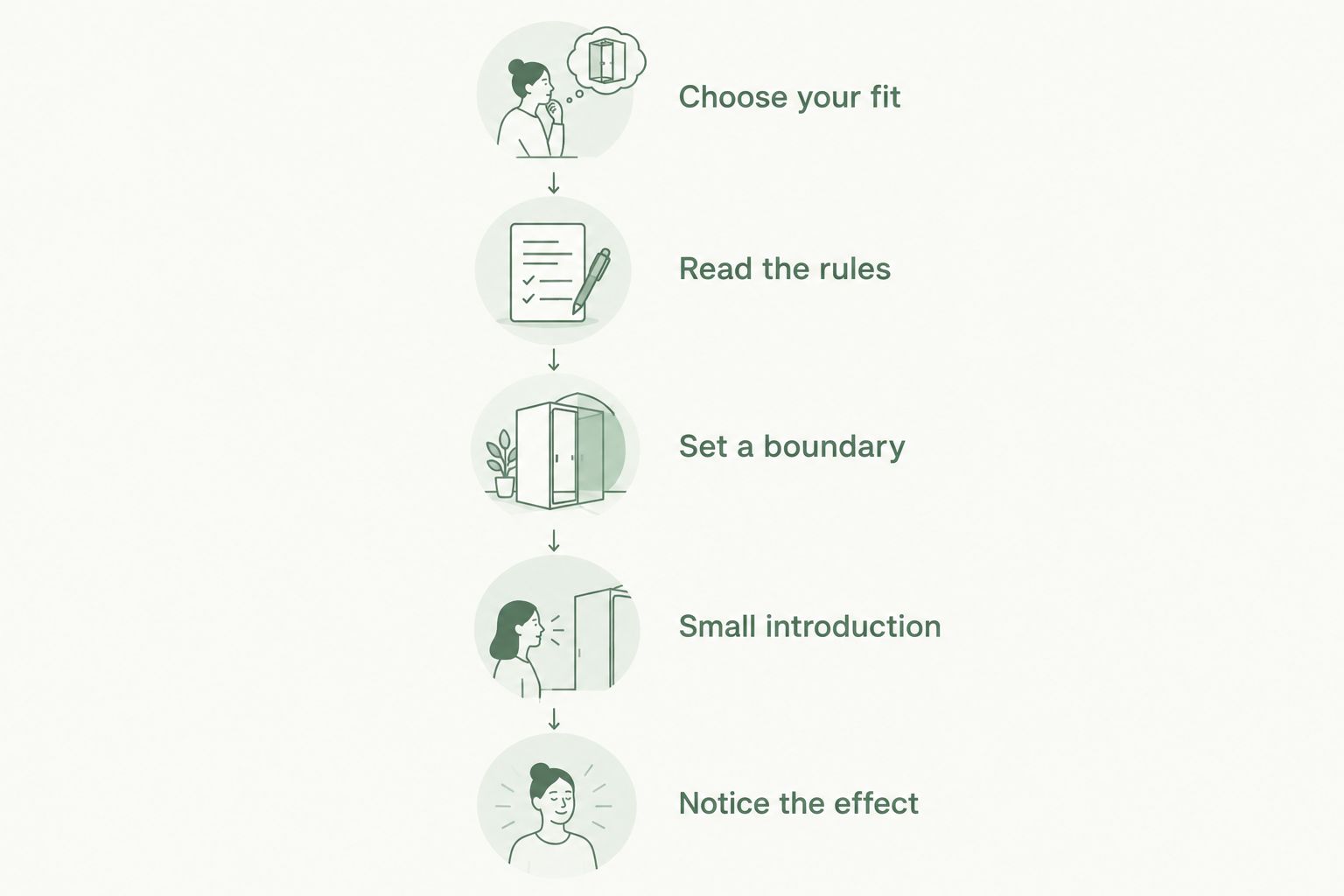
You can approach online grief support communities in small steps. For your first visit in 2026, set a boundary before opening a discussion rather than deciding under pressure.
- Choose your fit. Start with 1 community whose focus matches your loss. You can explore another later without treating the first choice as a commitment.
- Read the rules. Give yourself 10 minutes to check privacy, moderation, and participation expectations before reading personal stories.
- Set a boundary. Decide what you will keep private, including identifying details about children, relatives, or the death.
- Try a small introduction. If you want to post, 2 sentences are enough. Name the relationship you lost and the kind of support you want.
- Notice the effect. Afterward, ask whether you felt respected, pressured, understood, or more distressed. You are allowed to leave.
These are suggested limits for a first visit, not a timetable for grief. Reading quietly is a valid way to begin.
Be cautious if a stranger pressures you to move into private messages, send money, or disclose identifying information. A compassionate tone does not replace clear boundaries, and a private group does not guarantee that another member will keep your words private.
Which community should you choose?
Start with Grief in Common if you want general bereavement connection and have no narrower preference. Choose The Compassionate Friends for family grief after a child dies, Widowed Village for partner loss, Alliance of Hope for suicide bereavement, or GriefShare for Christian structure.
Keep remembrance separate from the question of finding peer support. Rememberme creates custom, professionally produced memorial songs from personal memories and stories; it is not a substitute for a grief community or counseling.
If music feels meaningful, the guide to a custom memorial song for a grief support group session explores that separate act of remembrance. Ask the facilitator before introducing any tribute into a shared session.
FAQ
What's the best online grief support community in 2026?
Grief in Common is the starting recommendation for general bereavement connection in this guide. A specialist community is a better fit when you specifically want child-loss, partner-loss, suicide-loss, or Christian support.
Which online community should I try after my spouse dies?
Widowed Village is the specialist starting choice here after the death of a spouse or partner. Read its current participation information and look for discussions that match your circumstances.
Is The Compassionate Friends only for bereaved parents?
No. The Compassionate Friends also supports bereaved siblings and grandparents following the death of a child. Check which online support option matches your relationship.
Where can I find online support after a suicide loss?
Alliance of Hope provides an online forum focused on suicide bereavement. It offers peer support, not immediate crisis care; in the United States, call or text 988 if you need crisis support.
Do I have to talk or post when I join a grief group?
Check the group's rules before joining because participation expectations differ. Ask whether you can read or listen first, and choose another group if its expectations feel uncomfortable.
Are online grief groups the same as grief therapy?
No. Peer support groups connect people through shared experience, while therapy involves care from a qualified professional. Check the facilitator's role rather than assuming a group is clinical care.
Are online grief support communities private?
Privacy depends on the community's settings and rules, and other members can still repeat what they read. Check profile visibility, post visibility, and recording policies before sharing identifying information.
Does Rememberme run an online grief support community?
Rememberme's stated service is creating custom memorial songs from customers' memories and stories. This guide recommends separate organizations for peer connection rather than presenting memorial songs as a support group.
One last thing
You do not have to describe the death to tell someone about the life. If an introduction feels impossible, begin with a small memory or say that you are not ready to share details.
Rememberme memorial songs serve a different purpose from conversation: honoring a loved one or pet through personal stories. Whether you choose a community, a private remembrance, or both, you can keep some memories entirely your own.
Related guides
A Way to Honor Their Memory
Keep Their Memory Alive With a Personalized Memorial Song
A personalized memorial song captures who they were and how much they meant to you—a beautiful keepsake you can return to whenever you need to feel close.
Create a Memorial Song