Grief Guide
Is a memorial song an appropriate gift for a coworker's death?
Is a memorial song appropriate for a coworker's death? Yes, with family permission. Learn how to offer a thoughtful tribute without pressure or intrusion.
Yes, a memorial song is an appropriate gift after a coworker's death when the family welcomes the idea, the memories are accurate, and you offer it privately without expecting a response. Ask before commissioning or sharing it, especially if you did not know the family well, and let their wishes take priority over the team's plans.
- Is a memorial song appropriate for a coworker's death? Yes, with family permission and a private, pressure-free offer.
- Rememberme creates custom memorial songs from personal memories and stories; choose this option only when the family welcomes it.
- Keep participation voluntary, use memories you witnessed, and request separate permission for public sharing.
- Choose a condolence card instead when the family's wishes are unclear.
Is a memorial song appropriate for a coworker's death?
A memorial song is appropriate when it honors the person without creating an obligation for the family. Your relationship with the coworker matters, but permission matters more. Being close at work does not automatically mean you know what their spouse, children, parents, or friends would want to hear.
If you are considering a custom memorial song for a coworker who passed away, start with the recipient rather than the recording. Decide who you hope to give it to, how you will ask, and whether they have already expressed preferences about tributes.
| Tribute option | Best for | What it offers | What to consider |
|---|---|---|---|
| Custom memorial song | A family that welcomes a personal musical tribute | A way to preserve specific memories in music | Requires consent and careful choices about stories and tone |
| Shared condolence card | Colleagues who do not know the family's preferences | A simple expression of sympathy without a listening request | Offers less space for detailed memories |
| Written memory collection | A family that wants stories from the workplace | Individual recollections the family can read privately | Needs editing to remove confidential or inappropriate details |
None of these gestures needs to represent everyone's grief. Choose the tribute the family welcomes, not the one that feels most impressive to the office.
Why this matters
A workplace relationship holds a particular part of someone's life. You might remember how your coworker welcomed new staff, made difficult days easier, or quietly helped someone finish a task. Those memories deserve care, even if you never knew the person outside work.
The boundary is equally important. A song from colleagues should speak honestly about the person you knew, not claim to explain their whole life or their family's loss. For a workplace tribute planned in 2026, keep the purpose simple: share a memory, offer kindness, and leave the recipient in control.
You do not need to promise comfort or healing. A respectful gift can simply say that this person mattered to you.
When a memorial song fits, and when to choose something simpler
When you knew the coworker well
A memorial song fits best when you have genuine memories and the family has welcomed the idea. Focus on qualities you witnessed, such as patience with a new colleague or generosity during a difficult project. A small, recognizable detail is more personal than a string of broad compliments.
Keep the perspective clear. Write as colleagues remembering a colleague, rather than speaking in the voice of a spouse or child. Workplace closeness does not give you permission to describe private relationships.
When the gift comes from a team
A team tribute fits best when participation is optional and someone coordinates the process. Invite memories without asking everyone to contribute money, disclose feelings, or explain why they prefer not to join.
Separate the team's wish to remember from the family's willingness to receive a song. Colleagues can share their memories privately with one another while waiting for permission to create a gift.
When you barely knew the coworker or their family
Choose a condolence card when you cannot confidently describe the person or confirm that a song would be welcome. A brief, sincere message is enough. You do not need a highly personal gift to show respect.
If other colleagues knew the person better, offer to help with a tribute they are already arranging. Avoid asking grieving relatives for intimate stories just to make an unsolicited gift possible.
Why the right choice varies
There is no workplace etiquette rule that makes a memorial song suitable for every family. Use these factors to decide whether to ask about one:
- Relationship: Consider whether you were close colleagues, occasional collaborators, or acquaintances. Keep the tribute within what you actually knew.
- Family wishes: Follow stated preferences about gifts, donations, privacy, and memorial events. A request for something else takes priority.
- Personal beliefs: Do not assume the recipient wants religious language, references to an afterlife, or a particular explanation of death.
- Workplace boundaries: Leave out confidential projects, clients, personnel matters, and stories that depend on office gossip.
- Sharing plans: Treat private listening, funeral use, workplace playback, and online posting as separate decisions requiring permission.
If one of these questions remains unresolved, pause. You can offer sympathy now without deciding on a lasting tribute immediately.
How to offer a memorial song respectfully in 2026
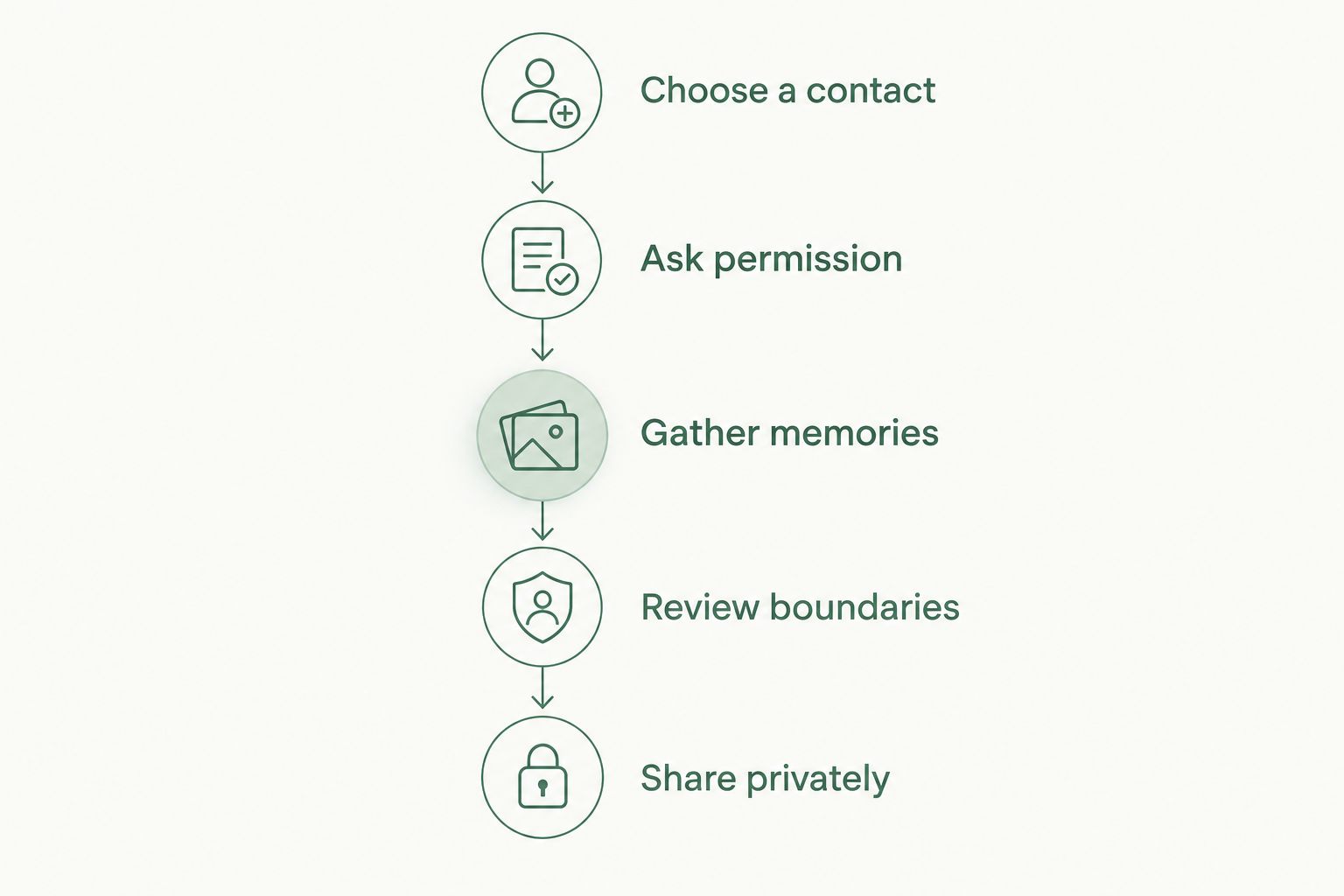
The safest sequence is to ask first, gather appropriate memories second, and discuss sharing only after the family has agreed to the gift. Keep requests brief so the process does not become another responsibility for them.
- Choose a contact. Ask the person already handling communication with the family whether it is appropriate to raise the idea. Avoid having several colleagues send the same request.
- Ask permission. Explain that colleagues would like to create a song from their memories. Make clear that declining is welcome and silence will not be treated as agreement.
- Gather memories. Invite short recollections from willing colleagues. Ask contributors to use experiences they witnessed and to leave out sensitive information.
- Review boundaries. Confirm names, pronunciation, personal details, and any subjects the family wants excluded. Do not ask them to manage the entire project.
- Share privately. Let the recipient choose when to listen. Request fresh permission before using the song at an event or posting it anywhere.
You can adapt this suggested message: Some of us would like to create a song using our memories of working with your loved one. Would that feel welcome? Please feel free to decline, and there is no need to reply now.
If the family declines, thank them for telling you and stop. Do not ask a different relative for a more favorable answer.
What should a coworker's memorial song include?
Use memories that recognize the person, not just their productivity. A tribute does not need to read like a performance review. Meeting targets or holding a senior title tells the family less than a thoughtful description of how their loved one treated people.
Consider gathering 3 short memories as a starting point, not a requirement. Ask what the coworker did, what that moment showed about them, and whether the detail would feel respectful outside the office. You can leave a memory out even if everyone at work remembers it fondly.
Include recognizable, respectful details
Useful material includes a welcoming gesture, a shared interest the person spoke about openly, or a way they helped others feel included. Choose ordinary moments as well as significant ones. There is no need to make the person sound flawless.
Use the name they preferred, checking with the family if you are unsure. For more help shaping the words, see how to choose lyrics for a custom memorial song.
Leave private matters out
Exclude the cause of death unless the family specifically wants it included. Also leave out medical details, workplace disputes, romantic speculation, salary information, and stories involving embarrassment or intoxication.
Do not write imagined final messages from the deceased. Speaking for someone who cannot approve the words is different from describing your own memory of them.
Keep humor gentle and optional
An affectionate joke needs context. If the humor depends on teasing, an embarrassing mistake, or a story the family has never heard, choose another memory.
Ask whether the detail shows warmth without needing a lengthy explanation. If you are uncertain, a straightforward tribute is the kinder choice.
Choosing a custom memorial song service
Rememberme is best for families who want a custom memorial song built from personal memories and stories. The service creates custom, professionally produced memorial songs to honor a deceased loved one or pet.
For a workplace gift, the useful feature is personalization: you can base the tribute on real recollections rather than a generic message. The limitation is that personal material still needs judgment and permission. Rememberme cannot decide whether a family wants the gift or which workplace stories belong in it.
Before choosing any service in 2026, check its current process for submitting memories, reviewing personal details, and receiving the finished work. Do not promise the family a particular delivery date or editing arrangement before confirming those details directly.
Is it too soon to give a memorial song after a coworker dies?
There is no fixed number of days that makes a memorial song appropriate. Ask whether the family wants to discuss a musical tribute, rather than choosing a date based on the office calendar. If they are not ready, send a simple condolence message and leave the song aside.
For a death that occurred in 2026, do not make a scheduled meeting, company event, or service date the reason to hurry the family. A gift does not become less sincere because you wait for permission.
Can we play the song at work or share it online?
Permission to receive a song is not permission to broadcast it. Ask separately about a workplace gathering, company social account, internal channel, or public tribute page. Explain the intended audience before asking for agreement.
For any digital tribute shared in 2026, confirm whether the family approves the song, accompanying photographs, names, and message. If permission covers only private listening, keep it private.
FAQ
Is a memorial song appropriate for a coworker's death if I never met their family?
A memorial song is appropriate only if the family welcomes it, even when you knew the coworker well. Ask through an established family contact, or choose a condolence card if you cannot confirm their wishes.
Should a memorial song for a coworker be a surprise?
Ask about the idea before making a memorial song a surprise. A personal tribute should not put the family in the position of listening, responding, or accepting publicly without warning.
Can our manager ask everyone to contribute to the song?
A manager should make every contribution optional, including money, memories, and attendance at a tribute. Do not ask colleagues to explain why they are not participating.
What if the coworker who died was also my close friend?
You can offer a more personal tribute when the coworker was also your close friend, but the family's permission still matters. Keep your own memories distinct from statements about what their relatives feel.
Can a workplace memorial song include religious lyrics?
Include religious lyrics only when the family welcomes that language. Do not infer someone's beliefs from the workplace, their name, or assumptions about their background.
Is Rememberme suitable for a song from coworkers?
Rememberme creates custom memorial songs from personal memories and stories, which fits a permission-based workplace tribute. Confirm the family's wishes and the service's current process before arranging the gift.
What should I do if the family never responds to my offer?
Treat no response as no permission to proceed with a gift for the family. Send no repeated requests, and do not publish a tribute on their behalf.
One last thing
Let your gift ask nothing in return. When you deliver an agreed-upon song, explain that the family does not need to listen immediately, send thanks, or share their reaction with the team.
That small boundary matters. Your intention is to remember someone with care, not to create a moment the family must manage for you.
Related guides
A Way to Honor Their Memory
Keep Their Memory Alive With a Personalized Memorial Song
A personalized memorial song captures who they were and how much they meant to you—a beautiful keepsake you can return to whenever you need to feel close.
Create a Memorial Song