Grief Guide
Is a custom memorial song a good gift for a grieving child?
Is a custom memorial song a good gift for a grieving child? Yes, when welcomed. Learn how to ask gently, choose memories, and keep listening optional.
Yes, a custom memorial song is a thoughtful gift for a grieving child when the child welcomes it, a parent or caregiver helps guide it, and listening remains optional. It is not a way to make grief disappear, and an unexpected public presentation puts pressure on the child to react. Offer it as something they can choose, not something they must receive gratefully.
- Is a custom memorial song a good gift for a grieving child? Yes, when welcomed, never imposed.
- Rememberme creates custom memorial songs from personal memories and stories; choose this keepsake for a child who wants music.
- Ask a caregiver first, use familiar memories, and let the child decide whether to listen.
- A memorial gift supports remembrance; it does not replace caring adults or professional grief support.
Is a custom memorial song a good gift for a grieving child?
A custom memorial song is a good fit when the child wants a musical reminder of someone they love. The strongest reason to choose one is personal relevance: the song can center on memories from the child's relationship, rather than a general message about loss.
Before arranging a song, consider how the child feels about hearing those memories aloud. Start with how to choose lyrics for a custom memorial song, and let the caregiver identify details that belong in the tribute.
| Gift approach | Best for | What it offers | What to consider |
|---|---|---|---|
| Custom memorial song | A child who wants memories expressed through music | A personal tribute built around shared stories | Listening is an emotional experience; avoid a surprise audience |
| Photo keepsake | A child who prefers pictures to music | A visual reminder they can put away or revisit | Choose photographs with the child's comfort and privacy in mind |
| Shared remembrance activity | A child who wants company rather than an object | Time together drawing, talking, or collecting memories | Keep participation optional and avoid turning it into a task |
These are choices, not a ranking of how much someone cares. If you are choosing a gift in 2026, put the child's preference ahead of what feels most impressive to adults.
Why this matters
A gift about someone who died is different from an ordinary present. It brings the relationship and the loss into the room, so the way you offer it deserves as much care as the gift itself.
Do not make the child responsible for reassuring the giver. They should not have to smile, finish the song, explain their feelings, or agree to share it with relatives.
The goal is to give the child another way to remember, with permission to say no. A quiet refusal does not make your care unwelcome. It tells you to offer that care differently.
When a custom memorial song is a good fit
Look for an invitation from the child, not a deadline on the family calendar. An invitation might be an expressed wish to hear stories, make a tribute, or choose music connected with the person or pet who died.
Ask about the particular idea. Enjoying music generally is not the same as wanting a song about a death, and a child who enjoys singing should not automatically be asked to perform a memorial tribute.
Rememberme custom memorial songs are best for families who want personal memories and stories set to music. Rememberme creates custom, professionally produced memorial songs honoring a deceased loved one or pet. That makes the service relevant to this kind of keepsake, but the decision still belongs with the family and child.
The limitation matters: a personally meaningful song is not automatically a welcome gift. Before commissioning any tribute, confirm that the family wants this form of remembrance rather than assuming personalization makes it suitable.
When waiting is the kinder choice
Wait if the child says no, asks not to hear music about the death, or does not want a memorial gift. Do not turn reluctance into a problem to solve. You can remain present without asking the child to take part in a tribute.
Also pause when you cannot speak with the caregiver, do not know the child's relationship with the deceased, or are unsure which beliefs the family wants reflected. A loving intention does not give you enough information to write someone else's memories.
A holiday or anniversary in 2026 does not create an obligation to present the song. If the family wants to wait, let the occasion pass without making the gift another responsibility.
Why the right choice varies
There is no single version of a memorial song that suits every child. Base the decision on these practical considerations:
- The child's wishes: Ask whether a song sounds welcome, and accept an uncertain answer without pushing for agreement.
- The relationship: Include memories the child recognizes, rather than assuming the adult family's experience matches theirs.
- The words: Keep descriptions clear, and check religious or spiritual language with the caregiver.
- The music: Choose around the child's stated preferences, not an adult's idea of what grief should sound like.
- The setting: Decide who will be present and make stopping or leaving easy.
- The sharing plan: Keep a private gift private unless the caregiver and child agree otherwise.
How do you give a memorial song gently?
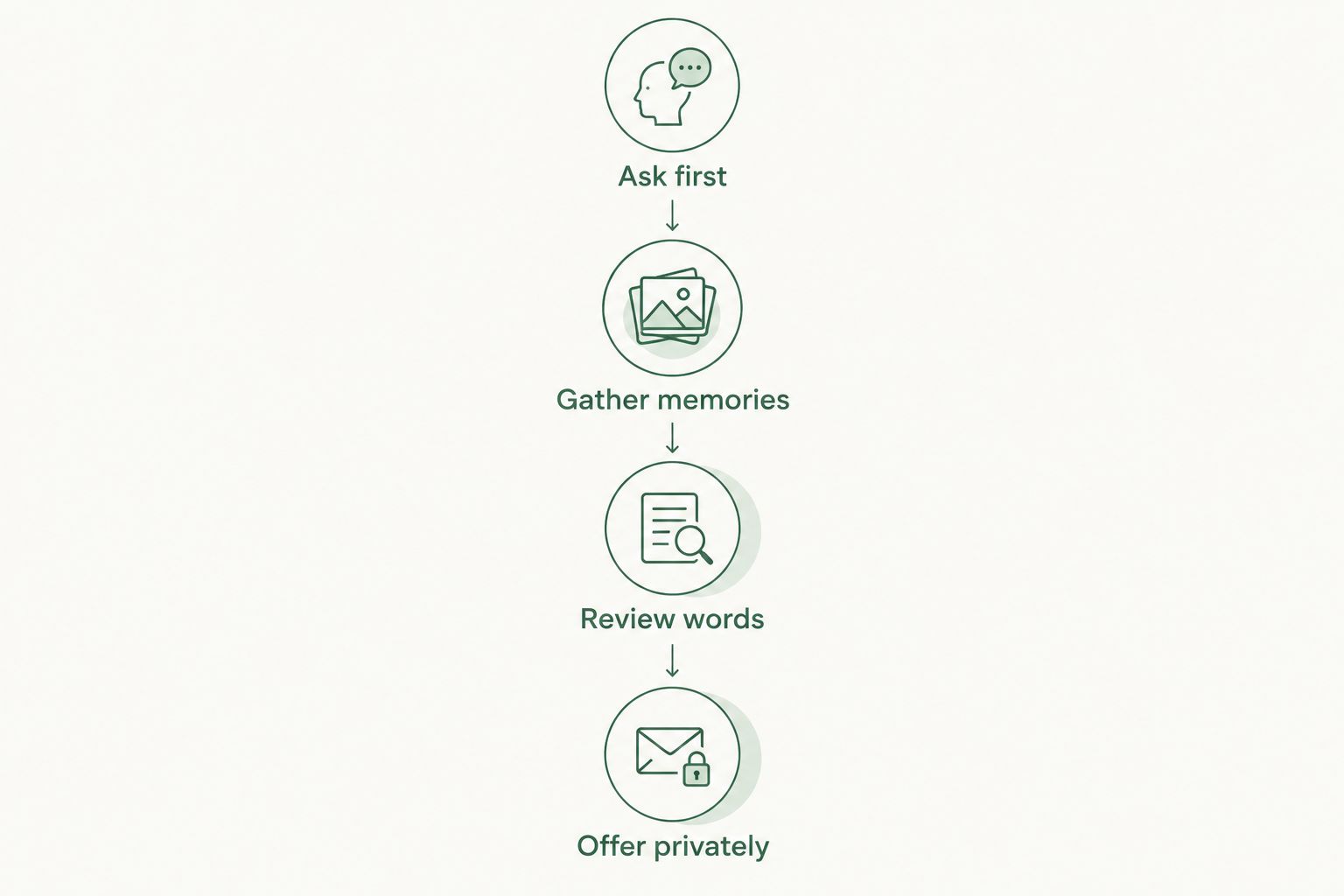
Use a simple sequence for a memorial gift in 2026: ask, gather, review, then offer. These are practical safeguards, not a timetable for grieving.
1. Ask first
Speak with the parent or primary caregiver before approaching the child. Explain the idea plainly and ask whether discussing it would be welcome.
Then offer the child 2 choices: hear more about the idea, or leave it for now. Neither answer should affect the attention or kindness you give them. Avoid presenting agreement as a way to make another family member happy.
2. Gather memories
Start with 1 memory, if the child wants to contribute. A familiar game, a favorite walk, or a small everyday routine is enough to begin a conversation; the child does not need to produce a complete life story.
Use prompts as invitations rather than interview questions. Ask what they would like remembered, and make clear that they can keep some memories to themselves.
3. Review words
Have the caregiver check the names, relationships, pronunciation notes, and sensitive details you plan to submit. Where the child wants involvement, let them identify words or memories they do not want included.
Ask a prospective provider how its process handles lyric review and changes before you commit. Do not assume every custom-song service offers the same process or permissions.
4. Offer privately
Choose a setting without an audience waiting for a reaction. Explain that the child can listen, stop, or save the song for another day.
Do not start recording the presentation. A memorial gift does not need a reaction video, and the child's private response is not something the giver is owed.
After the first offer, follow the child's lead. Do not repeatedly ask whether they have listened yet; that turns an optional keepsake into unfinished homework.
What should the lyrics include?
Choose recognizable memories over instructions about how the child should feel. A song can remember someone's kindness, a shared joke, or a familiar activity without telling the child to be brave or stop being sad.
For a song you are planning in 2026, write down the child's actual relationship words before drafting anything else. Use the name they used for the person, rather than replacing it with a formal title that feels unfamiliar.
Keep these boundaries in the brief:
- Include only personal details the family agrees to share.
- Leave out descriptions of the death unless the caregiver has specifically considered their inclusion.
- Do not tell the child that they must stay strong for surviving adults.
- Do not invent messages or promises from the person who died.
- Check spiritual language instead of assuming the family shares your beliefs.
Avoid presenting imagined words as something the deceased actually said. If you include a real remembered phrase, confirm its wording with the family and make its origin clear.
What kind of music should you choose?
Start by asking what the child likes to hear. A memorial song does not have to sound solemn to be respectful, and you do not need to choose a style merely because adults associate it with funerals.
Use how to choose a music genre for a custom memorial song to organize the conversation. Separate the child's listening preferences from music chosen for a public service; those are different decisions.
Before submitting a brief, ask 3 questions: Is this music welcome? Are these words comfortable? Who should hear it? If you cannot answer those questions with the family's guidance, pause the order rather than filling the gaps yourself.
Should a memorial song for a child be a surprise?
Keep the song optional, not the subject a surprise. Discuss the idea with the caregiver and child before arranging a presentation, especially if other people will be present.
You can still make the gesture thoughtful without concealing what it is. Let the child know that a tribute is being considered and ask whether they want involvement in choosing the memories or music.
Can a memorial song honor a pet who died?
A custom memorial song can honor a deceased pet, as well as a person. Take the child's relationship with the animal seriously, and ask which routines or stories they want remembered.
Do not frame the gift as preparation for getting another pet. Keep the tribute focused on the animal who died, without asking it to resolve the child's sadness.
What if the child cries or wants to stop?
Stop when the child asks, without requiring an explanation. Stay available, offer quiet company, and let the caregiver guide what happens next.
Tears are not a review of the gift, and silence is not proof that it failed. Do not ask the child to keep listening for the giver's sake or interpret their reaction publicly.
FAQ
Is a custom memorial song a good gift for a grieving child?
Yes, when the child welcomes the idea, a caregiver helps guide it, and listening stays optional. Choose another gesture if the child does not want a musical tribute.
Should I ask the parent before ordering a memorial song for a child?
Yes, ask the parent or primary caregiver before ordering. They can help you decide whether to discuss the idea with the child and which memories or beliefs need particular care.
What if a grieving child does not want to hear the song?
Respect the child's decision and do not play it anyway. Let the caregiver decide whether to keep it available privately, without repeated reminders to listen.
Can a child help choose the memories for a memorial song?
Yes, if the child wants to participate. Invite a memory or preference without making the child responsible for completing the tribute or comforting adults.
Does a memorial song replace grief counseling for a child?
No, a memorial song is a keepsake, not a replacement for professional support. Speak with the child's pediatrician or a qualified child mental health professional if you have concerns about their well-being.
Can I share a child's memorial song online in 2026?
Keep the song private unless the caregiver agrees and the child is comfortable with sharing. Review the lyrics for names, family stories, and other personal details before any public posting.
What does Rememberme create for families after a loss?
Rememberme creates custom, professionally produced memorial songs from customers' personal memories and stories about a deceased loved one or pet. For a grieving child, decide whether that kind of keepsake is welcome before arranging it.
One last thing
Give the child control over the next listen. When you offer the song, say clearly that it can stay put away and that there is no need to play it for you.
That permission belongs with the gift. The child does not owe anyone a moving moment; your care should remain just as steady whether the song becomes a treasured keepsake or something they leave untouched.
Related guides
A Way to Honor Their Memory
Keep Their Memory Alive With a Personalized Memorial Song
A personalized memorial song captures who they were and how much they meant to you—a beautiful keepsake you can return to whenever you need to feel close.
Create a Memorial Song