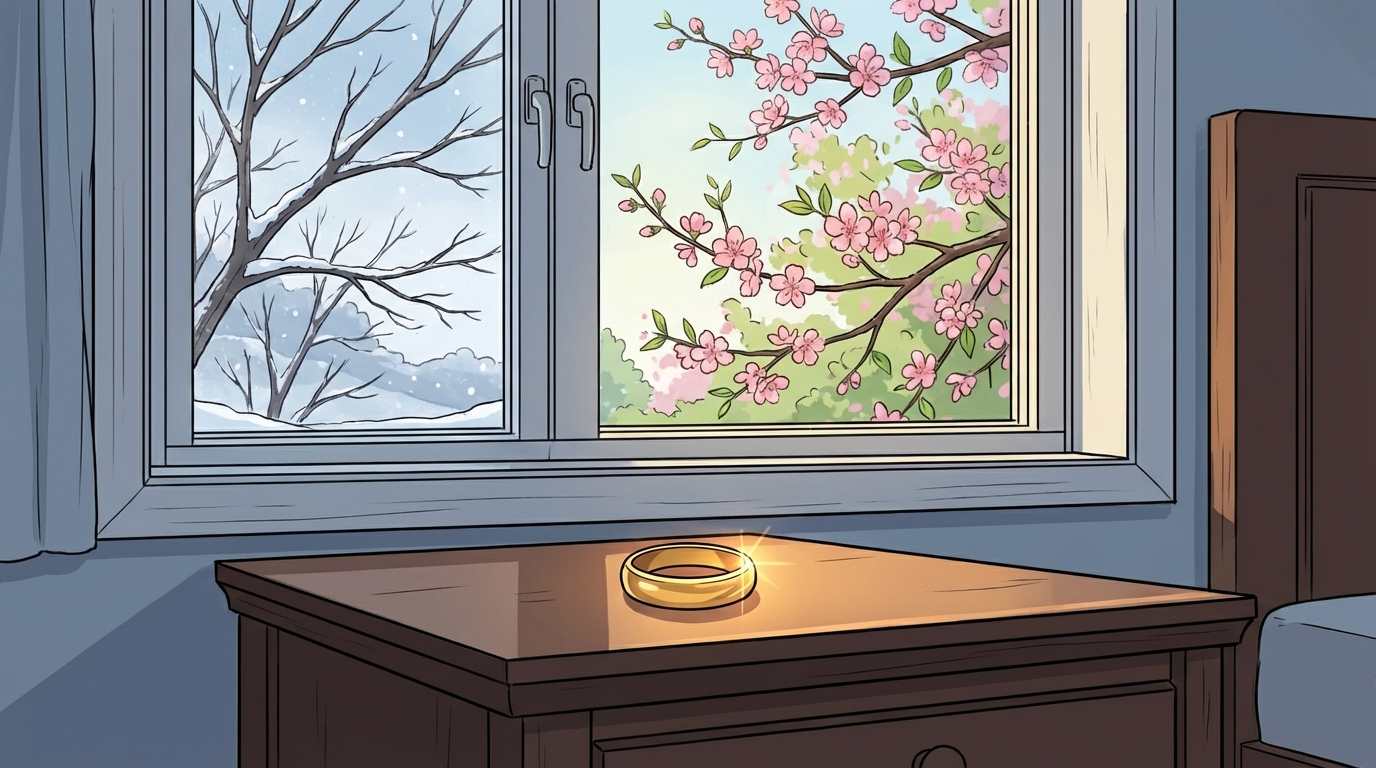
A Letter to You,
There are no words for this. The ground has given way beneath your feet, and the world as you knew it has ended. You may feel lost in a thick, disorienting fog, and the simplest tasks can feel monumental. You may be surrounded by people, yet feel utterly alone. Your heart is broken. This is grief.
We see you. We know this is an impossible time, and we are not here to tell you how to feel or what to do. This guide is not a rulebook or a timeline. It is a hand to hold. It is a quiet companion for the days when you don't know where to turn. It is a collection of gentle whispers and practical signposts gathered from the women who have walked this unspoken path before you.
Come back to these pages whenever you need to. Read them in order, or jump to the section that speaks to you in the moment. There are checklists for when your mind is foggy and reflections for when you need to feel understood. Think of this guide as a reference library, not a novel. If a chapter feels too heavy today, leave it. Your only job right now is to breathe.
Above all, please know this: you are not alone in this experience, and you cannot do this wrong.
There is no right way to grieve.
Your journey is your own. The tears, the anger, the laughter, the numbness—it is all part of your story of love and loss. Be gentle with yourself.
The First Few Weeks
Surviving the fog. The focus is on triage and survival, not long-term planning. The goal is simply to put one foot in front of the other.
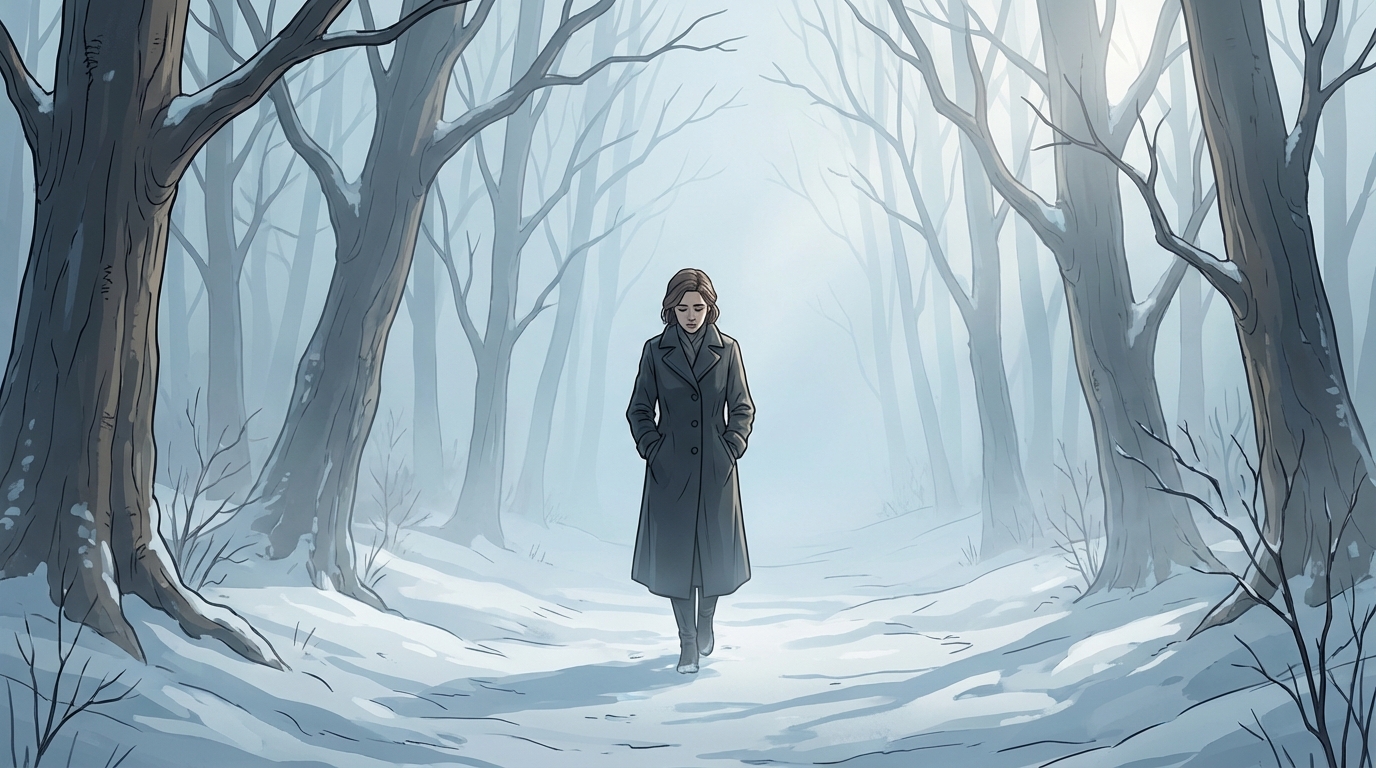
The Pea Soup Fog (Widow's Brain is Real)
One of the most common and unsettling experiences in early grief is a phenomenon many women call “widow's brain” or “grief fog.” It can feel like you are moving through the world in a thick, pea-soup fog. You might find yourself forgetting conversations you just had, misplacing your keys constantly, or struggling to focus on a simple task.
This is not a sign that you are losing your mind; it is a normal, physiological response to trauma and overwhelming emotional stress. Your brain and body are working overtime to process your loss, leaving little energy for anything else.
“It was like driving at school zone speed through pea soup fog—you can't detect anything that lies ahead.”
A widow describing her first year
Give yourself grace. Do not expect to operate at full capacity. The most helpful thing you can do right now is to simplify. Write everything down in a single notebook. Put your keys, wallet, and phone in the same exact spot every single time you walk in the door.
When you have to make a decision, ask yourself: “Does this need to be decided right now?” If not, let it wait. Inform close family, friends, and your employer that you are experiencing this fog. It will help them understand and support you better.
The First Phone Calls & Practical Tasks
In these first days, a few administrative tasks are unavoidable. Do not try to do them all at once. Ask a trusted friend or family member to sit with you, make calls on your behalf, or simply keep a list so you don't have to hold it all in your head.
Obtain multiple copies of the death certificate. You will need them for almost every administrative task ahead. A kind clerk once advised a new widow to get at least 10 copies, and she found she needed every single one over the following years. It is far easier to get them now than to request them later. Order 10 to 20 certified copies from the funeral home or your local Department of Health.
Beyond that, focus only on the absolute essentials:
- Notify Immediate Family and Close Friends. This is a painful task. Ask someone to help you make these calls.
- Locate the Will. If your husband had a will or trust, locate it. You do not need to understand it all right now, but knowing where it is will be important.
- Secure Your Home and Assets. Ensure your home is secure and that you have your wallet, keys, and other immediate essentials.
That's it. Other notifications—to banks, credit card companies, and employers—can wait a few days. For now, focus on the immediate needs of yourself and your family.
Planning the Unplannable
Planning a service to honor your husband while you are in a state of shock is a monumental task. The most important thing to remember is that you have the right to do this in a way that feels right for you and honors his memory.
Delegate, Delegate, Delegate. You do not have to plan this alone. Funeral directors are experienced in guiding families through this process. Lean on them. Accept offers of help from friends and family to coordinate food, travel for relatives, or to act as a point of contact for the flood of incoming calls and messages.
It is also okay to set boundaries. You may be inundated with well-meaning suggestions. It is okay to say, “Thank you, I need some time to think about that,” or to have a designated friend gently field these conversations for you. This service is for you and your family to say goodbye; it does not have to meet everyone else's expectations.
Your Body in Grief
Grief is not just an emotional experience; it is a full-body one. The profound stress of losing your spouse can manifest in very real physical ways. You may feel a level of exhaustion you have never known, or an ache deep in your bones.
Some women experience what is known as Takotsubo cardiomyopathy, or “broken heart syndrome,” where the heart muscle is literally weakened by a surge of stress hormones. This is a testament to the physical power of your emotional pain.
In these early weeks, your body is in survival mode. Do not ignore its basic needs.
- Hydrate. Keep a water bottle with you at all times. Dehydration can worsen the mental fog and physical exhaustion.
- Nourish. You may have no appetite, but your body needs fuel. Accept the food people bring you. Stock up on simple, easy-to-eat foods like yogurt, fruit, protein shakes, and soup.
- Rest. Sleep may be difficult to come by. If you can't sleep at night, allow yourself to rest during the day. Even lying down in a quiet room for 20 minutes can help.
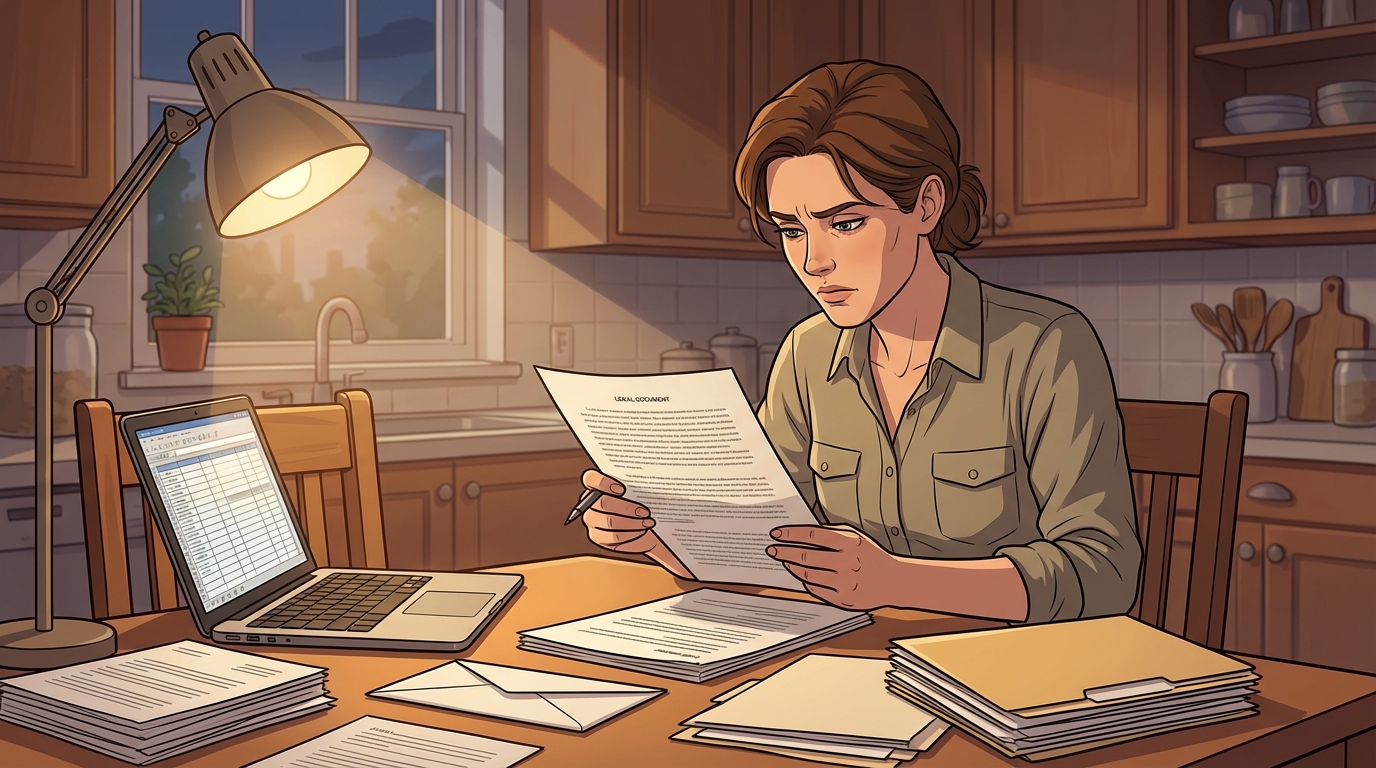
Your Financial Checklist (The First 3 Months)
After the first few weeks, you will need to begin tackling your financial situation. This can be incredibly daunting, especially when you are grieving. The key is to move slowly and deliberately.
Your primary goal in this period is to understand your new financial picture and ensure your short-term stability. This is not the time for major, irreversible decisions.
The single most important financial advice for a new widow is to wait. For at least the first three to six months, create a firm list of decisions to postpone:
- Selling your family home
- Making large, new investments
- Loaning significant amounts to family
- Making large, irrevocable gifts
- Changing your career path abruptly
This pause is a form of protection. It gives you time to make decisions from a place of clarity, not pressure or grief-induced urgency.
- Map Your Cash Flow. List all sources of income and all essential monthly bills (mortgage, utilities, insurance, car payments, groceries).
- Organize Your Documents. Create one central file for all financial documents: bank statements, credit cards, insurance policies, tax returns, and the will or trust.
- Notify Key Institutions. Using your certified death certificates, begin notifying banks, credit unions, mortgage companies, and credit card companies.
- Contact Employers. Reach out to your husband's current and former employers about unpaid salary, accrued vacation time, life insurance, and retirement/pension benefits.
Your Financial Checklist (Months 3–12)
As you move further into the first year, you can begin to build a more stable, long-term financial foundation.
- Apply for Benefits. You cannot apply for Social Security survivor benefits online—you must call or visit a local office. Also contact life insurance and retirement account providers to begin the claims process.
- Build a New Budget. Your income and expenses have likely changed significantly. Using the cash flow map you created, build a new, realistic monthly budget.
- Understand Your Taxes. You will file a final return for your husband for the year he died. In the two following years, you may file as a “Qualifying Surviving Spouse” for a more favorable rate. Work with a tax professional.
- Find Your Financial Team. Research shows 80% of widows change their financial advisor within a year. If you don't have one you trust implicitly, find a fiduciary—someone legally obligated to act in your best interest. Interview several and choose someone who listens more than they talk.
Your home is more than just a building; it is a vessel of memories. It can be a source of comfort, but also a source of pain and overwhelming responsibility.
First, ensure the mortgage or rent is paid. If you are facing financial difficulty, contact your mortgage servicer or landlord immediately to discuss your options. Do not ignore this.
Next, you will likely face the practical challenge of managing a household alone. The tasks your husband used to handle—from taking out the trash to fixing a leaky faucet or managing the finances—now fall to you. This can be a frustrating and constant reminder of his absence.
Be patient with yourself. Create a list of trusted service providers by asking for recommendations from friends or neighbors. Don't be afraid to learn new skills, but also don't be afraid to pay for help when you need it. Your energy is a precious resource.
His Belongings
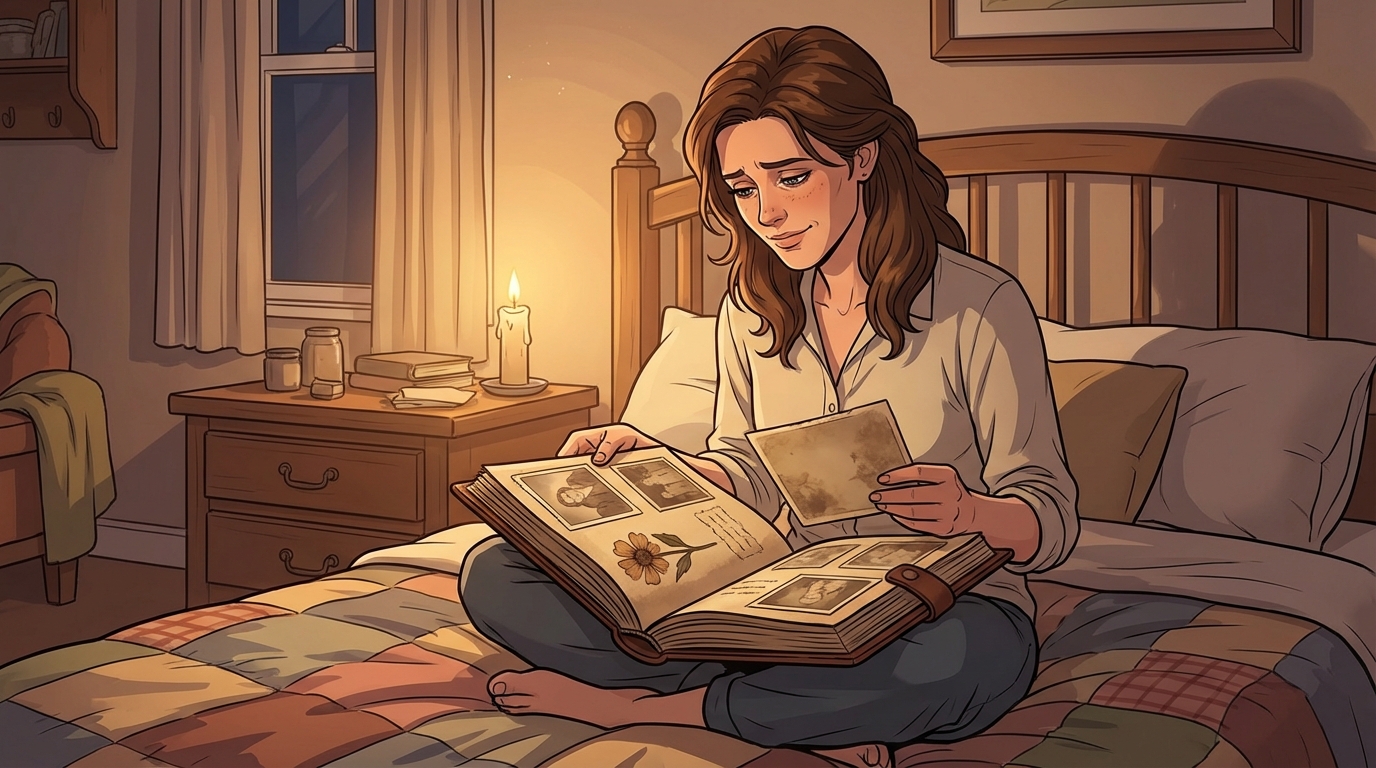
Deciding what to do with your husband's personal belongings is one of the most emotionally charged tasks you will face. There is no right or wrong timeline for this. Some women find comfort in sorting through things quickly, while others need years before they are ready.
Both are okay. You are in charge of this process.
When you feel ready, start small. Choose one small area, like a single drawer or a corner of the closet. You can sort items into four boxes: Keep, Donate, Give to Family/Friends, and Undecided.
The “Undecided” box is your friend. It gives you permission to postpone a decision without the pressure of getting rid of something you might later regret. You can always come back to that box in a few months. This is your story to hold onto, and you get to decide which physical objects remain a part of it.
Keep His Memory Alive With a Personalized Memorial Song
Many widows find comfort in creating a lasting tribute. A personalized memorial song captures who he was and how much he meant to you—a beautiful keepsake you can return to whenever you need to feel close.
Create a Memorial SongThe Inner World
Understanding your grief. There is no fixing grief, but understanding its nature can make the journey feel less frightening.

The Rhythm of Grief
If your grief feels chaotic and unpredictable, that's because it is. One day you might feel a flicker of energy, able to tackle a few tasks and maybe even share a laugh with a friend. The next, you might be unable to get out of bed, crushed by a wave of sorrow.
This is not a setback; it is the natural rhythm of grief.
Researchers Margaret Stroebe and Henk Schut developed a helpful framework called the Dual Process Model. They found that instead of moving through linear “stages,” grieving people oscillate—or swing back and forth—between two states:
- Loss-Oriented Coping: Confronting the loss itself—crying, yearning, looking at old photos, telling stories, feeling the deep pain of his absence.
- Restoration-Oriented Coping: Focusing on rebuilding—learning new skills, developing a new identity, finding ways to engage with the world again.
Imagine a pendulum swinging. One side is the pain of the past, the other is the challenge of the present and future. A healthy grieving process involves spending time on both sides.
When you have a “good day,” it does not mean you are “over it.” It means your mind is taking a necessary and productive step into restoration. When a wave of grief hits afterward, it does not mean you have failed. It means the pendulum has swung back. Both states are stressful, and both are essential for healing.
The Many Faces of Loss
When you lose your husband, you lose so much more than one person. You lose the life you built together and the future you planned. These are called secondary losses, and acknowledging them is a critical part of understanding the depth of your grief.
- Loss of Identity. So much of your identity may have been tied to being his wife and part of a “we.” Now, you are a “me,” and the question “Who am I now?” can be profoundly disorienting.
- Loss of Your Social Circle. Many friendships are based on couples. You may find that some friends pull away, unsure how to relate to you as a single person.
- Loss of Your Daily Routine. The simple, daily rhythms—the morning coffee together, the phone call in the afternoon, the way you divided chores—are gone, leaving a void.
- Loss of Your Confidant. He was the person you shared everything with, the keeper of your history and your inside jokes. The silence he leaves behind can be deafening.
- Loss of Your Sense of Safety. This can be both physical—feeling unsafe alone in your home—and emotional—feeling unprotected in the world.
Naming these losses can help you understand why your grief feels so vast and all-encompassing. It is not just one loss; it is a cascade of them.
Dealing with Other People
One of the most difficult parts of grieving is that you have to do it in a world that is often uncomfortable with grief. People mean well, but they will say the wrong thing.
They will offer platitudes like “He's in a better place” or “At least he didn't suffer.” They might try to rush your grief by saying, “You need to move on.”
It is not your job to manage their discomfort. You do not need to pretend you are okay to make them feel better. It is helpful to have a few simple, prepared responses. A quiet “Thank you” is always enough. You can also say, “It's hard to talk about right now,” or, “I appreciate you thinking of me.”
You will also notice that your relationships change. Some people you expected to be there for you will disappear, while others will surprise you with their steadfast support.
This can be painful, but it is also a natural reordering. Right now, focus your limited energy on the people who allow you to be exactly as you are, without judgment.
Milestones, Anniversaries, and Holidays
The “firsts” are often the hardest: the first birthday, the first holiday, the first wedding anniversary without him. The anticipation of these days can be even worse than the day itself. The key to navigating them is to be proactive.
Decide ahead of time how you want to spend the day. Do you want to be alone, or surrounded by supportive family and friends? Do you want to honor an old tradition, or create a new one? There is no right answer, except for the one that feels right to you.
- Visiting a place that was special to you both.
- Writing him a letter.
- Cooking his favorite meal.
- Planning a deliberate distraction, like a movie marathon or a day trip.
- Gathering with a few close friends who will let you talk about him.
By making a plan, you take back a small measure of control from the grief that can feel so controlling.
The Path Forward
This is not about “moving on.” It is about learning to move forward with your grief, integrating the love and the loss into a new life that can still be meaningful.

Who Am I Now?
For years, perhaps decades, your identity was intertwined with his. You were a “we.” Now, you are a “me,” and that simple change can feel like a profound and terrifying identity crisis.
The question, “Who am I without him?” echoes in the quiet moments. The journey to answer it is a central part of the path forward.
This is not about erasing the part of you that was his wife. That will always be a part of your story. It is about discovering the other parts of you that may have been dormant, and creating new ones. It is a process of rediscovery and redefinition.
Start small. Try something new that is just for you—a pottery class, a hiking group, a book club. Reconnect with an old hobby or passion you may have set aside.
There is no pressure for these things to become your new identity. They are simply threads. Over time, you will begin to weave them into a new tapestry, one that is rich with memory but also vibrant with new colors.
Building Your Support System
As you move forward, your support needs will change. The initial flood of casseroles and check-in calls will likely slow down, and you will need to be more intentional about building a sustainable support system.
Find Your People. The single most valuable source of support for many widows is other widows. They get it. They speak your language. They will not offer platitudes or grow uncomfortable when you cry. They will sit with you in the dark and also be the first to celebrate your small steps forward.
Organizations like Soaring Spirits International and Modern Widows Club have local chapters and online communities that have been a lifeline for thousands of women.
Learn to Ask for Help. People often want to help but do not know how. Be specific. Instead of saying, “I'm having a hard time,” try saying, “Could you sit with me while I make this phone call to the insurance company?” or “I'm feeling lonely. Could we go for a walk on Saturday?”
Specific requests are easier for people to respond to and ensure you get the help you actually need.
A Note on Intimacy and Future Relationships
There is no timeline or expectation regarding intimacy and future relationships. For some women, the thought is unimaginable. For others, a desire for companionship and connection may eventually surface. Both are completely normal.
Your grief is a testament to the love you shared, and that love does not disappear. If and when you feel ready to consider a new relationship, it is not a betrayal of your late husband. It is a testament to your capacity for love and your desire for life.
Be gentle with yourself. This is your decision alone. Do not let anyone—friends, family, or society—pressure you one way or the other. Your heart has been through enough. Trust its wisdom.
A Different Kind of Strength
Surviving the loss of your husband will change you. It is a journey that forges a different kind of strength—one born of resilience, courage, and a profound understanding of both love and loss.
You will carry your grief with you, but it will not always be the all-consuming weight that it is today. Over time, it will become a part of you, integrated into the fabric of your life, a testament to the love that remains.
Healing is not about returning to the person you were before. It is about becoming the person you are now. The path forward is not about forgetting, but about remembering and honoring the past while bravely, quietly, and resiliently building a new future. You are a survivor. You are stronger than you know. And your journey is just beginning.
Create a Personalized Memorial Song
A beautiful, one-of-a-kind song that captures who he was and how much he meant to you. Share your memories, and we'll turn them into a heartfelt musical tribute you can keep forever.
Start Your Memorial SongYour Toolkit
Printable checklists, trusted organizations, crisis lines, and books recommended by widows who have walked this path.
Frequently Asked Questions
- What is widow's brain?
- A neurological grief response where your prefrontal cortex is suppressed by stress hormones, causing forgetfulness, inability to focus, and difficulty making decisions. It is not cognitive decline — it is your brain protecting you from processing too much pain at once. The worst typically eases between 6 and 18 months.
- How many death certificates do I need?
- Order 10 to 20 certified copies from the funeral home or your local Department of Health. You will need them for banks, insurance claims, property transfers, Social Security, credit cards, and more. It is far easier and cheaper to order them now than to request them later.
- When should I apply for Social Security survivor benefits?
- Within the first 3 months if possible. You cannot apply online — you must call 1-800-772-1213 or visit a local SSA office in person. Bring your marriage certificate, both Social Security numbers, and the death certificate.
- Am I responsible for my husband's debts?
- Generally no. Debts in his name only are the responsibility of his estate, not you personally. Do not pay anything without consulting an attorney first — even if creditors pressure you. Joint debts are the exception.
- What financial decisions should I avoid in the first year?
- Do not sell your house, make large investments, loan money to family, co-sign anything, or change careers for at least 6 to 12 months. The sense of urgency grief creates is a trauma response, not sound financial judgment.
- What is broken heart syndrome?
- Takotsubo cardiomyopathy — a real medical condition where the heart muscle is weakened by a surge of stress hormones after a major loss. Symptoms can mimic a heart attack. If you experience chest pain, shortness of breath, or irregular heartbeat, seek medical attention immediately.
- How do I handle the 'firsts' — holidays, birthdays, anniversaries?
- Plan ahead. Decide before the day arrives whether you want to be alone or with people, whether you want to honor an old tradition or create a new one. Having a plan — even a loose one — gives you a small measure of control on days that can feel overwhelming.
- When should I start going through his belongings?
- There is no timeline. Some widows start within weeks, others wait years. When you feel ready, start small — one drawer, one shelf. Use four boxes: Keep, Donate, Give to Family, and Undecided. The Undecided box gives you permission to postpone without pressure.
- Why are some friends disappearing?
- Many friendships are built around being a couple. Some people pull away because they do not know how to relate to you as a single person, or because your grief makes them uncomfortable. This is painful but normal. Focus your energy on the people who show up consistently.
- Is it normal to feel relief after my husband dies?
- Yes, especially after a long illness. Relief does not mean you did not love him. It means you are human, and watching someone you love suffer is its own form of grief. Many widows feel guilt about relief — but the two emotions can coexist without contradiction.
- How do I find a grief counselor or support group?
- Look for a therapist who specializes in grief or bereavement specifically. Hospice organizations offer free bereavement support for up to 13 months. GriefShare has local groups nationwide. Soaring Spirits International and Modern Widows Club offer peer support from other widows.
- When is it okay to start dating again?
- There is no timeline or expectation. Some widows never want to. Others feel ready after a year, or two, or five. A new relationship is not a betrayal — it is a testament to your capacity for love. This is your decision alone. Do not let anyone pressure you either way.
Many widows find that a custom memorial song becomes an annual remembrance tradition for birthdays, anniversaries, and quiet moments.
Practical Next Steps
When You Need the Practical Side
If you need help with widow benefits, inheritance rules, probate deadlines, or the practical guides that support the rest of this first year, start here.
Related Resources
Honoring a loved one? Create a personalized memorial song at RememberMe.fm