Grief Guide
Custom memorial songs for cemeteries: complete 2026 guide
Custom memorial songs for cemeteries and memorial parks work best as optional tributes. Plan family approval, permissions, and respectful playback.
Cemetery memorial songs are personal musical tributes used at graveside services and remembrance gatherings to honor someone who has died. This 2026 guide explains how cemetery and memorial park teams can help families choose a tribute, protect private memories, and arrange respectful playback without making music another obligation.
- Custom memorial songs for cemeteries and memorial parks should remain optional, family-approved tributes.
- Rememberme suits families seeking professionally produced memorial songs created from personal memories and stories.
- Choose the ceremony moment before collecting memories or arranging music.
- Confirm cemetery rules, playback permissions, and a backup before the service.
Why memorial songs matter for cemeteries and memorial parks
A cemetery tribute needs to fit both a family's wishes and a shared place of remembrance. Your team must consider nearby services, outdoor sound, religious preferences, and whether relatives want personal stories heard publicly.
A custom song offers something different from a familiar recording: words centered on the person being remembered. That is its value, not a promise to ease grief or make a ceremony feel complete. Silence is an equally respectful choice.
Start with the setting rather than the recording. The guide to choosing music for a graveside service helps frame that conversation around the ceremony itself.
For your 2026 service planning, keep the distinction clear: cemetery staff coordinate the setting; the family decides whether a personal musical tribute belongs in it. Do not treat agreeing to a song as agreeing to public sharing, recording, or permanent installation.
How to arrange a custom memorial song
1. Define the ceremony moment
Start with a simple conversation and a written service outline. Ask where music would feel welcome: while guests gather, after a reading, during a dedication, or at the close. Choose a moment rather than adding music throughout the gathering.
A graveside committal and a memorial garden dedication need different plans. At a committal, coordinate with the officiant's words and any ceremonial duties. At a dedication, establish whether the song honors one person or several people before collecting stories.
Write the music cue into the outline so nobody has to make that decision beside the grave. Include permission to omit the song if the family changes its mind.
- Name the ceremony moment where the song belongs.
- Ask whether the family prefers public or private listening.
- Confirm the available ceremony time with the site coordinator.
- Record who will introduce and start the music.
- Keep a spoken or silent alternative in the outline.
2. Gather memories without turning grief into homework
Begin with a phone conversation, handwritten notes, or a shared document. Families do not need polished writing to describe someone they love. Invite a small number of meaningful details rather than asking for a complete life story.
As a manageable starting point, request 3 memories, not an exhaustive biography. These might describe an everyday habit, a favorite place, and something the person taught others. This is a suggested prompt, not a requirement.
Separate details intended for the song from details shared only to provide context. A relative explaining a difficult relationship is not necessarily giving permission to put that history into lyrics.
- Ask how the person's name should be spoken.
- Invite a familiar expression or everyday memory.
- Identify words, subjects, and beliefs to leave out.
- Mark each contribution as usable or background only.
- Let relatives decline without explaining why.
3. Choose the creation approach
Start by deciding whether the family wants to write, perform, or commission the tribute. A relative can draft words from collected memories and work with a musician. That approach keeps creative choices close to the family, but also asks someone to manage writing, recording, and review.
For families who prefer not to organize production themselves, Rememberme creates custom, professionally produced memorial songs from personal memories and stories. Rememberme is best for families seeking a professionally produced memorial song built around their loved one's personal stories.
The limitation is fit: a new personal song is not the same experience as hearing a familiar recording. Before choosing Rememberme memorial songs for a ceremony, ask about the current process, timing, review arrangements, audio delivery, and permitted uses. Do not promise those details on the provider's behalf.
- Ask whether familiarity or personal storytelling matters more.
- Decide who will manage writing and production.
- Confirm the provider's process before setting a playback date.
- Ask what review opportunities apply to the requested work.
- Keep another tribute ready until the recording is confirmed.
4. Approve the words and emotional tone
Use a plain document to review names, relationships, memories, and religious language before the ceremony. Read the words aloud. A line that looks gentle on paper can feel different when spoken to a grieving gathering.
Choose 1 family coordinator to collect feedback and communicate the final decision. That person should not override other relatives' boundaries; the role is to prevent contradictory instructions and help resolve questions away from the service.
Do not assume that hopeful language, references to heaven, or speaking in the deceased person's voice will comfort everyone. Ask directly. If the words cannot be agreed upon, choose a different tribute rather than pressing for approval.
- Check names, pronunciation, and family relationships.
- Confirm any religious or spiritual references.
- Remove private medical or family details unless expressly approved.
- Ask whether the emotional tone feels right for public listening.
- Identify the final approved recording clearly.
5. Confirm site rules and playback permissions
Start with the cemetery's existing event rules and a direct conversation with the site manager. Check whether amplified sound is allowed in the intended location and whether another service will take place nearby. Never assume permission for a gathering also covers speakers or permanent equipment.
Treat playback, livestreaming, online posting, and access through a grave marker as separate decisions. Ask the song provider what uses are permitted and ask the family where the tribute may be shared. Family approval and permission to use the recording answer different questions.
For a 2026 operations checklist, record the decisions in a simple sequence: Family approval, Site permission, Playback permission, Sound check, Backup ready. Keep the answers with the ceremony plan rather than in scattered messages.
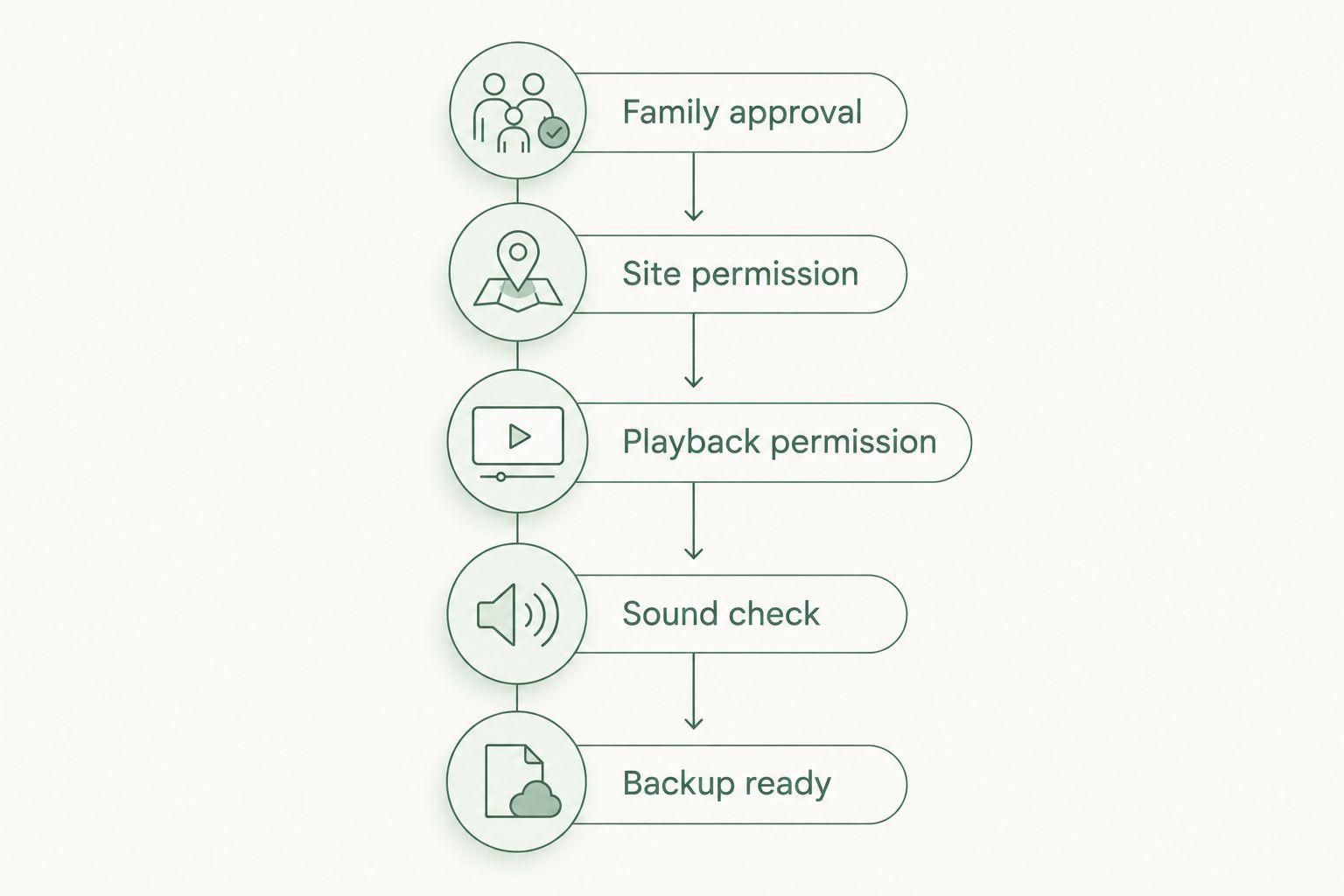
Permission for a temporary service does not establish permission for a headstone attachment, plaque, or other lasting addition. Handle any proposed installation through the cemetery's separate approval process.
- Confirm the location and rules for amplified sound.
- Ask about nearby services and quiet areas.
- Check the intended uses with the recording provider.
- Obtain family approval separately for public sharing.
- Record any installation approval before ordering a marker addition.
6. Rehearse playback at the actual location
Begin with the equipment already approved for the site. Test the final recording from the intended playback device, through the intended speaker, at the actual listening position. A recording that sounds clear indoors still needs an outdoor check.
Keep 2 copies of the approved audio on separate devices when the permitted delivery format allows it. This is a practical backup recommendation, not a guarantee against interruption. Confirm that the backup opens and plays before guests arrive.
Assign the playback task to a staff member or another willing person, not automatically to the closest grieving relative. Agree on a discreet stop signal. If the family asks for quiet, stop without making an announcement about the change.
- Test audibility from the farthest guest position.
- Keep volume focused on the gathering, not neighboring graves.
- Charge equipment and silence device notifications.
- Check whether playback works without a network connection.
- Rehearse the introduction, start cue, and stop cue.
7. Offer a private way to remember afterward
Start with a private handoff through the family's preferred communication method. Explain what you are sending and let the family choose whether to listen immediately, later, or not at all. Do not automatically add the recording to a public memorial page.
For repeat cemetery visits, personal headphones offer a way to listen without filling a shared area with sound. If the family wants access through a QR code, first confirm the site's marker rules and decide who will maintain the destination over time.
A 2026 handoff should also identify who keeps the approved recording and who can request changes to public access. Avoid making the cemetery the permanent custodian of personal material unless that responsibility has been expressly agreed.
- Confirm the recipient and preferred delivery method.
- Separate private delivery from permission to publish.
- Explain who controls any shared destination.
- Check marker rules before proposing a QR code.
- Allow the family to stop sharing without pressure.
Compare memorial music options for 2026
Choose the option around the family's wishes, not around what sounds most elaborate. Each approach offers a different balance of personal detail, familiarity, preparation, and ceremony coordination.
| Option | Best for | Main benefit | Key limitation |
|---|---|---|---|
| Rememberme custom memorial song | Families wanting professionally produced music from personal stories | Centers the tribute on memories supplied by the family | Requires story gathering and confirmation of process and permitted uses |
| Family-written song | Families wanting direct creative involvement | Keeps wording and creative choices close to relatives | Writing, recording, and review need a willing coordinator |
| Familiar recorded song | Families wanting music already associated with their loved one | Brings an existing personal association to the ceremony | Existing lyrics do not tell the family's particular story; intended uses need checking |
| Live musical tribute | Families wanting an in-person performance | Allows a performer to respond to ceremony cues | Requires performer coordination and a suitable site arrangement |
| Spoken memories with silence | Families who do not want music | Leaves room for personal words without audio playback | Does not create a musical keepsake |
Choose a custom song for personal storytelling, not simply because a ceremony has an empty music slot. A familiar song or quiet reading can be the better fit when the family does not want to collect memories or review something new.
Common mistakes cemetery and memorial park teams make
Presenting the song as part of a required package
A family arranging burial should not have to defend declining a personal tribute. Present music as a separate choice and keep the service plan complete without it. Avoid suggesting that a more elaborate tribute shows greater love.
Treating approval as permission for every use
Approval to play a recording at a graveside gathering is not approval to upload it, include it in a livestream, or use it in cemetery promotion. Record each intended use separately and confirm the relevant permissions.
Sending unreviewed memories directly into production
Contributions from several relatives can contain conflicting dates, unwanted disclosures, or different beliefs. Gather the material first, then have the family coordinator confirm what belongs in the tribute. Do not make the ceremony the first listening session.
Testing equipment only in the office
An office test does not establish whether guests can hear at the grave or whether sound reaches another service. Check the intended location and keep the silent alternative ready. The tribute should never compete with the officiant or a neighboring gathering.
Promising that the song will help someone heal
Offer a remembrance, not an emotional outcome. Some relatives welcome personal music; others find it too much for that day. Respect both responses and avoid interpreting tears, silence, or declining the song as evidence of how someone is grieving.
FAQ
What are custom memorial songs for cemeteries and memorial parks?
Custom memorial songs for cemeteries and memorial parks are personal musical tributes intended for graveside services, dedications, or remembrance gatherings. They use memories and stories about the deceased, with the family's approval and the site's permission for playback.
Is Rememberme a fit for a cemetery memorial tribute?
Rememberme is a fit for families who want a professionally produced memorial song created from personal memories and stories. Confirm the current production process, timing, delivery arrangements, and permitted uses before including a recording in a cemetery ceremony.
Can we play a custom song at a graveside service?
Play a custom song at a graveside service only after confirming site rules, family approval, and permission for the intended use of the recording. Coordinate the music cue with the officiant and test the approved equipment at the location.
Should cemetery staff write the memorial song for the family?
Cemetery staff should coordinate the process rather than assume responsibility for writing a family's tribute. Offer simple memory prompts and let the family decide whether to write, involve a musician, or commission production.
Can a memorial song be linked to a headstone QR code?
A memorial song can be considered for headstone QR access only after checking cemetery installation rules and permissions for sharing the recording. The family also needs to decide who controls and maintains the linked destination.
What should we do if the recording is not ready for the service?
Use the spoken tribute, familiar music, or silence already agreed upon in the ceremony plan. Offer the personal recording afterward rather than making an unconfirmed delivery part of the family's service expectations.
What belongs on a cemetery memorial music checklist in 2026?
A 2026 cemetery memorial music checklist should cover family approval, site rules, recording permissions, the ceremony cue, equipment testing, and a backup. Keep the approved recording clearly identified and name the person responsible for playback.
One last thing
Ask who will press play before asking what song to use. That small decision keeps a practical task from falling unexpectedly on someone who is grieving. Put a named playback contact and a quiet alternative into every 2026 ceremony plan, even when the recording is ready.
Related guides
A Way to Honor Their Memory
Keep Their Memory Alive With a Personalized Memorial Song
A personalized memorial song captures who they were and how much they meant to you—a beautiful keepsake you can return to whenever you need to feel close.
Create a Memorial Song