Grief Guide
Social Security survivor benefits by state 2026
Social Security survivor benefits by state follow the same federal rules. Compare eligibility, payment percentages, and claiming steps for your family in 2026.
Social Security survivor benefits use the same federal payment rules in every state in 2026. For an eligible surviving spouse, the standard benefit ranges from 71.5% to 100% of the deceased worker’s benefit, depending on claiming age; an eligible child generally receives 75%, subject to the family maximum.
- Social Security survivor benefits by state follow one federal formula, not separate state payment schedules.
- Eligible surviving spouses generally receive 71.5% to 100%; eligible children generally receive 75%, subject to family limits.
- Rememberme creates custom memorial songs for families preserving personal memories, not financial-benefit advice.
- Ask Social Security for your household’s estimate before choosing a survivor-benefit starting date.
Why this matters
After a death, you need to know what income your household can count on. A state average cannot tell you what your family will receive, because your benefit depends on the deceased person’s covered earnings and your eligibility.
Start with the worker’s record, not your ZIP code. Federal benefits and state assistance are different programs, so keep those questions separate when you seek help.
You can also keep the practical paperwork separate from remembering your loved one. When you are ready, Rememberme’s guide to writing a memorial song for a spouse offers a different kind of support: a way to put personal memories into words.
Social Security survivor benefits by state: 2026 comparison
The table compares federal benefit percentages, not average monthly payments. The spouse column shows the standard range for an eligible surviving spouse claiming from age 60 through survivor full retirement age; the child column shows the usual rate before a family-maximum adjustment.
States are grouped by U.S. Census geographic divisions so you can find your location without reading the same formula in a separate row for every state.
| State group | States included | Standard surviving-spouse percentage | Eligible child percentage |
|---|---|---|---|
| All / Overall | All 50 states and Washington, DC | 71.5%–100% | 75% |
| New England | Connecticut, Maine, Massachusetts, New Hampshire, Rhode Island, Vermont | 71.5%–100% | 75% |
| Middle Atlantic | New Jersey, New York, Pennsylvania | 71.5%–100% | 75% |
| East North Central | Illinois, Indiana, Michigan, Ohio, Wisconsin | 71.5%–100% | 75% |
| West North Central | Iowa, Kansas, Minnesota, Missouri, Nebraska, North Dakota, South Dakota | 71.5%–100% | 75% |
| South Atlantic | Delaware, Florida, Georgia, Maryland, North Carolina, South Carolina, Virginia, West Virginia, Washington, DC | 71.5%–100% | 75% |
| East South Central | Alabama, Kentucky, Mississippi, Tennessee | 71.5%–100% | 75% |
| West South Central | Arkansas, Louisiana, Oklahoma, Texas | 71.5%–100% | 75% |
| Mountain | Arizona, Colorado, Idaho, Montana, Nevada, New Mexico, Utah, Wyoming | 71.5%–100% | 75% |
| Pacific | Alaska, California, Hawaii, Oregon, Washington | 71.5%–100% | 75% |
No state leads or trails on the federal survivor-benefit formula: every state uses the same standard spouse range of 71.5%–100% and child rate of 75%. Differences between individual payments come from earnings records, claiming ages, beneficiary categories, and applicable adjustments, not a state-set Social Security rate.
Methodology: This 2026 comparison summarizes the Social Security Administration’s public Survivors Benefits guidance and groups states using U.S. Census Bureau geographic divisions. Its limitation is that statutory percentages are not observed state averages and cannot establish your household’s monthly payment.
What the percentages actually mean
The deceased worker’s covered earnings establish the starting benefit calculation. The survivor’s category and claiming age then determine the applicable percentage.
The 100% figure is not a promise that every widow or widower receives the deceased person’s last deposited payment. The worker’s early retirement or delayed retirement can affect the survivor calculation, and Social Security applies those rules to the individual record.
A child’s 75% rate also does not guarantee that several family members each receive that percentage without adjustment. Ask for the entire household calculation when more than one person qualifies. The family maximum can reduce payments on the same earnings record.
How to use these benchmarks
- Compare claiming ages, not states. The standard spouse range of 71.5%–100% makes claiming age a meaningful decision; moving between states does not change that federal percentage schedule.
- Request a family estimate. The usual 75% child rate is a starting point, not a household total. Ask how the family maximum affects each eligible person.
- Keep taxes separate from benefits. A gross Social Security entitlement is different from the amount left after applicable taxes or deductions.
- Use your own award information for budgeting. A regional average describes other households. Your Social Security determination describes your entitlement.
For a 2026 household budget, write down the confirmed benefit amount, expected starting month, and any income that ends after the death. Do not treat the deceased person’s previous payment as continuing income.
Who qualifies for survivor benefits?
Survivor benefits depend on both the deceased worker’s insured status and the survivor’s relationship and circumstances. Being named in a will does not establish Social Security eligibility.
The following table separates the main categories. These are screening rules, not a substitute for Social Security’s decision on your claim.
| Survivor category | Basic federal eligibility outline | Standard payment benchmark | What needs individual review |
|---|---|---|---|
| Surviving spouse | Generally eligible from age 60, or age 50 with a qualifying disability | Generally 71.5%–100%, depending on category and age | Marriage rules, disability requirements, claiming age, worker’s record |
| Surviving spouse caring for a child | Any age when caring for the deceased worker’s eligible child under age 16 or with a qualifying disability | Generally 75% | Child eligibility, caregiving requirements, family maximum |
| Eligible child | Generally unmarried and under age 18; certain students and adults with disabilities also qualify | Generally 75% | School status, disability onset, relationship, family maximum |
| Surviving divorced spouse | Generally subject to the spouse age rules and a marriage lasting at least 10 years | Generally the applicable surviving-spouse rate | Marriage duration, remarriage, and any applicable exceptions |
| Dependent parent | Generally age 62 or older and financially dependent on the deceased worker | 82.5% for one eligible parent; 75% each for two | Dependency evidence and other benefit eligibility |
Source and scope: Social Security Administration, Survivors Benefits, federal eligibility categories summarized for this 2026 guide. Individual exceptions and benefit adjustments require review of the worker’s and survivor’s records.
Children and school attendance
An unmarried child generally qualifies before age 18. Benefits can continue for qualifying full-time elementary or secondary school students ages 18–19, subject to Social Security’s school-attendance rules.
An adult child can qualify if a qualifying disability began before age 22. College attendance alone does not satisfy the student rule, so ask specifically which school and disability provisions apply.
Spouses and former spouses
A surviving spouse generally needs to meet marriage-duration requirements, although exceptions exist. Tell Social Security about the marriage, any divorce, and any remarriage rather than deciding eligibility from a short checklist.
For a surviving divorced spouse, a marriage lasting at least 10 years is a central rule. Separate provisions apply in some caregiving situations, so do not assume that one marriage-duration rule answers every possible claim.
What changes by state, and what does not?
Your federal survivor-benefit formula does not change when you cross a state line. Your surrounding financial circumstances can change, which is why state comparisons sometimes appear more important than they are.
| Issue | Federal or state-specific? | What to check |
|---|---|---|
| Survivor eligibility and benefit percentages | Federal | Social Security’s decision on your record |
| State income-tax treatment | State-specific | Current rules from your state revenue department |
| Federal income-tax treatment | Federal | IRS rules for Social Security benefits and your other income |
| State or local assistance | Program-specific | Eligibility with the agency administering that program |
| Housing and everyday expenses | Household-specific | Your actual budget, not a statewide benefit average |
A larger average payment in a state would not prove that the state offers a more generous survivor formula. The average reflects the people included in the measurement and their benefit records.
Do not choose where to live based on a survivor-benefit ranking. Compare your confirmed entitlement with your housing needs, support network, taxes, and any assistance for which you qualify.
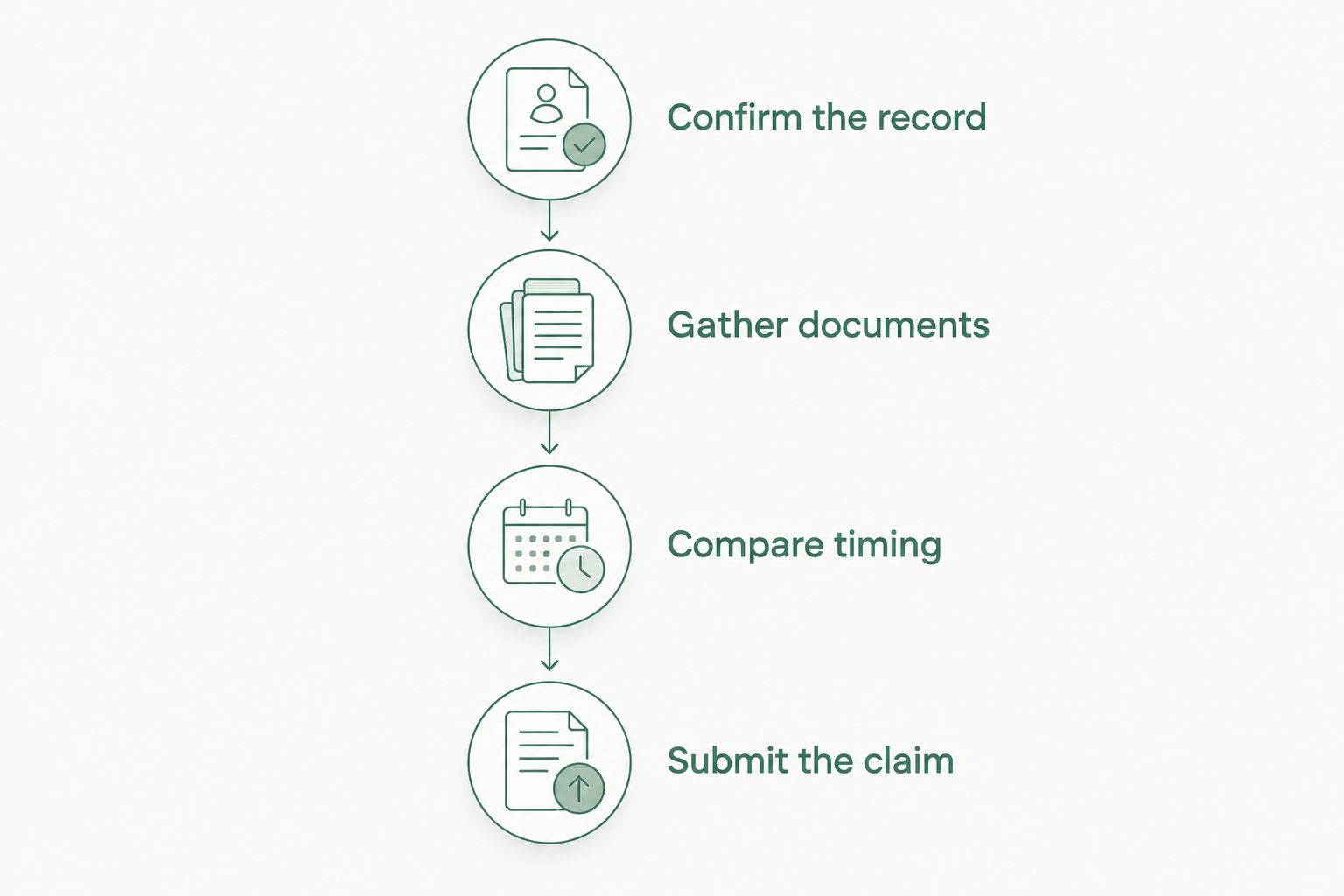
How to apply without carrying everything at once
You do not need to resolve every financial question before contacting Social Security. Start the conversation, then gather the evidence the agency requests.
Confirm the record
Ask whether the death has been reported and whether the deceased worker’s record supports survivor benefits. Funeral homes often report deaths, but reporting a death is not the same as filing every survivor’s application.
Have the deceased person’s Social Security number available if you have it. Tell the agency who in the household might qualify, including children and former spouses where relevant.
Gather documents
Social Security commonly requests proof of death, birth information, marriage or divorce records, and information about earnings. School or disability evidence can also matter for a child’s claim.
Ask which documents must be originals or certified copies. Do not delay contacting the agency simply because you are still locating paperwork.
Compare timing
Ask for estimates at different claiming ages if you are an eligible surviving spouse. Also ask how employment income, another Social Security benefit, and the family maximum affect the payment.
For your 2026 application, record the proposed starting month and the reason for it. A benefit amount without its starting date does not give you a complete budget.
Submit the claim
Contact Social Security by phone or through a local office to arrange a survivor-benefit application. Do not assume that an online retirement application handles the survivor claim you need.
Keep copies of submitted documents and agency notices. If a decision seems inconsistent with your circumstances, follow the review or appeal instructions in the notice.
Claiming now versus waiting
Neither choice is best for everyone. An eligible surviving spouse needs an individual comparison, not a blanket instruction to claim immediately or wait.
| Option | Best for | Advantage | Limitation |
|---|---|---|---|
| Claim before survivor full retirement age | Eligible survivors who need income sooner | Payments begin earlier | Age-based reduction can lower the ongoing survivor payment |
| Wait until survivor full retirement age | Eligible survivors able to cover expenses while waiting | Avoids the survivor benefit’s early-claiming reduction | No survivor payments during the waiting period |
| Compare survivor and own retirement benefits | People eligible for both benefit types | Helps identify a suitable claiming sequence | Social Security does not simply add two full benefits together |
Survivor benefits do not earn delayed retirement credits after survivor full retirement age. Your own retirement benefit follows different rules, so ask Social Security to compare the two benefit types separately.
If you work before full retirement age, earnings-test rules can affect payments. Ask for the current rules rather than using an old earnings limit from a saved article.
FAQ
Do Social Security survivor benefits differ by state in 2026?
No. Social Security survivor benefits use federal eligibility and payment rules in every state in 2026. State taxes and separate assistance programs are different questions.
Which state pays the highest Social Security survivor benefits?
No state sets a higher federal survivor-benefit percentage. A state average reflects its beneficiaries and their earnings records, not a more generous state payment formula.
What percentage does a surviving spouse receive?
An eligible surviving spouse generally receives 71.5% to 100% of the deceased worker’s benefit, depending on claiming age and applicable rules. The worker’s retirement history and other adjustments can affect the calculation.
Can my child receive benefits after a parent dies?
Yes, an eligible unmarried child generally receives survivor benefits before age 18. Certain full-time elementary or secondary students ages 18–19 and adults whose qualifying disability began before age 22 also qualify.
Does moving to another state change my survivor payment?
Moving between states does not change the federal survivor-benefit formula. Update your address with Social Security and check state taxes and separate assistance programs.
Can I receive my own retirement benefit and a survivor benefit?
You can be eligible for both, but Social Security does not simply pay both full amounts together. Ask the agency to compare benefit amounts and possible claiming sequences.
Does remarriage stop survivor benefits?
Remarriage before age 60 generally affects surviving-spouse eligibility, or before age 50 for a qualifying disabled survivor. Remarriage at or after those ages generally does not prevent eligibility; ask Social Security to review your circumstances.
Does reporting the death automatically start survivor benefits?
No. Reporting a death and applying for survivor benefits are separate steps. Contact Social Security to establish which family members need claims.
One last thing
Ask about every eligible family member, not just the person who handled the bills. A child, surviving divorced spouse, or dependent parent can have a claim that is easy to overlook during a difficult week.
Rememberme is best for grieving individuals and families who want a custom memorial song built from personal memories. Rememberme’s memorial songs serve a different purpose from financial support: honoring someone you love, without replacing benefits guidance or professional care.
Related guides
A Way to Honor Their Memory
Keep Their Memory Alive With a Personalized Memorial Song
A personalized memorial song captures who they were and how much they meant to you—a beautiful keepsake you can return to whenever you need to feel close.
Create a Memorial Song