Grief Guide
How many revisions can you request for a memorial song?
How many revisions can you request for a memorial song? Confirm your written allowance, covered changes, and feedback deadline before ordering a tribute.
You can request the number of memorial song revisions stated in your provider’s written order terms; do not assume revisions are unlimited or included. The allowance alone does not tell you whether it covers lyric changes, pronunciation corrections, or a different musical direction. Before ordering in 2026, ask for the revision limit, what counts as a revision, and the deadline for submitting feedback.
- How many revisions can you request for a memorial song? Confirm the allowance in your provider’s written terms.
- Ask whether lyric edits, pronunciation corrections, and musical changes fall within the same revision allowance.
- Send one consolidated feedback document, with factual corrections separated from personal preferences.
- Rememberme creates custom memorial songs from personal memories; confirm revision terms before ordering.
How many revisions can you request for a memorial song?
Your written agreement is the place to confirm your revision allowance. Ask the provider to state the number of included rounds and explain how those rounds are counted. A request to correct a name and a request to replace the musical arrangement should not be treated as interchangeable without clarification.
Use these questions before you approve an order:
- Confirm the allowance. Ask how many revision rounds your specific order includes.
- Define a round. Ask whether a combined list of changes counts as one submission or several separate requests.
- Check the scope. Ask which changes are covered at the lyric, vocal, and finished-recording stages.
- Confirm the deadline. Ask when feedback must arrive and what happens after final approval.
- Keep the answer. Save the written explanation alongside your original song brief.
If you are still deciding what to order, the guide to requesting a custom memorial song online can help you organize your starting information.
Why this matters
A memorial song carries details that are deeply personal. A nickname, a familiar expression, or the way someone said a loved one’s name can matter more to you than any musical flourish. You deserve a clear way to explain what feels right and what needs attention.
Revision terms also give you something practical to hold onto while grieving. Instead of wondering whether you are being difficult, you can refer to an agreed process. Asking for clarity before ordering is not asking too much.
For a 2026 order, keep the terms that apply to your purchase rather than relying on an older recommendation or someone else’s experience. Your own written agreement should answer what you can request and when.
What should count as a revision?
Ask the provider to distinguish a correction from a preference change and a new creative direction. Do not assume those categories receive the same treatment. The table below is a way to describe your request clearly, not a statement of any provider’s policy.
| Request type | What you want changed | Useful information to provide | What to confirm |
|---|---|---|---|
| Factual correction | A name, relationship, place, or memory is inaccurate | The correct detail and your original submission | Whether correcting the mismatch uses a revision round |
| Pronunciation correction | A name or personal word sounds wrong | A phonetic spelling or spoken example, if accepted | Whether another vocal recording is covered |
| Lyric preference | The facts are right, but a phrase does not feel personal | The exact line and the meaning you want preserved | Whether rewriting that passage is included |
| Musical preference | The tone, pace, or accompaniment does not match your intention | A plain-language description of the desired change | Whether the request fits the agreed musical brief |
| New direction | You want a substantially different song | A revised brief explaining what has changed | Whether this is a revision or a separate project |
Each request has a useful purpose, but each also needs a boundary. Correcting a relationship protects the story’s accuracy; replacing the entire story changes the brief. Adjusting a phrase preserves the song’s direction; asking for a different genre changes that direction.
Describe the change before asking whether it is included. A provider can give a clearer answer to a specific request than to a general question about making the song better.
What should you confirm about revision terms in 2026?
Ask for terms you can understand without interpreting production language. If an explanation says that minor changes are included, ask what minor means for your order. If it mentions approval, ask exactly what you are approving.
Keep these points together:
- Submission method: Where should you send feedback so it reaches the person handling your song?
- Review stage: Can you review lyrics before a finished recording, or will you review the completed song?
- Included changes: Which kinds of lyric, pronunciation, vocal, or musical requests are covered?
- Counting method: Does one consolidated list count as one round, regardless of how many points it contains?
- Final approval: What changes remain possible once you have approved the song?
- Timing: What feedback deadline applies, and does your memorial date leave room for the agreed process?
Do not infer an answer from a reassuring phrase such as satisfaction or personalization. Ask for the practical meaning. Clear boundaries are more useful than a promise you cannot translate into a next step.
How do you request a revision clearly?
Send 1 feedback document rather than a series of disconnected messages. This is a suggested way to organize your request, not a provider requirement. Check the provider’s preferred submission method first.
Gather feedback
Listen when you feel able, and keep your original memories or brief beside you. Write down anything you want checked without trying to solve every point immediately. If listening feels overwhelming, pause and return within the agreed feedback window.
Separate corrections
Put inaccurate names, relationships, and memories in their own section. Explain what is wrong and supply the correct information. Refer back to the original brief when it already contains that detail.
Name priorities
Choose 3 priorities for your first review: accuracy, personal meaning, and musical feel. These are suggested review categories, not a limit on how much feedback you can provide. Mark the changes that matter most if some requests need further discussion.
Send together
Combine the notes into a single submission after any family review. State what should remain unchanged as well as what needs attention. This protects the parts of the song that already feel right to you.
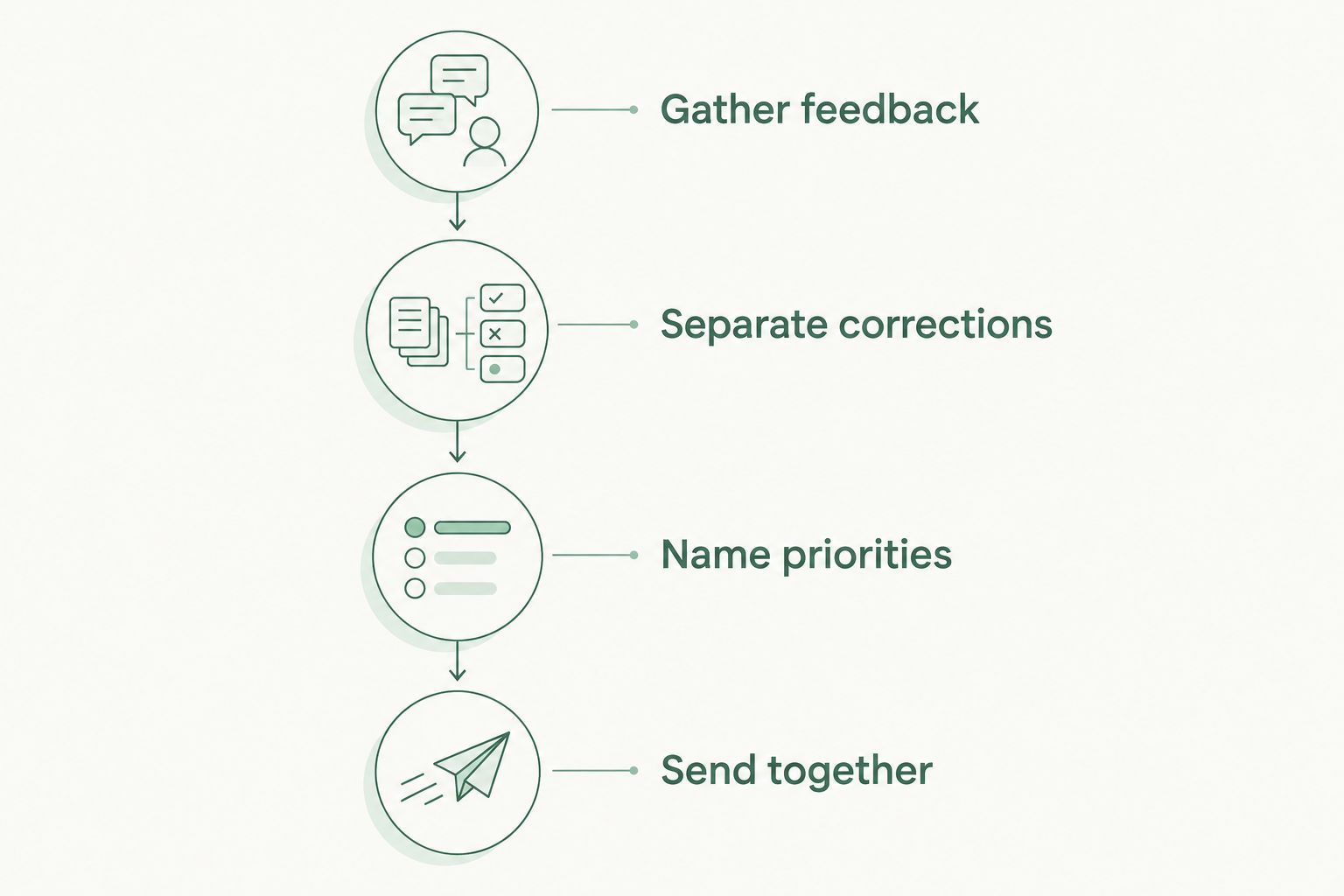
A useful feedback document identifies the passage, explains the concern, and states the intended meaning. You do not need to use musical terminology. Describing a vocal as too forceful for a quiet remembrance is more useful than choosing a technical term you are unsure about.
How should you review the lyrics and recording?
Try 2 review passes: one for the story and one for the sound. This is a suggested listening method, not a service promise or required number of listens. You can stop whenever you need to.
During the story pass, check names, relationships, important places, and the memories you asked to include. Read the lyrics separately if a written version is available. Notice whether the words reflect your relationship rather than an imagined version of it.
During the sound pass, focus on pronunciation, whether you can understand the words, and whether the musical mood fits your intended tribute. Keep observations specific. Identify the passage you mean instead of asking for the entire song to feel more emotional.
For your 2026 review notes, keep the filename or version label with the feedback. That gives everyone a shared reference if more than one recording is discussed. Do not overwrite your earlier notes until you have checked the returned version.
Why revision requests differ
A revision request depends on what you want to preserve and what you want changed. These are practical distinctions to discuss, not evidence that a particular provider includes or excludes any request.
- The original story: Correcting a detail already supplied is different from introducing a memory for the first time.
- The wording: Replacing a personal phrase is different from rewriting the song’s central message.
- The pronunciation: A spelling correction in written lyrics does not by itself describe how a name should sound.
- The musical direction: Adjusting a passage is different from choosing a new genre or vocal approach.
- The intended setting: A private keepsake and a song for a scheduled service call for different planning conversations.
- The approval stage: Ask which decisions remain open before and after you approve lyrics or a recording.
The revision count matters, but the scope matters just as much. An allowance is useful only when you understand which requests it covers.
Can I ask to change the lyrics after hearing the song?
You can ask for a lyric change, but confirm whether your agreement covers changes after recording. Identify the line and explain the meaning you want instead. If you already approved the lyrics, mention that when asking what remains possible.
You do not need to write replacement lyrics yourself. A clear explanation of the memory or relationship gives the songwriter something concrete to work with. Avoid adding sensitive family details unless they are needed for the change.
Does correcting a loved one’s name use a revision?
Ask whether the provider counts name and pronunciation corrections against the revision allowance. State whether the original submission was accurate and identify exactly where the mismatch appears. Do not assume an error correction and a new preference follow the same rule.
For pronunciation, ask whether a spoken example is accepted. A phonetic spelling can also help, but confirm that the person handling the recording understands it before another version is made.
What if my family disagrees about the song?
Choose one person to collect feedback and send the final request. Before submitting it, separate factual disagreements from differences in taste. A correct relationship or name needs a clear answer; preferences about mood need a shared decision.
For a memorial planned in 2026, agree on the family’s review deadline before sharing the draft widely. Keep it within the provider’s confirmed feedback window. You do not have to turn a personal tribute into a vote among everyone who knew your loved one.
Where does a custom memorial song fit?
Rememberme is for individuals and families seeking a custom memorial song built from personal memories and stories. The service creates professionally produced tributes for a deceased loved one or pet. That focus is relevant when you want the song to tell a particular person’s story rather than use only a general message of remembrance.
A custom tribute also asks something of you: deciding which memories to share and reviewing whether the result reflects them. If that feels too difficult right now, give yourself permission to pause. Before ordering a Rememberme memorial song, confirm the revision allowance and process in writing.
FAQ
How many revisions can I request for a memorial song?
Your provider’s written order terms should state the revision allowance. Confirm the number of rounds, what each round covers, and the feedback deadline before ordering.
Does Rememberme offer unlimited memorial song revisions?
Do not assume Rememberme offers unlimited memorial song revisions. Ask for the current written allowance and the kinds of changes it covers before placing an order.
Can I include several changes in one revision request?
Ask whether several changes submitted together count as one revision round. Send a consolidated list, but do not assume the provider counts requests that way.
Can I change the genre after hearing my memorial song?
Ask whether changing the genre is covered by your agreement or requires a separate creative brief. Explain whether you want a small adjustment in mood or a substantially different musical direction.
What should I do if a name is pronounced incorrectly?
Identify the incorrect pronunciation and provide the intended pronunciation in a format the provider accepts. Ask whether correcting it uses a revision round before approving another version.
Can I request changes after approving the final song?
Check the terms governing changes after final approval. Do not assume an unused revision allowance remains available after you approve the finished recording.
What if I need the revised song for a funeral?
Tell the provider the service date before ordering and ask whether the review process fits that date. Confirm when feedback and final approval must be submitted rather than assuming revision time is included in a delivery estimate.
One last thing
Include a short section in your feedback called Please keep. Name the lyric, memory, or musical passage that already feels right. A revision request should protect what you love about the song, not only describe what needs changing.
You are trying to recognize someone you miss in the words and music. That is a personal task, not a test of how well you can explain grief.
Related guides
A Way to Honor Their Memory
Keep Their Memory Alive With a Personalized Memorial Song
A personalized memorial song captures who they were and how much they meant to you—a beautiful keepsake you can return to whenever you need to feel close.
Create a Memorial Song