Grief Guide
Custom memorial songs for veterinary clinics: complete 2026 guide
Custom memorial songs for veterinary clinics work best as optional pet-loss tributes. Learn how to ask permission, protect privacy, and support family choice.
Veterinary clinics’ custom memorial song support is an optional pet-loss aftercare practice that helps families honor an animal through music made from personal memories. This 2026 guide to custom memorial songs for veterinary clinics explains how to offer that choice without adding pressure, sharing private records, or asking grieving families to decide before they are ready.
- Custom memorial songs for veterinary clinics belong in optional pet-loss aftercare, not the treatment decision.
- Rememberme creates professionally produced memorial songs from families’ personal memories and stories.
- Ask permission before discussing a tribute, and obtain separate permission before sharing family information.
- Offer written tributes alongside music so families can choose a memorial that feels right.
Why memorial songs matter for veterinary clinics
A veterinary clinic’s role is different from a family member’s role. Your team has a care relationship with the family, access to sensitive information, and responsibility for keeping medical decisions separate from optional remembrance choices.
A memorial song offers a way to remember the pet’s life rather than describe the final appointment. The subject can be a familiar greeting, a favorite resting place, or the small routine the family misses. Your clinic does not need to write lyrics or become a music producer to introduce that possibility.
For a family considering music, this guide to choosing music for a pet’s memorial service provides a useful starting point. Keep the invitation separate from a recommendation to purchase anything.
The purpose is remembrance, not a promised grief outcome. Do not present a song as treatment, a route to closure, or evidence that someone is coping well. A family who declines deserves the same attention as a family who welcomes the idea.
For your 2026 aftercare plan, make the choice easy to understand and easy to decline. That is a clearer standard than counting how many families request a tribute.
How to offer custom memorial songs sensitively
Use this sequence: Ask permission, Gather memories, Choose format, Review details, Share privately. The steps below turn that sequence into an aftercare process your team can follow without making music part of clinical care.
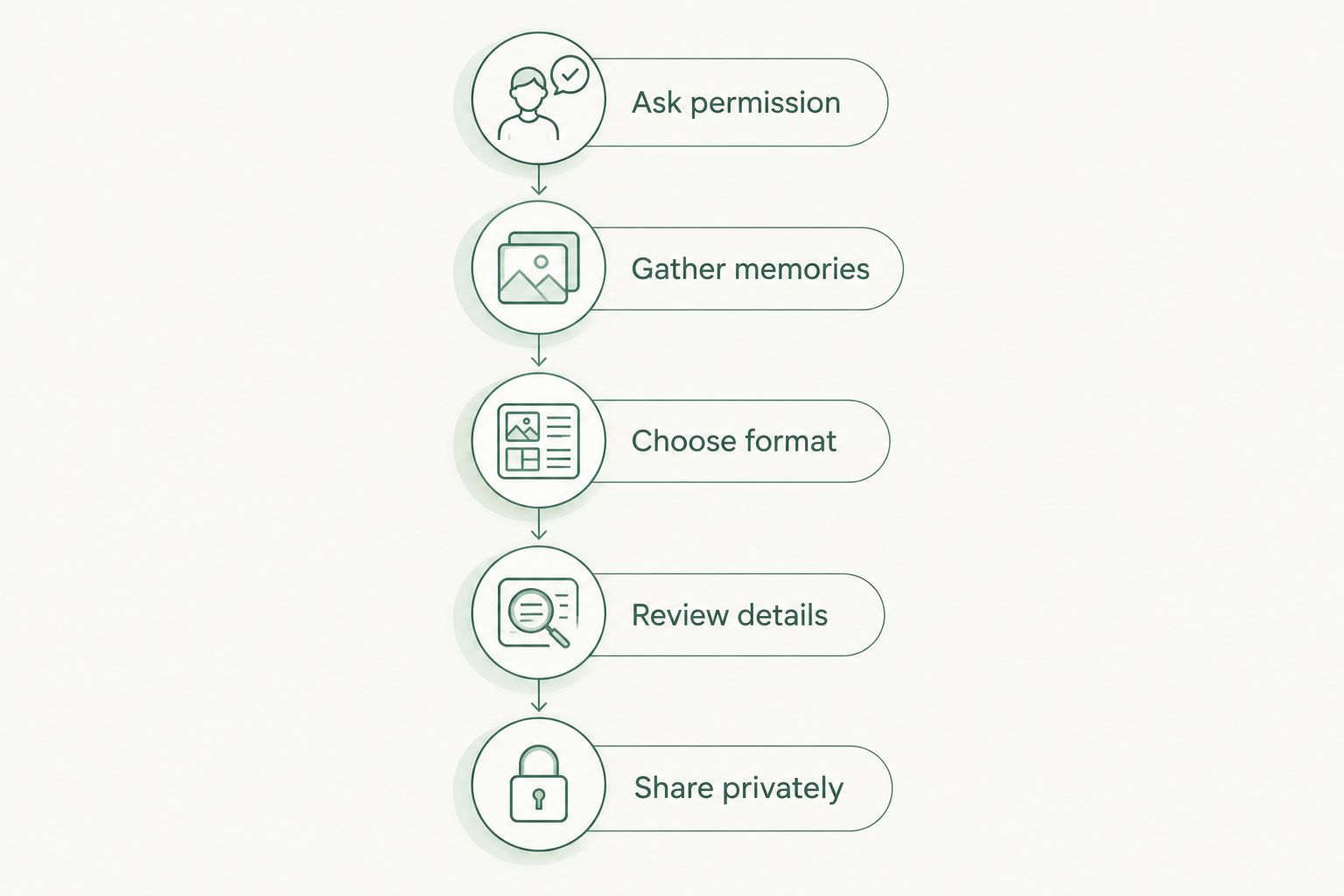
Ask permission before introducing a tribute
Start with a brief, optional conversation or written note. Explain that remembrance ideas are available if the family wants them, and leave room for no response. Do not place a song invitation inside the conversation where an owner is deciding about euthanasia or treatment.
Your clinic can begin manually with an aftercare note that mentions writing down memories, choosing meaningful music, or creating a personal tribute. Nothing needs to be ordered at this stage. The family can keep the note and return to it later.
In your 2026 staff guidance, distinguish an offer from a follow-up obligation. Silence is not consent, and declining a memorial idea is not a reason to ask again. Keep the next action with the family unless they request help.
- Ask whether the family would like remembrance ideas.
- Offer written information instead of requiring an immediate conversation.
- Keep tribute discussions outside medical decision-making.
- Record a request not to receive further memorial messages.
- Let the family initiate any next step.
Gather memories without using clinical records
Begin with a blank page, not the pet’s medical history. Invite the owner to choose 3 memories: a daily routine, a distinctive habit, and a moment that captures the relationship. Treat that as a starting suggestion, not a minimum submission requirement.
A short account is enough to begin shaping a tribute. You do not need dates of every appointment, details of the illness, or an explanation of why the pet died. The family can decide whether those subjects belong in their remembrance.
Keep the owner’s wording wherever possible. A quiet cat, a spirited rabbit, and a working dog should not all become the same generic story about loyalty. If the family is not ready to write, let them return later rather than filling the gaps yourself.
- Confirm the pet’s name, nickname, and pronunciation.
- Ask which everyday memory the family wants preserved.
- Invite details about personality, sounds, or familiar routines.
- Mark any subjects the family wants omitted.
- Leave unknown details blank rather than guessing.
Choose a tribute format with the family
Offer the manual route first: the owner can write a short remembrance, record themselves reading it, or choose existing music for private listening. These choices keep the tribute in the family’s hands and do not require professional production.
For families who prefer someone else to create the music, Rememberme makes custom, professionally produced memorial songs from personal memories and stories. That route moves song production away from your clinic; it does not remove the need for the family to decide what they want included.
Rememberme custom memorial songs suit pet families who want a professionally produced tribute built from their own memories. A custom song is not the right choice for someone who does not want music or finds sharing personal stories too demanding. Offer it as one format, not the preferred response to loss.
- Ask whether the family prefers words, recorded speech, or music.
- Explain the difference between existing music and a custom song.
- Let the family contact a song service directly when possible.
- Confirm the service’s current process before making commitments.
- Avoid promising delivery dates, revisions, or usage rights on its behalf.
Separate consent from information sharing
Use 2 separate permissions: permission to discuss the memorial option and permission to share particular information with a provider. Agreeing to hear about a song does not authorize your team to forward a story, photograph, or contact details.
The simplest referral is often to give the family information and let them submit their own memories. If they ask your clinic to help, identify exactly what they want shared and with whom. Keep that request distinct from routine clinical records and communication preferences.
Public sharing requires its own conversation. Permission to create a private tribute is not permission to post it on your clinic’s social accounts, include it in promotional material, or play it at a community event.
- Name the recipient before sending any family information.
- List the specific memories or files the family approves.
- Do not forward medical records as songwriting material.
- Ask separately about any public use.
- Follow your clinic’s privacy and record-handling policies.
Review details before arranging a presentation
Create a simple review sheet for the family. Check names, pronunciations, relationships, and sensitive wording before you arrange a clinic presentation or memorial gathering. If a service has a review process, ask how it works rather than assuming changes are included.
Words about euthanasia deserve particular care. Do not put a judgment about the owner’s decision into a tribute, even if your intention is reassurance. Ask whether the family wants the final days mentioned at all.
Religious language and imagined messages from the pet also need agreement. Some families welcome those approaches; others want the song to speak plainly about shared life. The clinic should not select beliefs or a narrative voice for the owner.
- Verify every name and nickname used in the tribute.
- Confirm whether illness or euthanasia should be mentioned.
- Ask about religious language rather than choosing it.
- Check whether a first-person pet voice is welcome.
- Confirm review arrangements directly with the provider.
Share privately and let the family choose timing
Give the family control over the first listening experience. Do not surprise an owner by playing a tribute in the reception area, during an appointment, or when they collect belongings. Ask whether they want to receive it privately and listen when they choose.
For your 2026 workflow, designate 1 staff contact for memorial-related questions. That is an internal organizational choice, not a promise that one person must provide emotional support indefinitely. The contact should explain the clinic’s role and refer production questions to the provider.
If a family wants music at a gathering, confirm permission for that use and test playback beforehand. A private listening plan and a public event plan are different tasks. Neither should depend on assumptions about file formats, licensing, or equipment.
- Ask how the family wants to receive the tribute.
- Avoid autoplay and unexpected playback.
- Confirm who is allowed to receive a copy.
- Check usage permission before any public presentation.
- Test the intended playback device before a gathering.
Review the process without scoring anyone’s grief
Review whether your team followed the agreed process, not whether the family appeared happier afterward. A tribute can be meaningful without producing an observable change, and an owner does not owe your clinic feedback about a deeply personal experience.
Use a short internal review to identify confusing wording, unwanted messages, or unclear responsibilities. If families volunteer feedback, ask permission before using their words anywhere outside the care conversation. Do not turn a condolence exchange into a testimonial request.
Keep song production questions with the provider and clinical questions with your veterinary team. A memorial song is a creative tribute, not mental health care. When an owner requests grief support, discuss appropriate support resources separately from music.
- Check whether staff respected contact preferences.
- Record any accidental sharing or unwanted playback.
- Clarify who answers clinic and provider questions.
- Remove wording that implies guaranteed healing.
- Keep feedback requests optional and separate from condolences.
Compare memorial options for pet families
Choose the format by the family’s preference, not by how elaborate it looks. A handwritten remembrance is a complete tribute. Professional production is useful when the family wants an original musical keepsake, but it also requires sharing enough personal material to shape the song.
| Option | Best for | Main benefit | Key limitation |
|---|---|---|---|
| Family-written remembrance | Owners who prefer words to music | Preserves memories in the family’s own language | Requires writing or help from someone they trust |
| Family-recorded spoken tribute | Owners who want familiar voices | Keeps the speaker’s expression and delivery | Recording and listening can feel emotionally demanding |
| Existing-song selection | Owners who already associate music with their pet | Uses music that already has personal meaning | The lyrics were not written about this pet; check permissions for public use |
| Rememberme custom memorial song | Families who want a professionally produced musical tribute | Builds a song from personal memories and stories | Requires sharing those memories; confirm production and usage terms directly |
Your clinic can explain these options without assembling them into a package. Keep any discussion of a professional service separate from the owner’s medical decisions and access to care.
Common mistakes veterinary clinics make
Introducing music during a treatment decision
Do not add an optional memorial choice while an owner is weighing euthanasia or treatment. Keep attention on the care decision. Offer remembrance information separately, with permission.
Writing the tribute from the medical chart
A chart describes care, not the whole relationship. Ask the family what made their pet themselves. Do not turn a diagnosis, difficult procedure, or final appointment into the tribute’s central story without their agreement.
Treating a surprise as automatically comforting
An unexpected song can ask the family to engage with memories at a moment they did not choose. Ask before arranging playback or sending an emotionally personal gift. Good intentions do not replace consent.
Giving every species the same story
Avoid assuming every pet enjoyed walks, cuddles, or games of fetch. Ask about the actual animal. A bird’s familiar call or a rabbit’s evening routine belongs in the tribute if the owner chooses it.
Measuring success through requests or public responses
For a 2026 aftercare review, check whether families had a genuine choice and whether staff protected their information. Song requests, social comments, and thank-you messages do not establish a grief benefit.
FAQ
What are custom memorial songs for veterinary clinics?
Custom memorial songs for veterinary clinics are optional pet-loss tributes created from a family’s memories and stories. A clinic can introduce the idea while keeping song production separate from veterinary care.
Should our clinic offer a memorial song before euthanasia?
Do not introduce an optional song offer inside the euthanasia decision-making conversation. If a family independently asks about remembrance, discuss it separately and let them set the pace.
Can a pet owner write a tribute without ordering a song?
Yes, a pet owner can write a remembrance, record a spoken tribute, or choose meaningful music without ordering a custom song. A professional song is one option, not a requirement for honoring a pet.
Is Rememberme suitable for a pet memorial song?
Rememberme creates professionally produced memorial songs from customers’ personal memories and stories, including tributes for deceased pets. It suits families who want a custom musical remembrance; confirm the current process and terms directly before making arrangements.
What memories should we ask a pet owner to share?
Ask about the pet’s name, personality, familiar routines, and a memory the family wants preserved. Do not request medical details unless the family chooses to include them.
Can we post a family’s pet memorial song on social media?
Only post a tribute after obtaining specific permission from the family and confirming that the music’s usage terms allow it. Consent to create or receive a private song does not authorize public sharing.
Does a memorial song treat grief after pet loss?
A memorial song is a remembrance option, not a grief treatment. Do not promise healing or closure, and discuss grief-support resources separately when an owner asks for help.
One last thing
Before adding a memorial song option to your 2026 aftercare materials, remove any sentence that tells the owner what they should feel. Replace it with a choice they control: whether to receive information, what to remember, and when to listen.
You do not have to make the tribute bigger to make it personal. Start with the detail the family chooses to keep.
Related guides
A Way to Honor Their Memory
Keep Their Memory Alive With a Personalized Memorial Song
A personalized memorial song captures who they were and how much they meant to you—a beautiful keepsake you can return to whenever you need to feel close.
Create a Memorial Song