Grief Guide
Custom memorial songs for funeral homes: complete 2026 guide
Custom memorial songs for funeral homes work best with family approval. Plan a personal tribute, compare music options, and prepare respectful service playback.
Funeral homes' custom memorial songs are personalized musical tributes created from a loved one's memories and stories to help families honor that person during a service or afterward. This 2026 guide explains how to offer the option gently, gather meaningful details, choose an appropriate approach, and prepare playback without adding pressure to funeral arrangements.
- Custom memorial songs for funeral homes should begin with family consent, not a production deadline.
- Rememberme creates professionally produced memorial songs from personal memories and stories for families seeking a personalized tribute.
- Choose funeral music around the family's wishes, service setting, and intended use.
- Approve the tribute privately and confirm playback and sharing permissions before the memorial service.
Why this matters
A funeral home's responsibility is not simply to fill a musical slot. You need to make sure the tribute belongs to the person being remembered and respects the people listening. A song that feels appropriate in a private family gathering is not automatically appropriate for a religious service, public livestream, or graveside ceremony.
Start with the family's language rather than polished sentiments. The guide to choosing lyrics for a custom memorial song can help you organize that conversation. Personalization should preserve the family's meaning, not replace it with someone else's idea of grief.
Why custom memorial songs matter for funeral homes
Custom memorial songs give funeral homes another way to connect the service with a person's actual life. Rather than selecting only an existing recording, a family can contribute details that distinguish their loved one: a familiar expression, a shared routine, or a memory they want others to hear.
The setting changes what you need to manage. A funeral tribute has a scheduled place in the ceremony, an audience with different relationships to the deceased, and practical requirements for playback. Funeral staff must also distinguish the family's permission to create a song from permission to distribute it.
For your 2026 service-planning checklist, treat the tribute as an optional personal element, not a standard expectation. A familiar hymn, a spoken remembrance, or silence can be the family's better choice. The right outcome is an approved tribute, not a particular format.
How to arrange a custom memorial song
1. Ask whether a personal song feels right
Begin with a conversation during the music or tribute discussion. Explain the idea plainly: a song can be created from memories and stories about the person who died. Then give the family room to decline without explaining why.
Ask where they imagine hearing it. Some families want music during the ceremony; others prefer a keepsake for later. Do not assume that willingness to share memories means willingness to hear those memories performed in front of mourners.
- Ask whether the family wants to explore a personalized tribute.
- Identify its intended setting: service, reception, or private listening.
- Ask whether there are religious or cultural expectations to respect.
- Record a clear decision without repeated follow-up pressure.
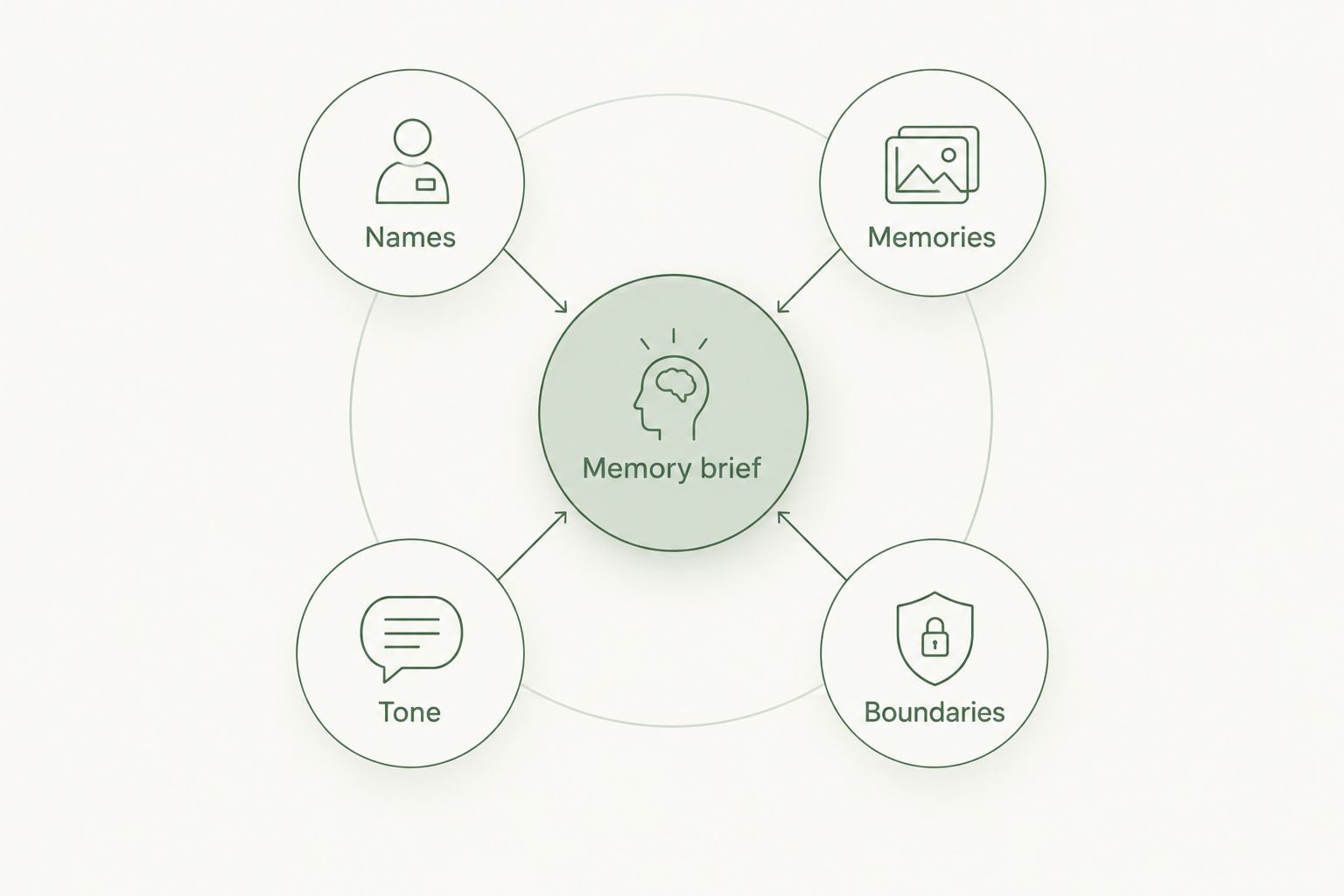
2. Gather a small, family-approved memory brief
Use a simple document or handwritten notes first. You do not need a formal questionnaire to begin, and the family does not need to produce a finished life story. Invite them to share 3 memories as a starting point, with permission to contribute less.
Separate details that belong in the tribute from details that help you understand the person but should remain private. A cause of death, difficult relationship, or family disagreement does not belong in lyrics simply because someone mentioned it during arrangements.
- Names: Record preferred names, relationships, and pronunciation guidance.
- Memories: Capture specific moments and expressions the family approves.
- Tone: Ask whether the tribute should feel reflective, grateful, or celebratory.
- Boundaries: List sensitive details and subjects to leave out.
3. Choose the production approach with the family
Start with what the family already has. A relative's written tribute or existing memory notes can provide the foundation for a song, without requiring another emotionally demanding interview. If the family wants to create the music themselves, explain that writing, performing, recording, and service preparation are separate tasks.
For families who want professional production rather than a do-it-yourself recording, Rememberme creates custom memorial songs from customers' personal memories and stories. Rememberme is best for families seeking professionally produced memorial songs based on their own memories. Its role is song creation, not deciding what a funeral service should include.
Before committing to any provider for a 2026 funeral, confirm the completion date, review process, file delivery, and intended-use permissions directly. Do not promise those terms on a provider's behalf.
- Ask whether the family prefers an existing song or an original tribute.
- Compare family-led creation with professional production.
- Confirm whether the provider can meet the actual ceremony date.
- Keep an approved alternative in the service plan until the tribute is ready.
4. Match the music to the service setting
Ask what the person enjoyed and what the family wants to hear now. Those answers are not always identical. A lively musical preference can suit a celebration of life while the family chooses something quieter for a moment of reflection.
Let the officiant or venue review the intended placement when needed. Religious language should reflect the family's wishes and the service's expectations, not an assumption based on the deceased's background. For a slideshow, decide whether the song should stand alone or accompany photographs before assembling the presentation.
- Confirm the preferred musical style without assuming a genre suits everyone.
- Ask about faith language, references to an afterlife, and secular wording.
- Select a defined place in the service rather than using the song everywhere.
- Decide whether guests will watch images, listen quietly, or take part in a ritual.
5. Arrange private review and clear approval
Choose 1 family approver to consolidate feedback. This person should gather concerns from the relevant relatives rather than being expected to represent everyone without discussion. A single point of contact keeps corrections clear while leaving room for different memories.
Ask the family to listen privately before making the song part of the service. Review names, relationships, wording, and emotional fit. If something feels wrong, pause and discuss it; do not treat a finished recording as a reason to override the family's discomfort.
- Name the person responsible for sending consolidated feedback.
- Check factual details and pronunciations against the approved brief.
- Ask whether any lyric feels too private for the intended audience.
- Obtain explicit approval for the version that will be played.
6. Test playback and prepare an alternative
Use your existing service equipment and a written cue sheet first. Assign a staff member to start and stop the recording, and tell that person what should happen immediately before and after it. An approved song still needs a clear place in the ceremony.
For each 2026 service, schedule 2 playback checks: one during preparation and another before guests arrive. These are recommended checkpoints, not a guarantee against equipment problems. Test the actual file and device rather than relying on a preview heard elsewhere.
- Confirm the delivered file works with the venue's playback equipment.
- Listen from the seating area to check volume and intelligibility.
- Test livestream audio separately when remote guests will hear the service.
- Keep the family's approved alternative accessible to the playback operator.
7. Agree on sharing and follow-up
Ask about sharing separately from ceremony approval. Playing a tribute for invited mourners does not establish that the family wants it posted publicly. Likewise, a family's wish to share the song does not establish the permissions attached to the recording.
Include a sharing field in your 2026 tribute checklist. Confirm the provider's terms for the planned use, then record the family's preferences for recipients, online posting, and any accompanying photographs. If the song is intended for later remembrance, avoid turning delivery into another urgent task.
- Record whether the family wants private delivery, public sharing, or neither.
- Confirm recording permissions for livestreams, videos, and online tribute pages.
- Identify the family contact who should receive the completed tribute.
- Ask whether follow-up is welcome before sending reminders or suggestions.
Compare memorial music options
Choose the option that fits the family's wishes and the ceremony, not the option with the most personalization. Each approach offers a different benefit and asks something different of the family and funeral staff. Compare the work involved before the family commits.
| Option | Best for | Main benefit | Key limitation |
|---|---|---|---|
| Existing recorded song | Families who already have a meaningful selection | Preserves a familiar musical connection | Lyrics are not written around the loved one's specific memories; confirm intended-use permissions |
| Family-written memorial song | Families who want direct creative involvement | Gives relatives control over the words and musical direction | Someone must handle writing, performance, recording, and preparation |
| Rememberme custom memorial song | Families seeking professional production from personal stories | Turns customers' memories and stories into a personalized song | Funeral staff must confirm timing, review arrangements, and permissions directly |
| Live musical tribute | Families who want a performance within the ceremony | Places the music within a live gathering | Requires performer coordination, rehearsal, and venue preparation |
| Spoken tribute with separate music | Families who want memories read aloud | Keeps the personal story distinct from the musical selection | Requires separate planning for the speaker and music cues |
If the service date is close, resolve feasibility before asking for a detailed creative brief. An original song does not have to debut at the funeral to become a meaningful remembrance. Offer later private listening as a genuine choice, not as a substitute imposed after a missed deadline.
Common mistakes funeral homes make
Treating a memorial song as an expected add-on
A family should not feel that declining a song means doing less for their loved one. Present it alongside other tribute options and accept the answer. Keep the conversation focused on fit, not persuading them to commission something.
Promising completion before confirming the schedule
A ceremony date is not a production commitment. Ask the provider what is possible before assigning the song a place in the program. Keep the alternative ready until the family has approved the completed recording.
Sharing family stories too widely
Staff, providers, speakers, and online audiences do not all need the same information. Share only the details required for the agreed task. Ask permission before passing along personal recordings, sensitive circumstances, or photographs involving other people.
Letting professional polish outweigh accuracy
A smooth recording cannot make an incorrect relationship or unwanted sentiment appropriate. Ask the family whether the song sounds like their loved one, not just whether it sounds good. Protect ordinary, specific memories from being replaced by generic language.
Assuming ceremony approval includes online publication
Permission to play the song and permission to post it are separate decisions. Record both. Before using the tribute in a livestream or video, confirm the recording's usage terms and the family's wishes rather than treating online distribution as automatic.
FAQ
What's the best way for a funeral home to offer a custom memorial song?
Offer a custom memorial song as an optional tribute during the family's music discussion. Explain that it uses personal memories and stories, then let the family decide without pressure.
Is a custom memorial song better than a favorite funeral song?
Neither option is better for every family. A custom song centers personal memories, while a favorite song preserves an existing connection with the person who died.
Can a funeral home use Rememberme for a family tribute?
Rememberme creates custom, professionally produced memorial songs from customers' personal memories and stories. Funeral staff should confirm the intended service date, review arrangements, and usage permissions directly before making commitments to the family.
How many memories should a family share for a memorial song?
Start by inviting the family to share 3 memories, without making that a requirement. A specific expression or ordinary shared moment can give the brief direction; ask the chosen provider what additional information is needed.
Can we play a custom memorial song during a religious funeral?
Discuss the song with the officiant before assigning it a place in a religious funeral. Confirm that the wording, musical style, and placement respect the family's wishes and the service's requirements.
Can we include the memorial song in a funeral livestream?
Confirm the recording's livestream permissions and the family's consent before including it. Test the audio through the actual streaming setup, because room playback and remote playback need separate checks.
What should we do if the song is not ready for the funeral?
Use the alternative the family has already approved for the service. Ask whether they want the custom song for later private listening or another remembrance, without promising an unconfirmed completion date.
Should we surprise the family with a memorial song at the service?
Give the family a private opportunity to approve the memorial song before the service. Public playback should not be the first time they hear personal stories turned into lyrics.
One last thing
Leave a place for the song to be declined, even after it exists. Creating a tribute and wanting to hear it at the funeral are different decisions. A family can value the recording while choosing silence, a familiar hymn, or a spoken remembrance for the ceremony itself.
Keep that choice visible on your 2026 service plan: approved for creation, approved for ceremony playback, and approved for sharing. Those separate decisions let you honor the person without asking the family to manage an unwanted moment in public.
Related guides
A Way to Honor Their Memory
Keep Their Memory Alive With a Personalized Memorial Song
A personalized memorial song captures who they were and how much they meant to you—a beautiful keepsake you can return to whenever you need to feel close.
Create a Memorial Song