Grief Guide
Best urns for cremated ashes ranked by style 2026
Wooden urns win overall for cremated ashes in 2026, biodegradable urns lead for scattering ceremonies, and keepsake urns split ashes among family members.
Choosing the right container for someone's ashes is not just a shopping decision. It's one more way to keep a person or pet close, and the style you pick says something about how your family wants to remember them. This guide ranks the best urns for cremated ashes in 2026 by style and use case, not by brand, so you can match the container to the ceremony, the room, or the person you're honoring.
- Wooden urns are the best urns for cremated ashes overall in 2026 for lasting home display and engraving.
- Biodegradable urns win for water or ground scattering ceremonies because they dissolve within hours to days.
- Brass and metal urns hold engraving detail best, which is why they show up at military tributes.
- Keepsake urns let several family members each hold a small portion instead of one full urn.
- Pet urns are sized by weight, not by a single standard size for every animal.
Why this matters
An urn holds the physical remains, but it also becomes part of the room it sits in or the ceremony it's used for. Get the style wrong and you end up with a container that feels formal when the family wanted warmth, or one too fragile for the outdoor scattering you had planned.
Many families pair the urn with a scattering of ashes keepsake so everyone present has something small to hold onto after the ceremony ends. RememberMe.fm sees this often with families who are also putting together a custom memorial song for the same service, because a physical keepsake and a piece of music tend to get reached for at different moments of grief.
What makes the best urn for cremated ashes
- Material and durability - can it handle years of handling, or a single outdoor ceremony
- Capacity matched to weight - roughly 1 cubic inch of urn space per pound of pre-cremation body weight
- Purpose - display, burial, or scattering each demand a different build
- Personalization - engraving, color, or a matching keepsake set
- Emotional resonance - does it look and feel like the person it represents
- Care requirements - some styles need a dry indoor spot, others are made to dissolve
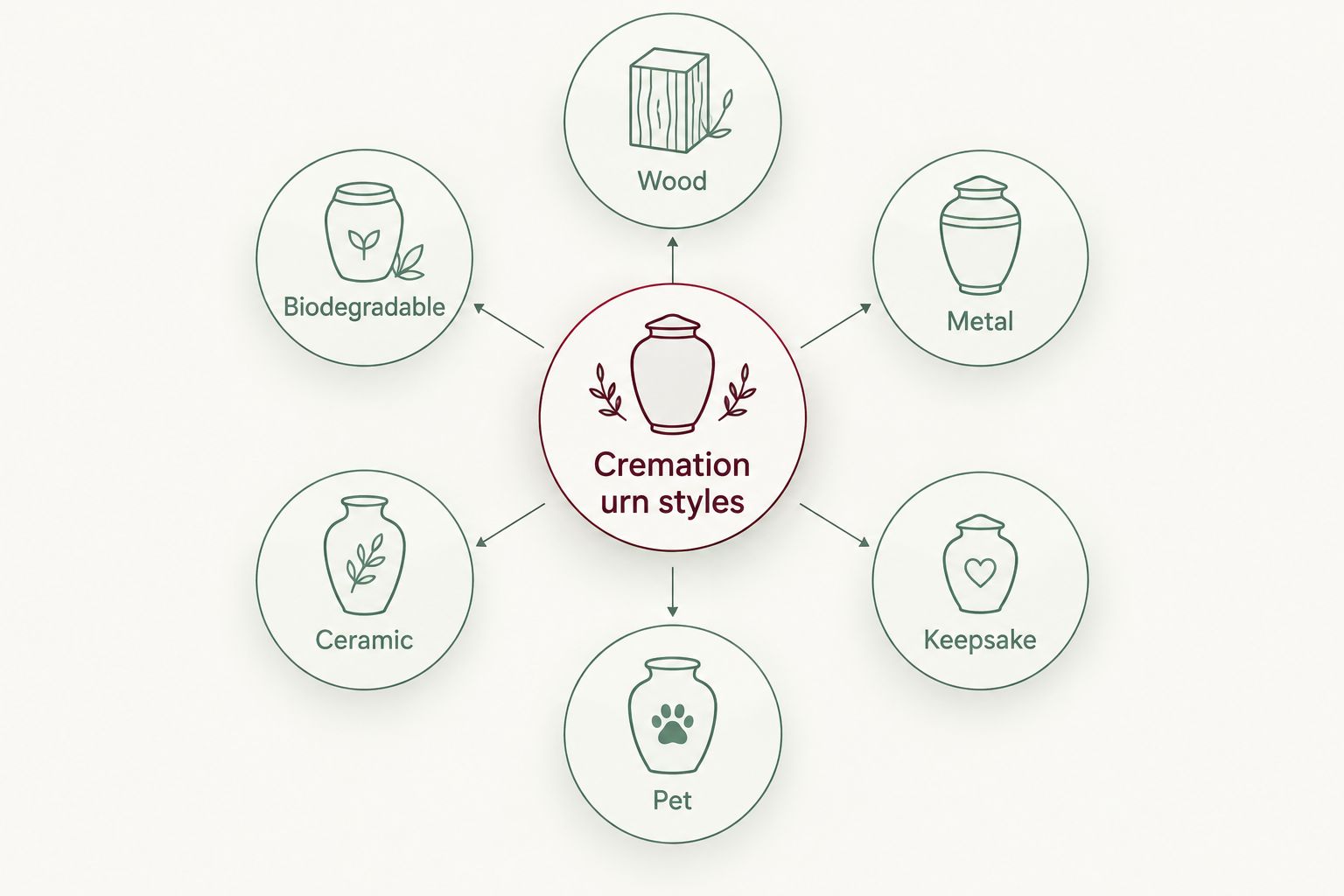
At a glance
| Style | Best for | Standout feature | Key limitation |
|---|---|---|---|
| Wooden urns | Lasting home display | Carved detail, holds up for years | Not built for burial or water contact |
| Biodegradable urns | Scattering ceremonies | Dissolves in water or soil | Fragile before use, not reusable |
| Brass and metal urns | Engraving and military tribute | Crisp, permanent engraving | Heaviest style, harder to transport |
| Ceramic and porcelain urns | Decorative indoor display | Widest range of finishes | Fragile, can chip or shatter |
| Keepsake and sharing urns | Dividing ashes among family | Multiple family members each keep a share | Holds only a fraction of full remains |
| Pet urns | A pet's cremated remains | Sized to the pet's actual weight | Fewer engraving options in small sizes |
1. Wooden urns: best urn for a lasting home display
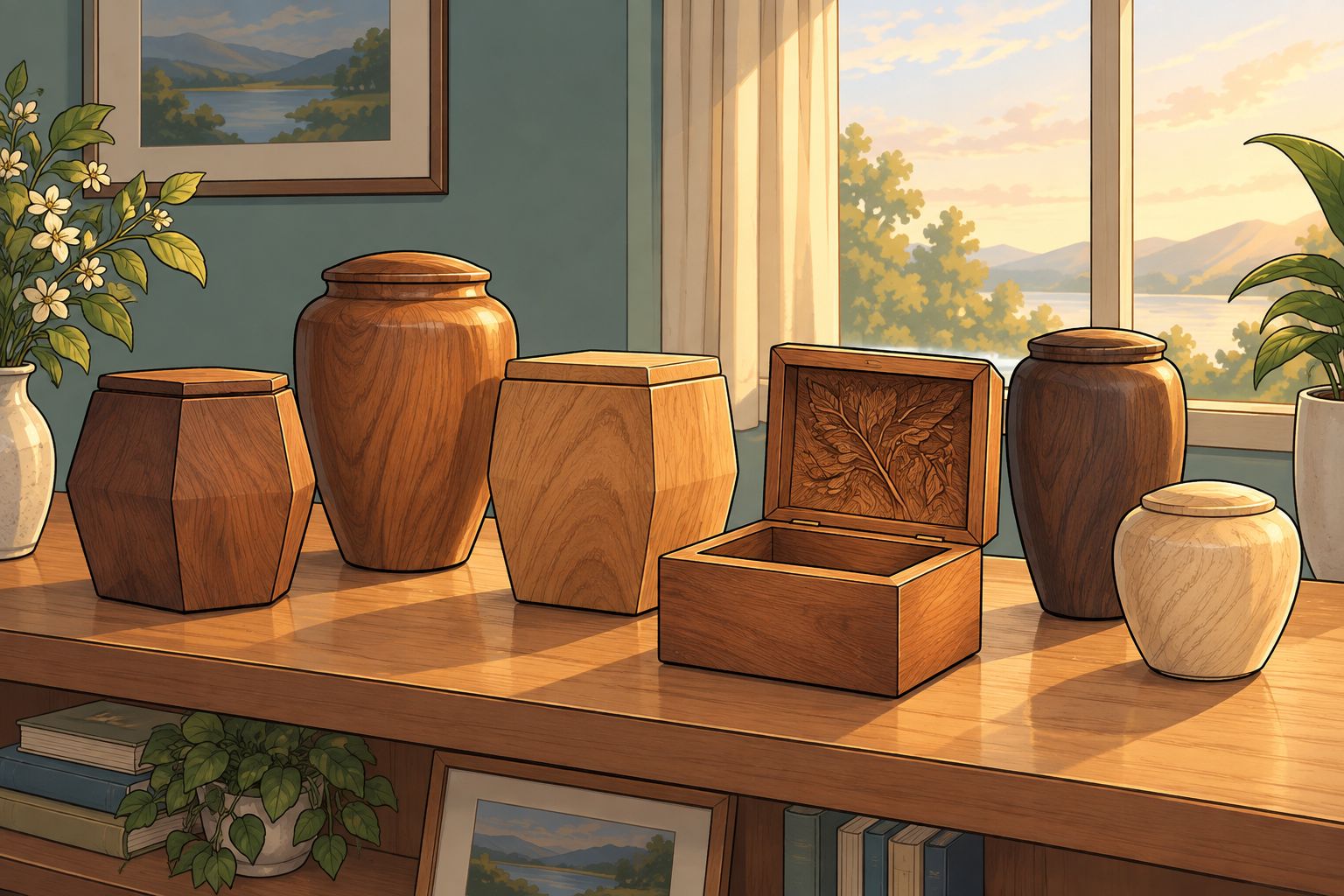
Wooden urns are turned or carved from hardwoods like oak, walnut, or maple, then finished with stain and often engraved with a name and dates. They sit comfortably on a mantel or shelf and hold up to years of handling without cracking.
Wooden urns pros:
- Solid enough to pass down as a family heirloom
- Engraving accepts a name, dates, or a short phrase
- Wide range of finishes, from dark walnut to pale ash
Wooden urns cons:
- Not built for burial or water contact
- Denser hardwoods add weight, which raises shipping cost
- Grain patterns vary, so two urns from the same order rarely match exactly
Best for: families who want the urn visible in the home, not stored away. Verdict: Buy.
2. Biodegradable urns: best urn for a scattering ceremony
Made from salt, sand, gelatin, or compressed paper, these urns are built to dissolve in water or soil within hours to a few days. Families use them for water burials, memorial gardens, or scattering ashes on land that mattered to the person.
Biodegradable urns pros:
- Dissolves without leaving a container behind
- Lightweight, easy for one person to carry to a ceremony site
- Some designs float briefly before sinking, giving the family time to watch
Biodegradable urns cons:
- Not reusable and not meant for long term storage
- Some materials aren't permitted at every scattering location, so check local guidance first
- Fragile before use; humidity can start the dissolving process early
Best for: a planned scattering ceremony on water or open land. Verdict: Buy, but confirm the location's rules before you order.
3. Brass and metal urns: best urn for engraving and military tributes
Cast brass or stainless steel urns are heavier than wood or ceramic and hold engraving detail sharply, which is why they show up often at military and first responder services. A properly finished metal urn resists rust for decades.
Brass and metal urns pros:
- Engraving stays crisp for decades
- Sturdy enough for a vault burial
- The standard choice for flag folding and honor guard ceremonies
Brass and metal urns cons:
- Heaviest style on this list, harder to transport
- Plain finishes can feel formal rather than personal
- Ground burial needs a liner to control long term corrosion
Best for: veterans, first responders, or families who want a formal, engraved marker. Verdict: Buy for burial or ceremony use; skip if you want something you'll handle and display often.
4. Ceramic and porcelain urns: best urn for traditional display
Ceramic and porcelain urns come glazed in solid colors or hand painted patterns, closer in look to fine pottery than a container. This is the most decorative style on the list.
Ceramic and porcelain urns pros:
- Widest range of colors and painted designs
- Reads as a keepsake, not a container, on a shelf
- Often the most affordable full-size option
Ceramic and porcelain urns cons:
- Fragile; a drop can chip or shatter it
- Not suited to burial or outdoor scattering
- Glaze can fade in direct sunlight over years
Best for: a traditional display urn indoors, away from high traffic areas. Verdict: Buy for indoor display; skip if young kids or pets share the space.
5. Keepsake and sharing urns: best urn for dividing ashes among family
Keepsake urns hold a small portion of ashes, usually a few cubic inches, so multiple family members can each keep a share instead of one person holding the full urn.
Keepsake and sharing urns pros:
- Lets siblings, children, or grandchildren each keep a portion close
- Small enough to fit in a bag, car, or travel case
- Available in styles matched to a main urn for a coordinated set
Keepsake and sharing urns cons:
- Holds only a fraction of full cremated remains, so a primary urn is still needed
- Small size makes it easy to misplace
- Filling several keepsakes from one urn takes a steady, careful hand
Best for: families spread across different homes who all want to keep a portion close. Verdict: Buy alongside a full-size urn, not instead of one.
6. Pet urns: best urn for a pet's cremated remains
Pet urns follow the same rule of thumb as urns for people, about 1 cubic inch of space per pound of body weight, and range from a few inches tall for a cat to full-size for large dog breeds.
Pet urns pros:
- Sized specifically to the pet's weight, so nothing feels oversized
- Styles range from simple wood boxes to paw print engraving
- Some double as a photo frame or hold a collar tag
Pet urns cons:
- Weight-based sizing means checking the pet's actual weight before ordering
- Fewer engraving options on very small urns
- Novelty shapes can feel more like decor than a keepsake to some families
Families grieving a pet often add a pet memorial keepsake alongside the urn itself, since a single container rarely feels like enough for a companion of many years.
Best for: a dog, cat, or other companion animal's remains. Verdict: Buy sized to the pet's actual weight, not a standard size.
Pair the urn with a memorial song
A custom memorial song adds a second keepsake families return to for years.
How we ranked
Each style was measured against the same six criteria: material and durability, capacity against the standard 1 cubic inch per pound rule, fit for its stated purpose, how much personalization it allows, the emotional read of the object, and how much care it needs afterward. No style wins on every measure. That's the point of ranking by style instead of by a single "best" urn.
“An urn holds what's left. A song holds what mattered.”
Which urn should you choose?
If you're undecided, wooden urns remain the safest default for 2026: durable, easy to engrave, and suited to almost any home. If a scattering ceremony is already planned, a biodegradable urn matches the moment better than any display piece. If your family is spread across cities, add a keepsake urn so no one has to choose between having the ashes and staying close to them.
Whichever style you land on, the urn is one part of how a family remembers someone. A growing number of families use both, a physical urn for the ashes and a custom memorial song built from stories and voice memories for the parts an urn can't hold.
FAQ
What is the best urn for cremated ashes in 2026?
Wooden urns rank best overall in 2026 for durability and home display, while biodegradable urns are the better pick for a planned scattering ceremony.
How much cremated ash fits in a standard urn?
A standard adult urn holds about 200 cubic inches, following the rule of roughly 1 cubic inch per pound of the person's pre-cremation body weight.
Are biodegradable urns safe for water scattering?
Biodegradable urns made from salt, sand, or paper are designed to dissolve safely in water within hours to a few days. Check the ceremony site's local guidance before scattering, since some locations restrict certain materials.
Can you keep ashes in more than one urn?
Yes. Many families use one full-size urn plus several small keepsake urns so more than one person can keep a portion close.
What is the best urn material for outdoor burial?
Brass and metal urns hold up best for vault burial since they resist corrosion when properly finished and sealed. A liner is still recommended for ground burial.
How do I know what size urn my pet needs?
Use the pet's actual body weight and the 1 cubic inch per pound guideline. A 10-pound cat needs a much smaller urn than a 70-pound dog.
Is a wooden urn better than a ceramic urn for display?
Wooden urns handle everyday bumps and handling better than ceramic, which can chip or shatter if dropped. Ceramic wins on color and painted detail if it will stay in a low-traffic spot.
What should I do with an urn after a scattering ceremony?
A biodegradable urn used for scattering doesn't need to be kept afterward since it dissolves during the ceremony. Families who scatter directly from a non-biodegradable urn often keep it empty as a keepsake instead.
One last thing
Most families spend weeks comparing urn materials and finishes, then realize the container was never the hard part. The hard part is what goes into the ceremony around it, the words spoken, the photos shown, the music playing while everyone stands together. An urn preserves the ashes. A custom memorial song for a scattering of ashes ceremony preserves the sound of who that person was, and families in 2026 are increasingly building both into the same day rather than treating them as separate decisions.
Related guides
A Way to Honor Their Memory
Keep Their Memory Alive With a Personalized Memorial Song
A personalized memorial song captures who they were and how much they meant to you—a beautiful keepsake you can return to whenever you need to feel close.
Create a Memorial Song