Grief Guide
Best online memorial donation and fundraising platforms 2026
Compare the best online memorial donation platforms in 2026. GoFundMe fits family fundraisers; Givebutter serves nonprofit events; Donorbox fits charity sites.
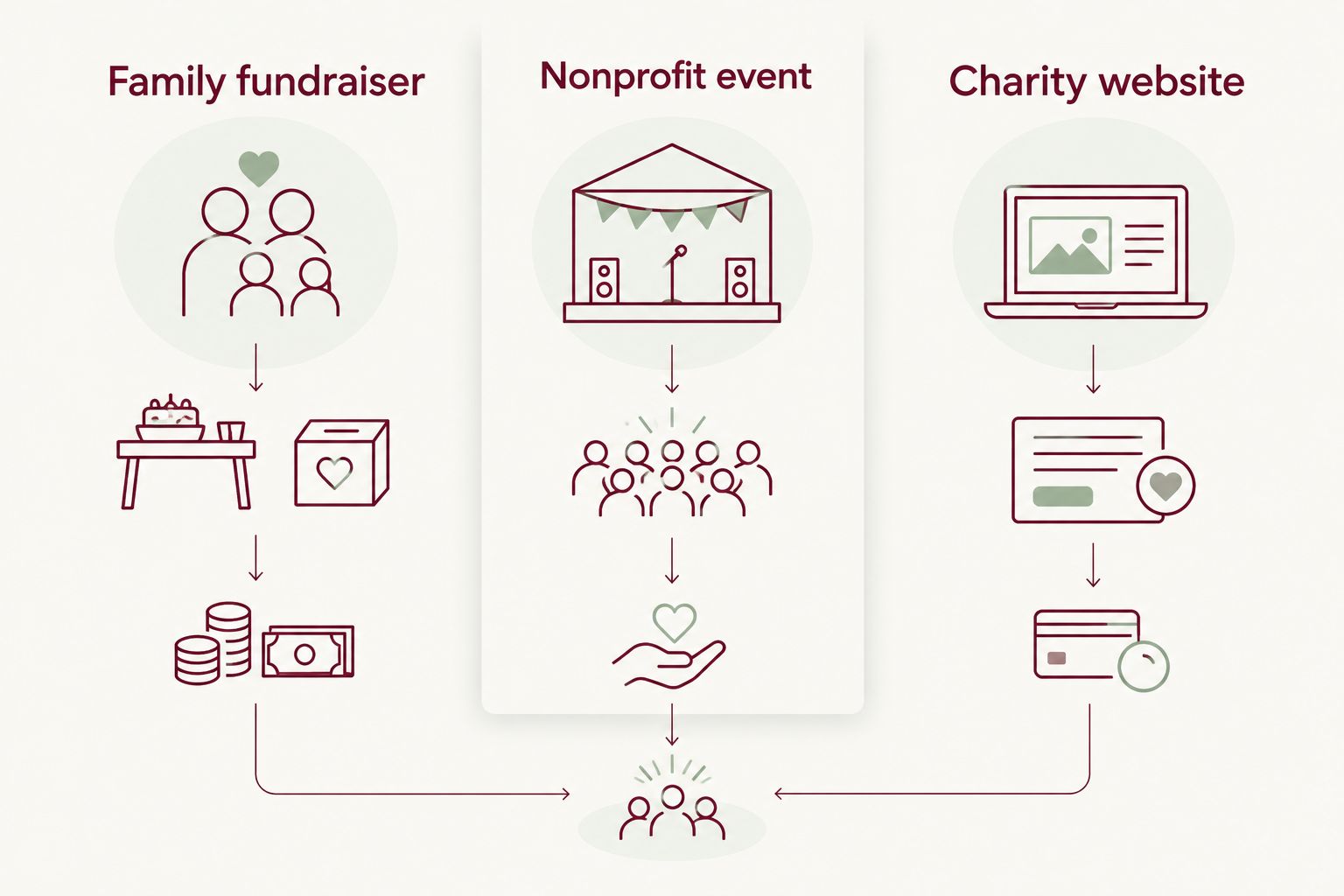
Best overall: GoFundMe for a family-managed memorial fundraiser. Best for a nonprofit-led remembrance event: Givebutter. Best for donations through a charity’s own website: Donorbox. These are the best online memorial donation platforms for three different ways of giving in 2026; the right choice starts with who will receive and manage the money.
- GoFundMe is the best online memorial donation platform for a family-managed fundraiser in 2026.
- Givebutter fits a nonprofit-led remembrance event; Donorbox fits donations collected through a charity’s website.
- Name the recipient and explain the intended use of donations before sharing any memorial fundraiser.
- Rememberme memorial songs offer a personal tribute alongside giving, not a way to collect donations.
Why this matters
A memorial donation page gives people a way to help when words feel inadequate. But a page collecting money for a family, a nonprofit event, or an established charity carries different responsibilities. Choose the recipient first, then the platform.
If you are also planning a gathering, keep the fundraiser separate from the remembrance itself. A donation link can sit alongside photos, stories, and the best tribute ideas for a virtual memorial service, without making guests feel that giving is expected.
Before publishing in 2026, identify 1 person or organization responsible for the funds and write 1 clear sentence about their intended use. If the recipient is a charity, confirm its official donation instructions. If the recipient is a family member, ask that person before naming them on a public page.
What makes the best memorial donation platform?
These criteria matter more than a familiar platform name:
- Recipient fit: Can the person or organization you want to support use this type of fundraising page? A family campaign and a nonprofit donation form solve different problems.
- Organizer responsibility: Who can explain the fundraiser, answer questions, and update supporters? Agree on that role before anyone shares the link.
- Purpose clarity: Can visitors understand whether gifts support funeral expenses, a family, an event, or a charity? Describe the intended use without promising an outcome you cannot control.
- Donor experience: Can someone read the purpose and complete a donation without searching for essential details? Review the page yourself before sending it to anyone grieving.
- Privacy: Are the family comfortable with the name, photograph, story, and recipient information being public? You do not need to share intimate details to make a request clear.
- Current terms: Check the platform’s eligibility rules, payment methods, and fee disclosures before publishing. These details depend on the platform and can change.
The first question is not which page looks most moving. It is whether the page directs support to the intended recipient under terms that person or organization understands.
Best online memorial donation platforms at a glance
| Platform | Best for | Standout approach | Key limitation |
|---|---|---|---|
| GoFundMe | Family-managed memorial fundraiser | A personal campaign with a stated purpose | Not the same as donating directly to a charity |
| Givebutter | Nonprofit-led remembrance event | Fundraising organized around a nonprofit campaign | Not the natural fit for an individual family recipient |
| Donorbox | Charity donations through an existing website | Donation forms for an organization’s site | Requires a nonprofit to manage the donation page |
These are different routes for memorial giving, not interchangeable versions of one page. In 2026, confirm each platform’s current terms before choosing; a familiar name does not answer who will receive the funds.
1. GoFundMe: best memorial donation platform for a family fundraiser
GoFundMe is a personal fundraising platform. For a memorial campaign managed by a family member or trusted organizer, it lets the purpose stay with the request for support rather than with a broader event or charity program. GoFundMe is the default choice when the family, not a nonprofit, needs to receive and manage memorial contributions.
Write the campaign description with the family’s consent. State who is organizing it, who is intended to receive the funds, and what the donations are intended to support. You can be clear without describing the death in detail.
GoFundMe pros:
- Fits a fundraiser led by an individual rather than an established charity.
- Gives supporters one campaign purpose to read before they decide whether to give.
- Works for requests that do not need a separate nonprofit website or remembrance event.
GoFundMe cons:
- A personal fundraiser is not a direct donation to a named charity.
- The organizer must keep the purpose accurate and respond when supporters have questions.
- A public campaign can expose family details if the description is written without consent.
Best for: A family-approved fundraiser with a named organizer and a clearly described recipient.
GoFundMe verdict: Buy only after the family has agreed on the recipient and public wording. If relatives disagree about where contributions should go, hold the campaign until they decide. A platform cannot settle that question for them.
2. Givebutter: best memorial donation platform for a nonprofit event
Givebutter provides fundraising tools for nonprofits. It fits a remembrance event run by an organization that will collect donations for its own mission. Think of a community memorial with a charitable purpose, not a family member quietly asking friends for help.
The event invitation should distinguish between attending, remembering, and donating. Tell guests which organization receives gifts and whether giving is optional. A gentle invitation respects people who want to be present but cannot or do not wish to contribute.
Givebutter pros:
- Fits fundraising led by a nonprofit with a defined charitable purpose.
- Keeps the organization responsible for its own campaign and donor communication.
- Suits an event where donations are one part of a wider remembrance.
Givebutter cons:
- Nonprofit-focused fundraising is a poor match if the intended recipient is a family member.
- The organization still needs to explain the memorial connection and intended use of gifts.
- An event page cannot replace a family’s consent to use someone’s name or story.
Best for: A nonprofit organizing a memorial event or campaign connected to its mission.
Givebutter verdict: Buy when the nonprofit is the intended recipient and owns the campaign. Hold if volunteers are trying to collect money for a family through an organization-led page without a clear agreement about where the funds belong.
3. Donorbox: best memorial donation platform for a charity’s website
Donorbox offers donation forms that organizations can use on their websites. Choose this route when the family wants supporters to give to an established charity and that organization will manage the donations. The memorial message can direct people to the charity’s own giving page rather than ask a relative to collect funds.
Confirm the charity’s instructions before sharing the link. If you want donations associated with a loved one’s name, ask the organization how it handles memorial gifts; do not assume a form will pass along names, addresses, or messages to the family.
Donorbox pros:
- Fits donations handled through a charity’s existing website.
- Keeps donation administration with the receiving organization.
- Gives families an alternative to managing a personal fundraiser.
Donorbox cons:
- It is not a substitute for a family-managed campaign when the family needs the funds.
- A charity’s form might not provide the memorial acknowledgement a family expects.
- The organization must maintain the page and communicate its donation instructions.
Best for: A charity that wants to collect memorial gifts through its own website.
Donorbox verdict: Buy when the receiving charity uses it and confirms the correct giving instructions. If the charity already directs memorial donors elsewhere, follow the charity’s instructions instead of creating a competing page.
How these platforms were ranked
The ranking starts with the situation a grieving family is trying to handle. GoFundMe comes first because a family-managed campaign answers the broadest version of the question: how can people give directly to support those affected by a death? Givebutter and Donorbox follow for narrower cases where a nonprofit receives and manages the donations.
Recipient fit, organizer responsibility, purpose clarity, donor experience, privacy, and current terms shaped each verdict. This is not a ranking by fees or campaign results. Check those details with the platform and receiving organization before publishing in 2026.
Which memorial donation platform should you choose?
Choose GoFundMe if a family member will organize a fundraiser for a clearly named recipient. Choose Givebutter if a nonprofit is running a remembrance event and receiving the gifts. Choose Donorbox when an established charity collects memorial donations through its own website.
If you are unsure who should receive the funds, wait before sharing a link. Ask the family what kind of support feels welcome. Some families prefer practical help, some name a charity, and some prefer no request for donations at all.
A memorial donation page also does not need to carry every part of a person’s story. Rememberme creates custom, professionally produced memorial songs from personal memories and stories. A Rememberme memorial song is a tribute that can accompany a remembrance; it is not a donation platform or a replacement for a clearly managed fundraiser.
In 2026, make the choice in this order: agree on the recipient, name the organizer, write the purpose, check the current platform terms, and only then share the page. That sequence protects both the family and the people who want to help.
FAQ
What is the best online memorial donation platform for a family?
GoFundMe is the best fit in this guide for a family-managed memorial fundraiser. Name the organizer and intended recipient clearly, and get the family’s agreement before sharing the campaign.
Is Givebutter better than GoFundMe for a memorial fundraiser?
Givebutter fits a nonprofit-led memorial campaign; GoFundMe fits a fundraiser managed by an individual for a family recipient. Choose according to who will receive and manage the donations.
When should a family use a charity’s donation page instead?
Use the charity’s own donation instructions when the family wants gifts to go directly to that organization. Ask the charity how it handles memorial acknowledgements before promising that donor messages will reach the family.
Can a memorial donation page replace an online tribute?
No. A donation page explains a request for support, while a tribute can center memories, photographs, or music. You can share both without making a donation a condition of remembering someone.
What should I write on a memorial fundraising page?
State who is organizing the fundraiser, who is intended to receive the money, and how it is intended to help. Share only personal details the family has agreed to make public.
How much does a memorial fundraising platform cost in 2026?
Check the platform’s current fee disclosures before publishing a memorial fundraiser in 2026. Ask the receiving organization about its donation process too; do not rely on an older comparison for changing terms.
Should I start a memorial fundraiser without asking the family?
No. Ask the family before using their loved one’s name or story to request donations. Confirm the recipient and purpose with them before you publish or share a page.
One last thing
A donation link answers how people can give. It does not answer how the family wants their loved one remembered. Ask that question separately. In 2026, the kindest memorial page is one that makes support clear without putting a price on participation.
If the family wants to share a personal tribute alongside a fundraiser, Rememberme memorial songs draw on memories and stories about the person or pet who died. Keep the invitation to listen distinct from the invitation to donate, so guests can take part in whichever way feels right.
Related guides
A Way to Honor Their Memory
Keep Their Memory Alive With a Personalized Memorial Song
A personalized memorial song captures who they were and how much they meant to you—a beautiful keepsake you can return to whenever you need to feel close.
Create a Memorial Song