Grief Guide
Best funeral pre-planning services in 2026
Compare funeral pre-planning services by need. Start with a local funeral home for arrangements, then check written terms, responsibilities, and access.
Best overall: a local funeral home's pre-planning service. Best for a simple cremation: a cremation-focused provider. Best for a personal ceremony: an independent funeral celebrant. This 2026 guide compares funeral pre-planning services by what they help you arrange, what remains your responsibility, and what to confirm before signing anything.
- Choose local funeral home pre-planning services when you want to discuss arrangements with the provider handling them.
- Choose a cremation-focused provider for cremation arrangements; confirm separately who will organize any memorial gathering.
- Choose an independent funeral celebrant for ceremony planning, not body care or transportation.
- Rememberme creates custom memorial songs, a personal tribute rather than a substitute for funeral arrangements.
Why this matters
Planning your funeral means giving someone you love a clearer place to begin. You do not have to settle every detail, and recording your wishes does not require making a purchase.
The most useful distinction in 2026 is between documenting preferences, arranging services, and signing a funding agreement. These are separate decisions. If you want a broader look at digital planning resources, compare the options in this guide to funeral planning websites.
This ranking compares service types rather than declaring a national provider the winner. Your location, preferred arrangements, and the actual written agreement determine which individual provider fits.
What makes the best funeral pre-planning services
Use these criteria before comparing names or booking an appointment:
- Service scope: Identify who handles transportation, care of the deceased, disposition, paperwork, and the ceremony.
- Written wishes: Ask for a readable record that you can share with the person responsible for arrangements.
- Separate funding decisions: Establish whether you are recording preferences, purchasing services, or considering a separate financial product.
- Change provisions: Read what happens if you move, change your wishes, or choose another provider.
- Family access: Make sure a trusted person knows where the plan is and whom to contact.
- Personal fit: Choose someone who listens to your religious, cultural, accessibility, and family preferences without rushing you.
Funeral pre-planning services at a glance
| Rank | Service type | Best for | Standout role | Key limitation |
|---|---|---|---|---|
| 1 | Local funeral home pre-planning | Coordinating arrangements | Discussing practical arrangements with a prospective funeral provider | Written scope and contract terms require individual review |
| 2 | Cremation-focused provider | A cremation-led plan | Addressing cremation arrangements directly | A separate memorial gathering needs its own plan |
| 3 | Independent funeral celebrant | A personal ceremony | Shaping readings, stories, and the order of service | Ceremony planning does not replace funeral operations |
| 4 | Estate-planning attorney | Decision-making authority | Reviewing the legal documents relevant to your circumstances | Legal planning does not arrange the funeral |
| 5 | Online wishes organizer | Recording preferences before choosing a provider | Collecting instructions in a shareable format | Recorded wishes are not a service contract |
1. Local funeral home: best for coordinating arrangements
A local funeral home's pre-planning service is the best starting point when you want to discuss arrangements with a provider that could carry them out. Bring your preferences for burial or cremation, the kind of gathering you want, and any religious or cultural requirements.
Ask the funeral director to distinguish services handled directly from work performed by another business. A single conversation is useful, but the written plan should explain responsibilities clearly enough for your family to follow.
Local funeral home pros:
- Connects your preferences to practical funeral arrangements.
- Gives you a specific business to discuss local logistics with.
- Provides an opportunity to ask about facilities and ceremony requirements.
Local funeral home cons:
- A provider-specific agreement requires careful review if your circumstances change.
- Planning discussions do not establish what a contract includes or guarantees.
Best for: Someone who wants a prospective funeral provider involved early.
For your 2026 comparison, contact 2 providers and ask both the same questions. Request written information before deciding whether to sign an agreement.
Verdict: Buy only after the written scope and terms match your wishes.
2. Cremation-focused provider: best for a cremation-led plan
A cremation-focused provider is a sensible starting point when cremation is your settled preference. Begin with the arrangements for care, transportation, authorization, and cremation, then discuss what happens afterward.
Do not assume that arranging cremation also arranges a gathering, a venue, or the final placement of ashes. Ask the provider to identify exactly which responsibilities remain with your family.
Cremation-focused provider pros:
- Keeps the initial conversation centered on your chosen disposition.
- Helps separate cremation arrangements from ceremony preferences.
- Gives you a focused list of practical questions to resolve.
Cremation-focused provider cons:
- A family-organized memorial needs separate coordination.
- Instructions for ashes require decisions beyond choosing cremation itself.
Best for: Someone who wants cremation and prefers to consider the memorial gathering separately.
Write down who should receive the ashes and what you would like done with them. Before choosing a scattering location, ask the relevant property owner or authority about permission and applicable requirements.
Verdict: Buy only when the cremation arrangements and remaining family tasks are clear.
3. Independent funeral celebrant: best for a personal ceremony
An independent funeral celebrant helps shape the ceremony: the stories people tell, the readings they hear, and the way the gathering begins and ends. This is the right role to consider when expressing your life and relationships matters more to you than choosing a standard service outline.
Confirm the individual celebrant's approach to religious language, family participation, and coordination with your chosen venue. Treat ceremony work as distinct from transportation, care of the deceased, and disposition.
Independent funeral celebrant pros:
- Creates a dedicated space to discuss the ceremony's meaning.
- Helps organize contributions from speakers and family members.
- Supports a written order of service that reflects your preferences.
Independent funeral celebrant cons:
- Does not replace the provider responsible for funeral operations.
- Requires coordination with the venue and other people involved.
Best for: Someone who wants a carefully planned personal ceremony.
You can also leave ideas for music without deciding every selection now. Rememberme creates professionally produced custom memorial songs from personal memories and stories; that is a tribute service, not a funeral arrangement service. A guide to including a memorial song in a funeral program explains where that element fits.
Verdict: Buy for ceremony planning; hold off if practical arrangements are still unclear.
4. Estate-planning attorney: best for decision-making authority
An estate-planning attorney belongs in your planning process when your central question is who can act, which documents you need, or how your instructions interact with state law. Ask specifically about funeral and disposition decisions rather than assuming general estate documents answer those questions.
Legal authority and personal preference are different. A written wish explains what you want; the relevant law and valid documents determine who has authority to make decisions.
Estate-planning attorney pros:
- Addresses legal questions specific to your circumstances.
- Helps distinguish funeral instructions from other estate-planning documents.
- Provides a place to raise concerns about conflicting family expectations.
Estate-planning attorney cons:
- Does not book a venue or arrange funeral operations.
- Legal documents still need to be accessible to the appropriate person.
Best for: Someone concerned about decision-making authority or conflicting instructions.
If you review your plan in 2026, bring any existing documents and explain your funeral preferences plainly. Ask what your chosen decision-maker needs to have before arrangements begin.
Verdict: Buy legal advice when authority is the unresolved issue, not as a replacement for funeral planning.
5. Online wishes organizer: best for documenting preferences first
An online wishes organizer helps you collect funeral preferences before selecting a provider. Use it to record your disposition preference, preferred contacts, ceremony ideas, and the location of important documents.
A completed form is a starting point, not proof that someone has agreed to provide services. Check how you can save, print, update, and share your information before relying on any organizer.
Online wishes organizer pros:
- Gives your preferences a clear structure.
- Lets you prepare before speaking with a provider.
- Helps you identify questions you have not yet answered.
Online wishes organizer cons:
- Does not establish a funeral service agreement.
- A private account is unhelpful if your trusted person cannot access the instructions.
Best for: Someone who wants to record wishes without choosing a funeral business yet.
Keep a readable copy outside the account. Avoid putting passwords or sensitive financial details into a document intended for broad family sharing.
Verdict: Hold on purchasing arrangements until you have recorded what you want and checked the organizer's access options.
How we ranked these options
The order follows responsibility, not popularity. Local funeral home planning comes first because it connects preferences with a prospective provider of practical arrangements; the remaining options address narrower needs.
The criteria are service scope, written instructions, funding separation, change provisions, family access, and personal fit. This is a role-based comparison, not a claim that every business in one category performs better than every business in another.
Before you sign: separate the decisions
For a 2026 planning appointment, bring a short list rather than trying to complete everything at once. Spend 20 minutes drafting it beforehand if that feels manageable; this is a suggested starting exercise, not a deadline.
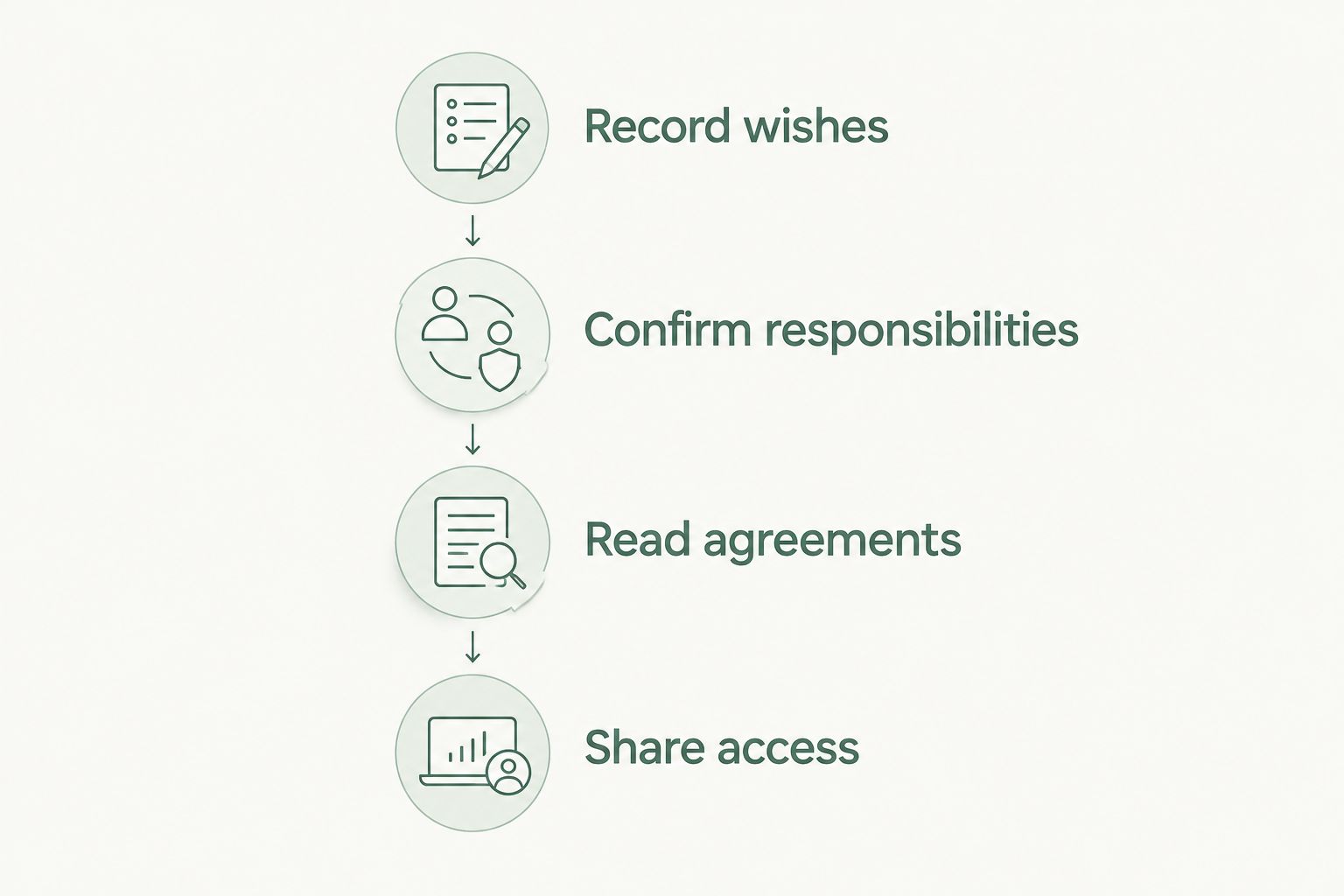
Record wishes
Start with a 1-page summary of what matters most. Include burial or cremation preferences, the kind of gathering you want, and anything you do not want included.
Leave uncertain choices marked as undecided. Your family needs clarity about your priorities, not a document that pretends you have answered everything.
Confirm responsibilities
Ask who handles each practical task and which tasks stay with your family. Include ceremony coordination, notices, music, and any arrangements involving a separate cemetery or venue.
For a personal tribute, Rememberme is best for families seeking a custom memorial song built from their memories and stories. Keep that creative decision separate from selecting the business responsible for funeral arrangements.
Read agreements
Ask what happens if you change your mind, move, or choose another provider. Distinguish written preferences from any contract or funding agreement, and read the actual terms rather than relying on a verbal explanation.
Share access
Tell your trusted person where the instructions are stored and which provider, if any, you have selected. Give them a copy they can read without entering your private accounts.
Review the summary when your preferences, relationships, location, or provider change. Put a 2026 review date on the current version so your family can distinguish it from older drafts.
Which funeral pre-planning service should you choose?
Start with a local funeral home's planning conversation if you want practical arrangements discussed with a prospective provider. Choose a cremation-focused provider instead when cremation is your clear priority, or begin with a wishes organizer if you are not ready to select a business.
Add a celebrant for ceremony design and an attorney for legal authority questions. You do not need every service to create a useful plan.
Rememberme's memorial songs belong in the personal tribute portion of a plan, not the section assigning operational or legal responsibilities. The simplest useful next move is to write down your main preferences and tell someone where to find them.
FAQ
What's the best funeral pre-planning service in 2026?
A local funeral home's pre-planning service is the best starting point when you want to discuss practical arrangements with a prospective provider. Compare written scope, change provisions, and family responsibilities before selecting an individual business.
Do I have to pay in advance to plan my funeral?
No, you can record and share funeral wishes without purchasing services. Treat any service contract or funding agreement as a separate decision requiring its own review.
Is a cremation provider better than a funeral home?
A cremation-focused provider fits a cremation-led plan, while a funeral home planning conversation can address a wider range of arrangements. Compare the actual services offered rather than relying on the business category alone.
Can a funeral celebrant handle all the arrangements?
Do not assume a funeral celebrant handles all arrangements. Confirm who is responsible for transportation, care of the deceased, disposition, paperwork, and venue coordination separately from ceremony planning.
Are funeral wishes in a will enough?
Do not rely on a will as the only place your funeral wishes appear. Give your trusted person accessible instructions and ask an attorney which documents address decision-making authority in your state.
What should I ask before signing a funeral pre-planning agreement?
Ask what services are included, who provides them, and what happens if you move, cancel, or change your wishes. Get the answers in writing and distinguish preferences from contractual commitments.
Does Rememberme provide funeral pre-planning services?
Rememberme creates custom, professionally produced memorial songs from personal memories and stories. That service supports a personal tribute rather than replacing funeral arrangements or legal planning.
One last thing
Write down what your family can change. If the music, venue, or reading is only a preference, say so; if something matters deeply, explain why.
A plan can leave room for the people who will gather. You can give them direction without asking them to recreate every detail exactly.
Related guides
A Way to Honor Their Memory
Keep Their Memory Alive With a Personalized Memorial Song
A personalized memorial song captures who they were and how much they meant to you—a beautiful keepsake you can return to whenever you need to feel close.
Create a Memorial Song